
Deer management requires a proactive, adaptive approach
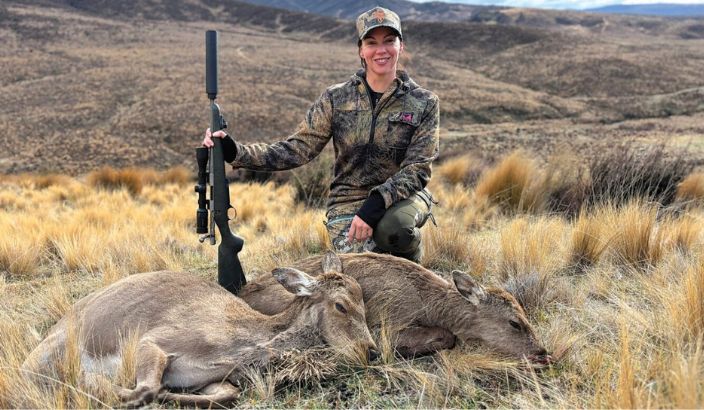
Corina Jordan says adaptive deer management is key ‘If we want better outcomes for the environment, for our farms and, frankly, for the deer themselves’. Photo: Supplied.
Corina Jordan, New Zealand Game Animal Council
Across New Zealand, wild deer are woven into the fabric of our rural and regional communities. For hunters, they are an important source of food, recreation, and connection to the outdoors.
For tourism operators, rural towns and local businesses, they help support regional economies. And it’s important to acknowledge that many farmers genuinely value having deer on their land, whether for the hunting opportunities they provide, or because some have successfully commercialised them through guided hunting or to bring in supplementary income through the meat processors. However, we also need to acknowledge that in some places, wild deer populations have increased to the point where biodiversity, forest regeneration and farm productivity are being impacted.
Doing what we’ve always done, and applying an all-or-nothing approach to controlling deer populations is no longer an option. If we want better outcomes for the environment, for our farms and, frankly, for the deer themselves, we need a more proactive adaptive approach to managing their numbers. For decades, New Zealand has lurched between long periods of inaction and short bursts of intensive culling. The approach has been reactive rather than proactive, often driven by pressure from short-term venison prices or public concern about browse impact.
What we haven’t done is commit to a consistent, long-term system of proactive adaptive management based on evidence, monitoring and community participation. In other parts of the world, this is exactly what successful deer management looks like.
Adaptive management, which has been used successfully for generations overseas, relies on setting clear goals, using a suite of available management and monitoring tools, and adjusting operations as conditions and outcomes change. It’s flexible, and responsive to what is happening on the ground. Most importantly, it works.
Applying adaptive management in New Zealand means using all the tools at our disposal, and applying them in the right place, at the right time, for the right outcome. In some locations, recreational hunters and volunteer management hunts in collaboration with landowners can maintain deer at low, sustainable densities. In other areas where populations have grown too large, short-term professional ground or aerial control operations may be needed to knock numbers back to a level where ongoing hunter-led management becomes viable again. The key is tailoring the tools to the site, not relying on a one-size-fits-all national strategy. Underpinning this are the basic principles of ungulate population management.
If we want reduced browsing pressure, improved environmental outcomes and smaller but healthier herds, we need to focus on the engine room of the population, the hinds. Deer are polygynous animals; a single stag can mate with multiple females. By targeting breeding hinds, we can deplete populations in the short term, reduce future growth rates, create more balanced sex ratios, and increase competition between males. This ultimately reduces the herd’s breeding capacity and improves animal health and quality.
This is a win-win for biodiversity, farming and hunting. Hunter-led adaptive management initiatives such as those run by the Fiordland Wapiti Foundation and the Sika Foundation show the power of combining monitoring, community effort, and targeted management. These models deliver lower deer densities, better ecological outcomes, and stronger local participation, at no-or-minimal cost to the taxpayer. But if we are to get on top of some of the more troublesome population ‘hotspots’ in our front country we must do more.
The Game Animal Council is committed to supporting farmers, foresters, councils and communities to reduce the impact of overabundant deer, including by developing resources to support landholders in managing game animals.
If New Zealand commits to proactive adaptive deer management and stays focused on what works rather than getting bogged down in old ideological debates about the place of deer in our landscape, I’m confident we can strike the right balance. We can protect biodiversity, support farmers, and maintain a healthy, sustainable hunting resource for generations to come.