
Dolphin health in scientific spotlight

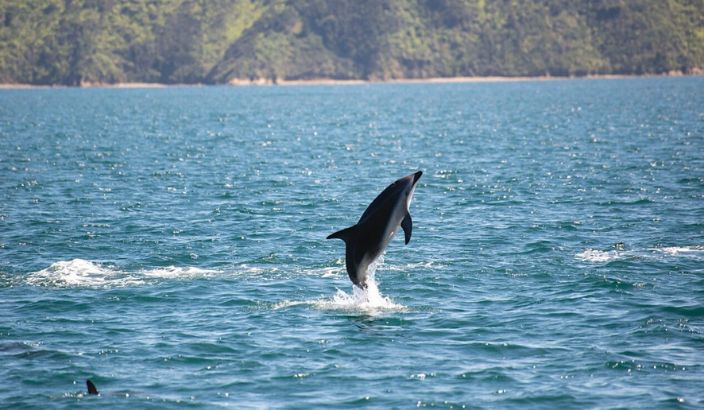
Dolphins in the Marlborough Sounds. Photo: Supplied/Marlborough Tour Company.
International scientists are calling for greater support for endangered Hector’s and Māui dolphins, with research suggesting these species could hold clues to preventing Alzheimer’s disease.
Veterinary epidemiologist Dr Stephanie Venn-Watson discovered a link between the fatty acid C15.0 in the diets of US Navy dolphins and lower rates of age-related health issues.
Research is now extending to New Zealand’s well-monitored Hector’s and Māui dolphin populations, with the Marlborough Sounds a key hub for ongoing studies.
“Our research sees C15.0 as the largest essential fatty acid discovery since Omega 3, and we’re seeing increasing relevant research between large-brained mammal species and how similar our physiological processes are.
“We had a working group for marine mammal mortality events, in addition to a Navy marine mammal programme with dolphins, and through that work, with collaborations around the world researching the impact of environmental events like the Deepwater Horizon oil spill, we found meaningful health impacts over multiple generations.
“Through this work we saw both wild and Navy dolphin populations develop ageing-associated conditions like Alzheimer’s, which are unique correlations between two large-brained, long-lived species.
“The Navy dolphins are very clean, both with exercise and diet, and yet one in three are getting these ageing conditions like high cholesterol and reduced brain function.
“A change in fish diet specifically for higher C15.0 content resulted in ageing healthier, and that shows the impact we have on animals, where if you lose specific types of fish it causes environmental carnage on the ecosystem.
“The Navy population has been invaluable in understanding physiology changes, so our work in New Zealand is now looking at the well-studied populations you have with the same factors.”
Stephanie says that for humans, New Zealand and Australia’s preference for grass-fed dairy means higher natural levels of C15.0.
In her book The Longevity Nutrient, the first chapter summarises cetacean health, and Stephanie stresses the significance of making time for good discoveries by doing good things for other species.
“While we’re researching dolphins, C15.0 is showing that common human health issues in New Zealand like type 2 diabetes and fatty liver disease are improving, as well as showing better cognitive function in children,” she says.
“Grass-fed dairy has twice the C15.0 than corn-fed, and New Zealand is emerging as a gold standard, especially with a five-year study showing children are having better cognitive function when including more in their diets.
“We keep learning from our large-brained mammals, with the whole discovery coming from caring for dolphins.
“Our approach to science and research, with the belief that if you improve one species it helps all, takes cognisant research to make those links.”