
Tearing down old bridge doesn’t settle ferry future in Picton, opponent says

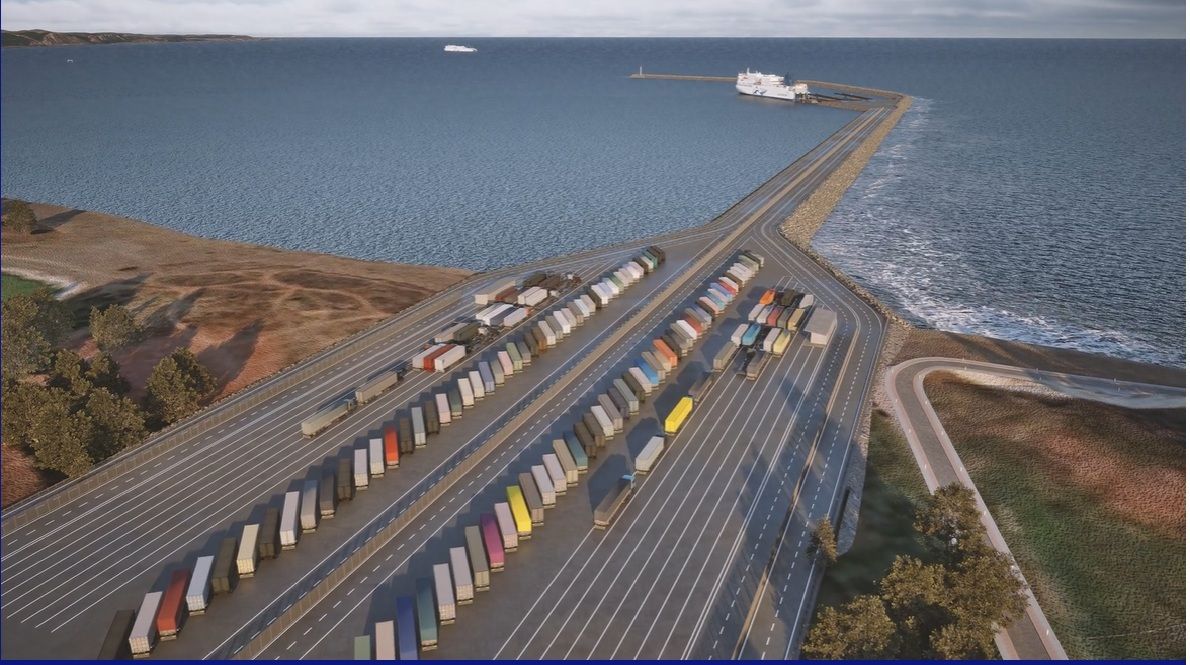
A concept design of the ferry terminal proposed for Clifford Bay, south of Blenheim. Photo:Supplied
By Kira Carrington, Local Democracy Reporter
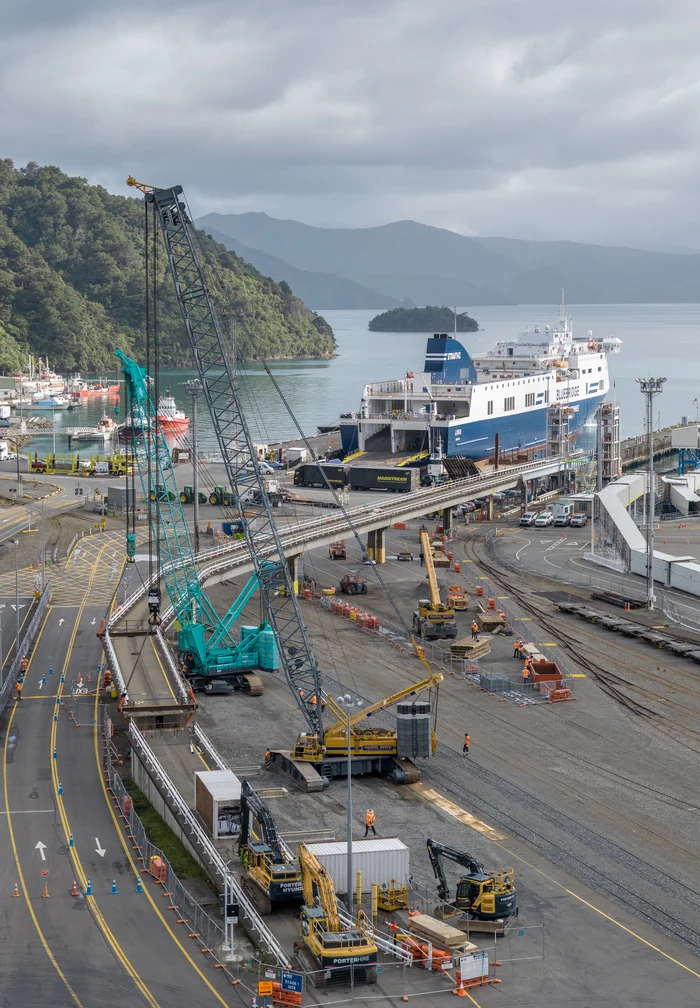
A company proposing to move inter-island ferry services to Clifford Bay says demolishing an old bridge in Picton does not cement the port town as the future of New Zealand’s ferries.
CB Port director Stephen Grice has disputed Port Marlborough’s declaration this week that the demolition of the vehicle access bridge at Waitohi/Picton shows the major upgrade to accommodate new ferries in Picton is in motion and that there is “no ambiguity” that ferry services will remain there.
“Demolishing an old bridge does not prove that Picton is the best solution; it only proves that Port Marlborough is rushing to create facts on the ground to prevent a better option from being considered,” Grice said.
However, Port Marlborough chief executive Rhys Welbourn said the demolition of the bridge was not “incidental or symbolic” but to clear the way for new ferry infrastructure.
Grice also said the bridge was a seismic risk, but Welbourn said it was not, pointing out it was in use until the Aratere ferry was retired in August last year.
“It's demolition is occurring now for one clear reason ... The bridge is no longer required for the next generation of ferries, and its removal is a planned and necessary step to clear the site for the new ferry infrastructure,” Welbourn said.
The CB Port-led consortium’s pitch of a privately-funded ferry terminal and port at Clifford Bay had been rejected by Rail Minister Winston Peters, who had committed to infrastructure upgrades in Picton, but Grice said in August the minister was open to further discussion.
However, this week he told Local Democracy Reporting that they had not been in touch with Peters since.
Welbourn said earlier this week the project was focused on creating resilient and efficient connections for the country, rather than “chasing unproven ideas elsewhere”.
Grice said there was nothing “unproven” about the viability of a Clifford Bay ferry terminal.
“It is a geographical fact that a terminal at Clifford Bay would save 150 minutes off every single ferry crossing,” Grice said.
“This reduction saves millions in fuel, significantly reduces carbon emissions, and allows vessels to complete more return trips per day. It is just a better outcome for passengers and freight.”
Grice said there would continue to be ambiguity about the future of the ferries until Port Marlborough had fully locked in its new terminal precinct design, construction timetable and contracts.
Welbourn said detailed designs for the new ferry infrastructure, construction timeline, and contracts were being progressed with partners Ferry Holdings and KiwiRail.
Grice further queried the port borrowing $110 million through its shareholder, the Marlborough District Council, to help fund its upgrades, and claimed building a multi-use ferry terminal at Clifford Bay with private capital moved any financial risk away from the taxpayer.
Welbourn stressed legal and commercial safeguards would be included in the loan, as were in place the last time it borrowed $110m from the council before iReX fell over. At any rate, the $110m loan still had to go out for public consultation again, likely to happen in the coming months, he said.
“While the [borrowing] details are commercially sensitive at this point, we can categorically state that there will be no additional burden on the ratepayer of Marlborough from this project.”
Nevertheless, Grice said the time was right to consider future terminal options with “open minds”.
“We agree that Picton has served New Zealand well for generations. But we must design our infrastructure for 2060, not 1960,” Grice said. “New Zealand is desperate for productivity gains, opting for the longer, slower route purely for the sake of history is a luxury we cannot afford.”
Welbourn added the Clifford Bay port was a “speculative concept” that resurfaced every few years, but had never progressed for good reason.
It had no road, no rail, no marine staff, no tugs, no breakwater, no port, he said.
Grice said he would welcome a meeting with Port Marlborough.
LDR is local body journalism co-funded by RNZ and NZ On Air.