
Canterbury council says 4 percent rates cap achievable, if no surprises
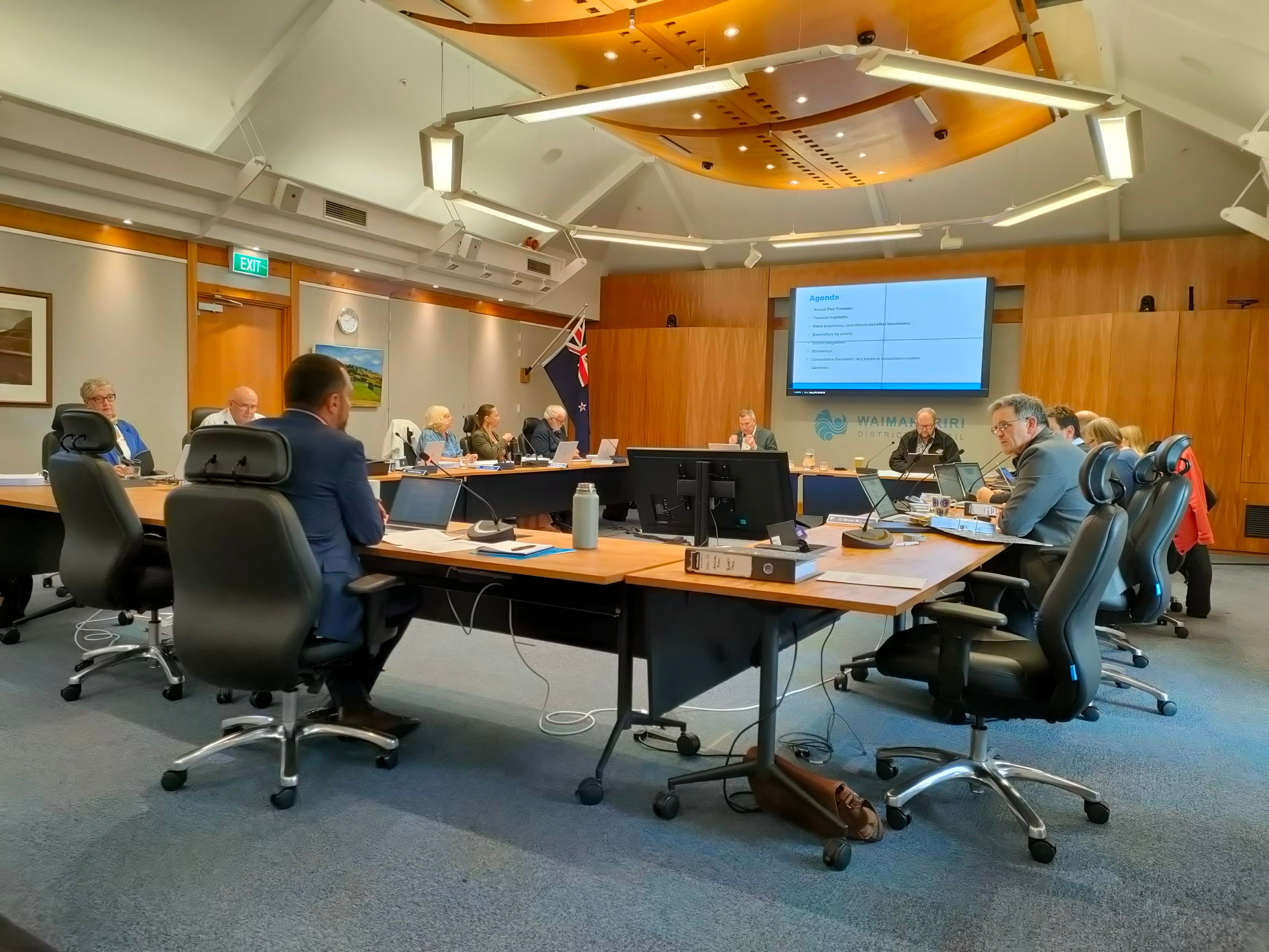
Waimakariri District Council finance and business support general manager Chris Genet addresses councillors on the proposed draft annual plan. Photo: David Hill / North Canterbury News
By David Hill, Local Democracy Reporter
A North Canterbury council says it is in ‘‘a strong position’’ to meet a future four percent rates cap, barring rising inflation or unexpected costs.
Speaking at Tuesday’s (January 27) annual plan deliberations, Waimakariri District Council finance and business support manager Chris Genet said while a 4.92 percent average rate rise is signalled for this year, rate rises are predicted to drop below 4 percent over the next few years. ‘‘We are better placed than many in the sector to meet the 4 percent rates cap.’’
The Government is proposing to introduce a rates cap of 2 percent to 4 percent to bring rates under control.
While Consumer Price Index inflation has risen to 3.1 percent, after dropping to 2.2 percent in December 2024, councils operated with construction inflation (BERL - Business and Economic Research), which has risen to 3.5 percent.
Council chief executive Jeff Millward said last week, costs associated with upgrading water infrastructure to comply with regulations had helped to push up this year’s rate rise.
This included introducing ultraviolet treatments in urban drinking water.
Weather events such as flooding or high winds, or natural disasters can also push up costs.
Other cost drivers this year included earthquake loan repayments and depreciation payments, with the council playing catch up after deferring some payments in recent years to support the community during periods of Covid restrictions and high inflation by keeping rate rises down.
The council took out a 30-year loan to fund the district’s recovery from the 2010 and 2011 Canterbury earthquakes, while depreciation is funding set aside for the future replacement of council infrastructure.
The business manager said the council’s debt was set to rise to $231m this year, which represented a debt to revenue ratio of 135 percent, well under the cap of 350 percent set by the Local Government Funding Agency
The CEO said there was no requirement to consult on this year’s annual plan, as there were no significant changes from the work signalled in the 2024/34 Long Term Plan. ‘‘It has been our practice for community groups to put forward grant applications as part of our annual plan process and it’s also good for our council to consult to get the heartbeat from the community about whether we are still on the right track.’’
Mayor Dan Gordon said it was a ‘‘judgement call’’ from the council to consult, which he supported.
The annual plan consultation document will seek feedback on the Government’s reforms, the implementation of an in-house water services business unit, the council’s capital works programme and the business case for the proposed Rangiora eastern link road.
The reforms include the Resource Management Act reforms, the proposal to abolish the Canterbury Regional Council, the emergency management bill, rates capping and development levies.
The council will meet again on February 17 to adopt the draft 2026/27 annual plan before it goes out for consultation from March 13 to April 13. Hearings are scheduled in May, before the annual plan is adopted in June.
LDR is local body journalism co-funded by RNZ and NZ On Air.