
Hunter’s ‘back in the boat’ after horrific crash

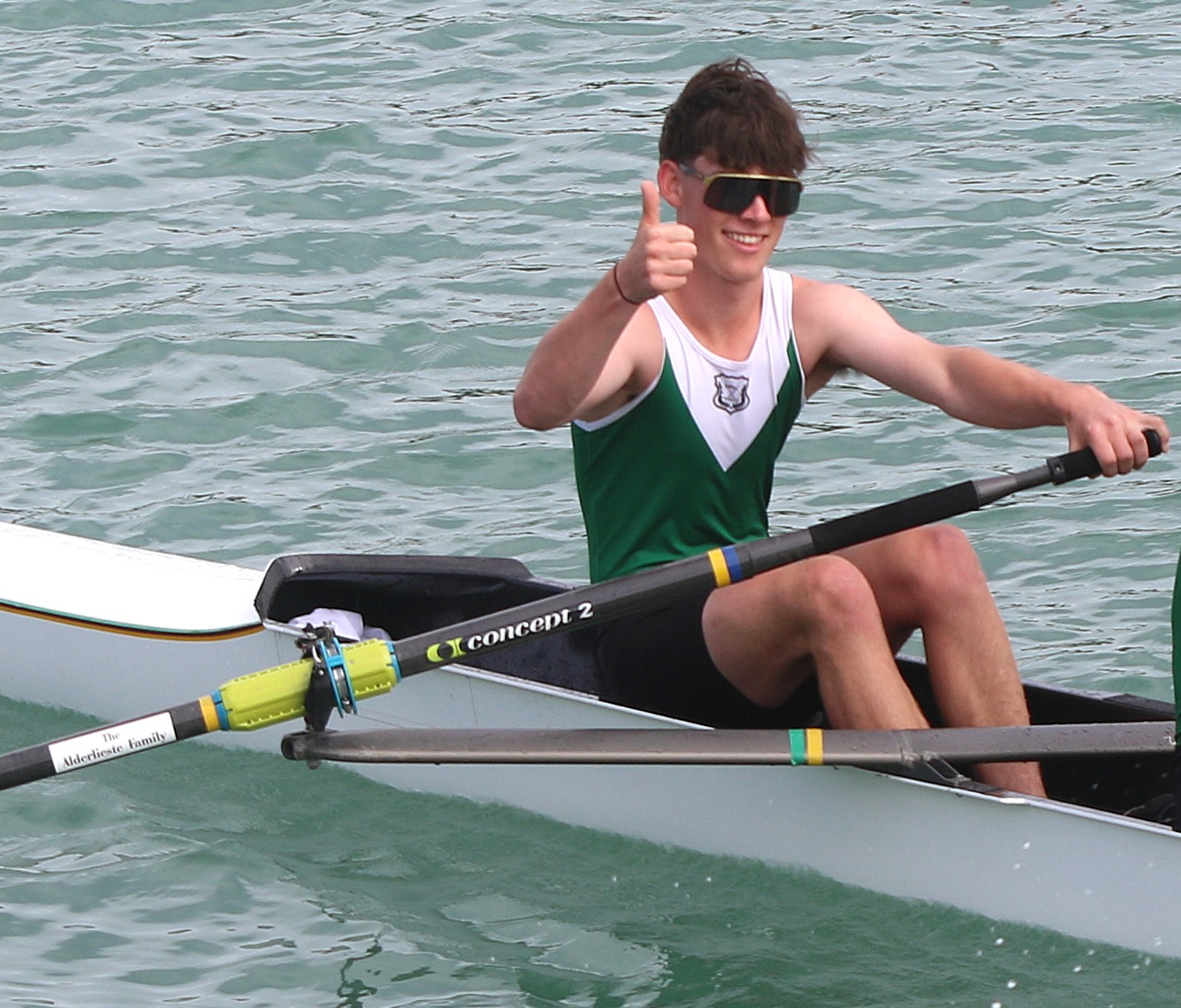
Hunter Marfell at the recent Marlborough champs. Photo Peter Jones
A burning desire “to get back in the boat” fuelled Hunter Marfell’s rapid recovery from a life-threatening injury.
The 17-year-old Marlborough Boys’ College Year 13 student, a senior member of the college’s rowing programme, recently picked up a silver and bronze in fours at the Canterbury championships, with a trip to the forthcoming Maadi Cup on the horizon.
However, 14 months ago, his world, and immediate future, looked very different.
On the 27 December, 2024, a horrific mountain bike accident at Nelson’s Silvan Forest Park left him with a traumatic brain injury and eight broken bones - his collarbone, two top ribs, two eye socket bones, a crack in his skull and two vertebrae.
He was flown by the Nelson Marlborough Rescue Helicopter directly to Christchurch Hospital, where he spent four days in a coma in the Intensive Care Unit.
“When I woke, I had to re-learn everything … how to sit up, talk, read, write, walk, even climb stairs,” says Hunter.
“You truly take everyday things for granted until you have to learn to do them all over again.”
After two weeks in Christchurch, spending time in the Neuro High Dependency Unit, then the Neuro Ward, he was transferred by the New Zealand Flying Doctor Service to the Acquired Brain Injury [ABI] Unit in Porirua, Wellington, where he spent another three weeks before being allowed to return home.
In Blenheim he came under the auspices of APM Work Care Ltd who are contracted by ACC to handle speech and language therapy, occupational therapy and physiotherapy.
Hunter’s recall of the crash itself is limited. “I just remember coming off a jump, I went straight over the handlebars … and saying a few [unprintable] words, that’s all I remember.
“The next thing I remember is waking up in Christchurch Hospital four days later - opening up one of my eyes … everything twisting and turning and wondering, ‘why am I here’. As soon as I finished thinking that, I was straight off to sleep again. I couldn’t say anything at that stage.
“I had to relearn everything again, like I was a baby … it took me at least six days to get back to talking a little bit, forming words again.”
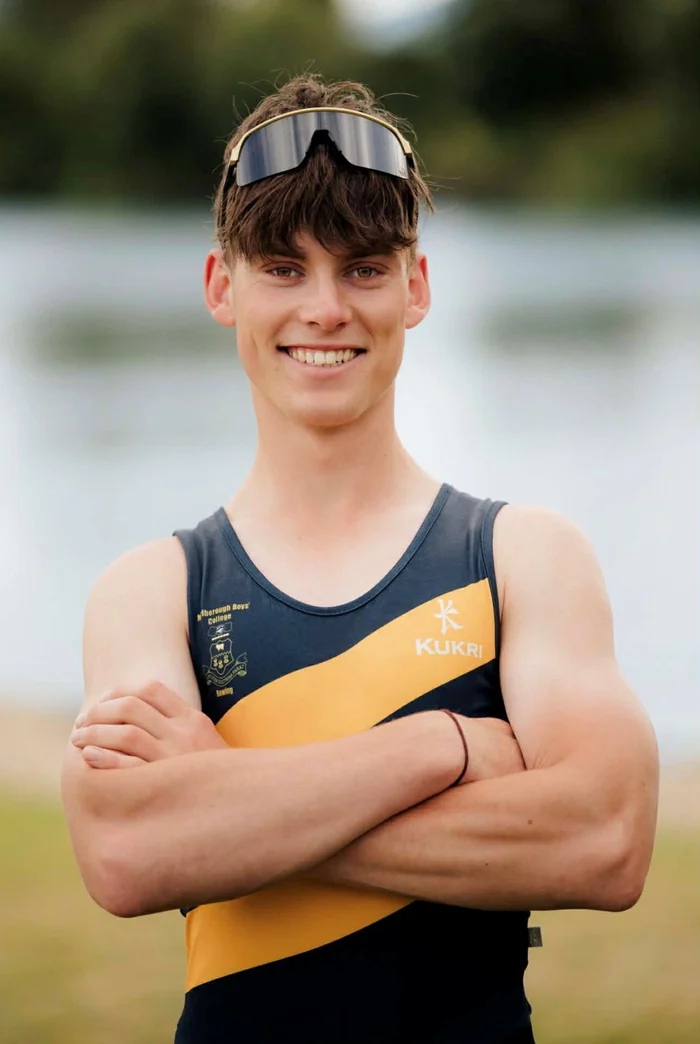
Despite his circumstances, Hunter remained calm.
“I didn’t cry once, I didn’t get scared once, because I knew I was in the best care I could get. I also knew I would be best off if I did exactly what they said and even go a bit beyond if I can.”
“My attitude from day one was ‘it is what it is, you can’t change It, so let’s do this’.”
An interesting feature of his recovery was weight loss.
“With a brain injury you need 25 percent more food,” explained Hunter. “So the plates of food were huge. In the coma, I was on 3500 calories a day and my weight went from 72kg to 52kg in four days, so I had to put it back on. I got back up to 64kg by the time I left ABI.”
A week after he returned to Marlborough, Hunter was cleared for limited gym work then stepped it up soon after, utterly determined to regain the life he had enjoyed before his accident.
“That was my main goal – to get back to rowing, to better myself despite the injury”, he said. “Rowing teaches you determination and life skills, and I didn’t want my injury to define what I could or couldn’t do.”
The health care providers were astonished by Hunter’s speedy recovery.
They had expected him to be in Christchurch Hospital for three months and ABI for at least four months but, due to his fitness levels and determination, he defied their predictions.
“I pushed as hard as I could just to get out of there as soon as possible.”
Then, in early 2025, it was back to rowing. Initially he spent time in the coach boat, having to watch his mates, a situation he described as demoralising “because you just want to get out there and do it”.
Another incentive was provided by his parents, who had promised the teen that if he was out of hospital and well enough before the Maadi Cup regatta they would take him to Lake Karapiro to watch his team mates in action.
“That was really cool … it kind of fuelled the fire in me a bit more.”
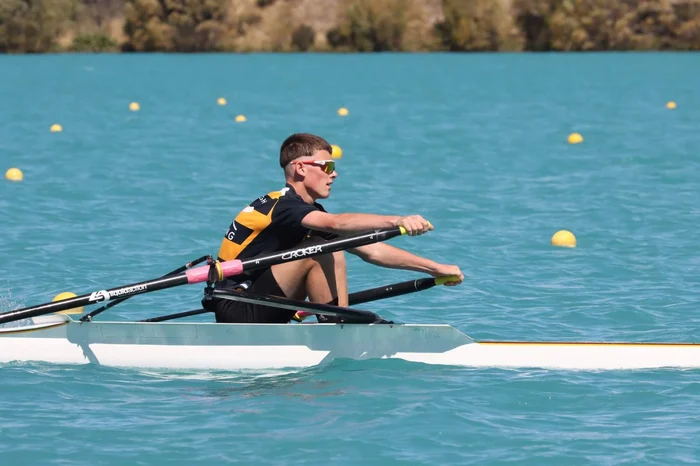
He finally hopped back in the boat at trials for the Interprovincial team in mid-September.
“It felt so good to be back in the boat … my form was terrible at first but things came back to me relatively quickly.”
Hunter has been fully involved in the MBC programme since the start of this season and has enjoyed early success. Apart from eagerly awaiting a return to Maadi competition, he is not looking too far ahead, absorbing the life lessons learned from such a traumatic time for both him, his family and friends.
“I remember Dad telling me from my teen years that ‘you are not invincible’ and I never truly knew what that meant until my accident … you are kind of going through life in your own little bubble, then something like that happens.
“I also realised that when you put 100 percent of your mind into something you can get it done.”
A recent bonus for the determined teen was his naming as MBC rowing’s club captain for the current season, an honour he never expected after sitting out the previous season.
But as, Hunter and his family are quick to point out, none of this would have been possible without “the incredible decision-making and care of the Nelson Marlborough Helicopter team” who made critical correct decisions under pressure.
“Their skill, calmness, and professionalism on that day made all the difference to my long-term recovery,” said Hunter.
“I am forever grateful to my heroes for being there when I needed them most.
“Because of the Nelson Marlborough Rescue Helicopter, I’ve been given the chance to heal, recover, and look forward again. If you ever have the opportunity to donate to the helicopter service, please do so — you never know when you or someone you love might need them.”
To support the NMRH go to https://www.helirescue.co.nz/fundthegap/