
Police add Jimmy Skipper to iwi liaison team
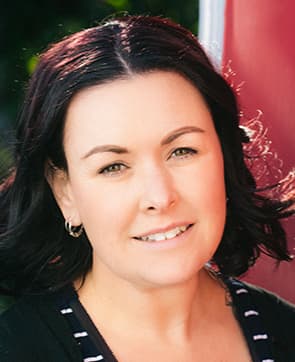
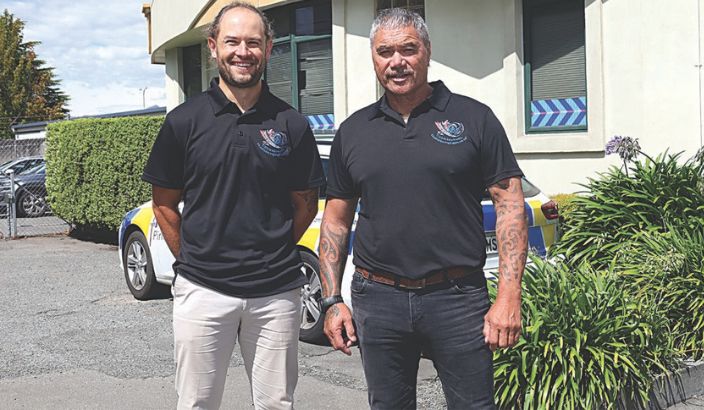
The new iwi liaison team for Marlborough Police comprises of Taia Goad, left, and Jimmy Skipper. Photo: Sara Hollyman.
A former builder has stepped into a police role that has been vacant for years, aiming to strengthen relationships between police and iwi across Te Tauihu.
Jimmy Skipper (Te Ātiawa) has taken on the role of kaitakawaenga – iwi liaison officer. The position is designed to help improve connections between police and iwi, a relationship that has at times been fractious.
Jimmy hopes the role will help police better connect with the community. “We want to create connections, build those relationships so that police meet the people, know the people, and so people will know them.”
After 18 years as a builder and carpenter at Port Marlborough, Jimmy grew up in Waikawa and sits on the marae committee. He jokes that the thing he enjoys most is not having to wear work boots and PPE.
He completed a carpentry apprenticeship through Māori Trade Training in Wellington, spending a decade there before returning to Waikawa in 1990 with his wife to raise their children.
His new role as iwi liaison officer is wide and varied – one of few roles in the organisation to be able to cross over into many different areas, whether it be youth work, prevention, training, or support.
Four weeks into the job, Jimmy says it has been a steep learning curve as it is “totally new”.
The role sits within a small group across Te Tauihu, with Nelsonian Taia Goad (Ngāti Porou, Ngāti Kahungunu) also becoming a familiar face around Blenheim after filling the role of Pouwhakataki - district iwi liaison coordinator, Māori responsiveness, six months ago.
“This role gets you out and about engaging with whānau and the community,” Taia said.
“From my experiences so far, iwi right across Te Tauihu are just stoked that we finally have someone in this position. For my position - it’s been a couple of years. For Jimmy’s position, it’s been longer, much longer.”
Working with eight iwi brings added complexity, Jimmy said. “There’s also the challenge of normally it’s one iwi but here we’ve got eight, so there’s navigating that, but I think it’s just making those connections. I’m lucky as I already know a lot of people in the iwi space. But there’s a lot of people I don’t know.”
The team will work alongside services like Te Piki Oranga, Maataa Waka and Ara Poutama – Corrections, among others.
Taia hopes that they can be part of the healing process between police and Māori.
“There are those who have had firsthand experiences with police in a negative sense, but also those intergenerationally as well, who have looked at the way police have dealt with things with their pāpā, their māmā, their kaumātua.
“We sit well outside the box, but that’s cool, we’re mandated by police to identify what the needs of our community are, what the needs of police are, and whatever we develop is a design that helps support better outcomes for our community. We’ve got the backing of police right from our district commander, and that’s a blessing.”
“I’ve been told that ‘you’ll make the job, as you see it needs to be done’,” Jimmy added.
That job could easily become all-consuming with no set hours and calls coming at any time of the day. “You have to realise you can’t do everything,” Jimmy said, but he’s looking forward to doing as much as he can.