Learning wild
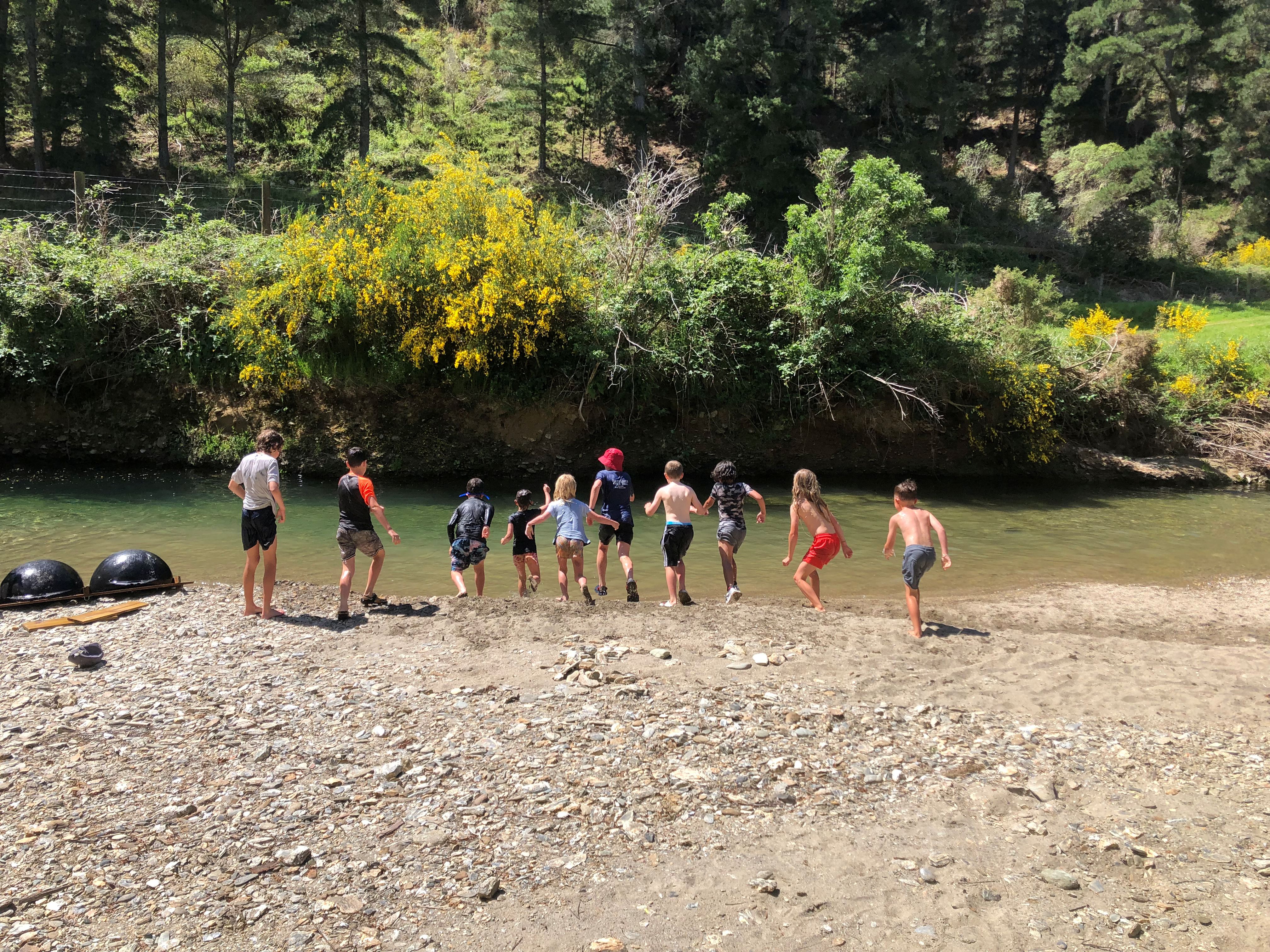
River jumps are all part of the school day at Ōhinemahuta Nature School, where learning happens outdoors – and often barefoot. Photo: Supplied
Tucked away in the Marlborough countryside, a small nature school is reimagining education, taking learning out of the classroom and into the landscape.
Words: Rachel Enright
Thirty minutes out of Blenheim, the road narrows, the paddocks widen, and cellphone reception begins to flicker. I wind along country back roads until I reach a farm near Onamalutu Reserve, where a barefoot welcome committee is already waiting.
A friendly farm dog trots up first, tail wagging, followed by Emily Lemmens and her children, also barefoot, of course. They lead me past canvas tents, a well-used fire pit, climbing ropes strung between trees and a river that curves along the edge of the property. In the distance, willows sway and birds chatter. Downstream, Emily tells me, a neighbour has a hazelnut farm where children sometimes forage with their teachers.
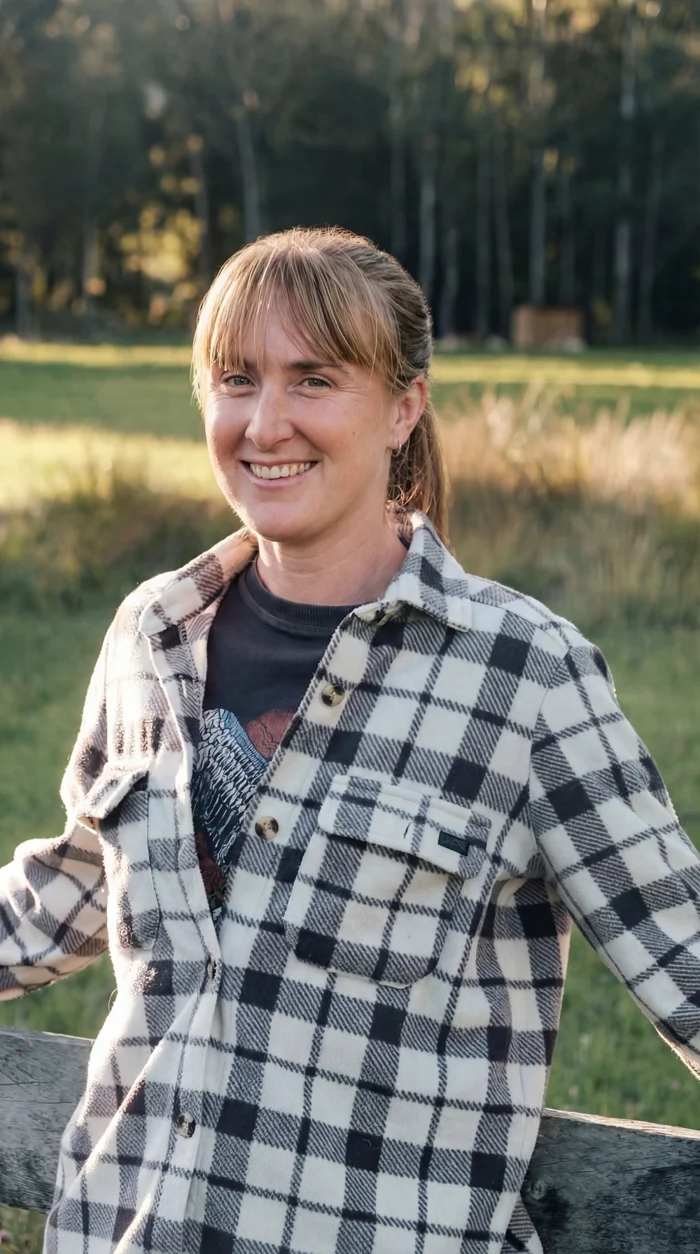
This is Ōhinemahuta Nature School, one of more than 80 nature or forest schools now operating around New Zealand, and part of a global movement that takes learning beyond four walls.
As kids head back to school for the year, many families are thinking about uniforms, stationery lists and classroom routines. But here, learning looks a little different.
Growing up in Christchurch, Emily couldn’t have imagined she would one day run a school in a paddock.
After high school, she spent a year in Canada working as a nanny, then moved to Auckland with her partner, where she studied psychology. She had originally planned to become a child psychologist, but the thought of many more years at university didn’t feel right.
“I wanted to work with kids, but I didn’t want to commit to years more study.”
She later moved to Europe with her partner, where a stint in Munich turned into a job at an international preschool teaching children aged three to seven. While the school itself was fairly traditional, she began hearing other parents and educators talk about forest schools.
“At first, I couldn’t get my head around it. I thought, ‘You mean they’re outside all day? How can they learn like that?’”
The couple later moved to Portugal, where they began living fully off-grid on a piece of land that, at first, had no house at all. Over time, they rebuilt an old stone ruin (once a small chapel) into a home. It was there that their first two children were born, and where Emily poured her energy into off-grid living and began her Untaming podcast.
“We were living a really natural, earth-based lifestyle and it started to remind me of forest schools,” she says. Over time, that way of living began to reshape how she thought about childhood, education and what really mattered.
Eventually, they moved back to New Zealand to be closer to family, returning with a growing dream of creating their own nature-based learning space. They began searching for a rural property where that vision could take shape. Fond memories of holidays in Marlborough drew them north, and they eventually found the right piece of land in Onamalutu.
Ōhinemahuta Nature School has now completed four terms as a private “one-day school” for children aged 6 to 16, which runs twice a week on the farm, with around 18 to 20 children attending each day and four teachers on site.
“We keep our ratios much lower than a typical school, especially because we’re near the river,” Emily says.
The school draws an even mix of homeschooled children and students who attend mainstream schools the rest of the week. A community van, booked through local trusts, helps transport children so distance doesn’t become a barrier.
Mornings begin with a hui, followed by what the teachers call “Discovery Basics.” Children split into small, mixed-age groups and explore a theme that weaves together literacy, numeracy and science.
One recent theme was peitatanga, Māori painting. Children learned about traditional red and black patterns, the history behind them, and how natural pigments can be made from charcoal and plants. They then foraged for materials and created their own paints.
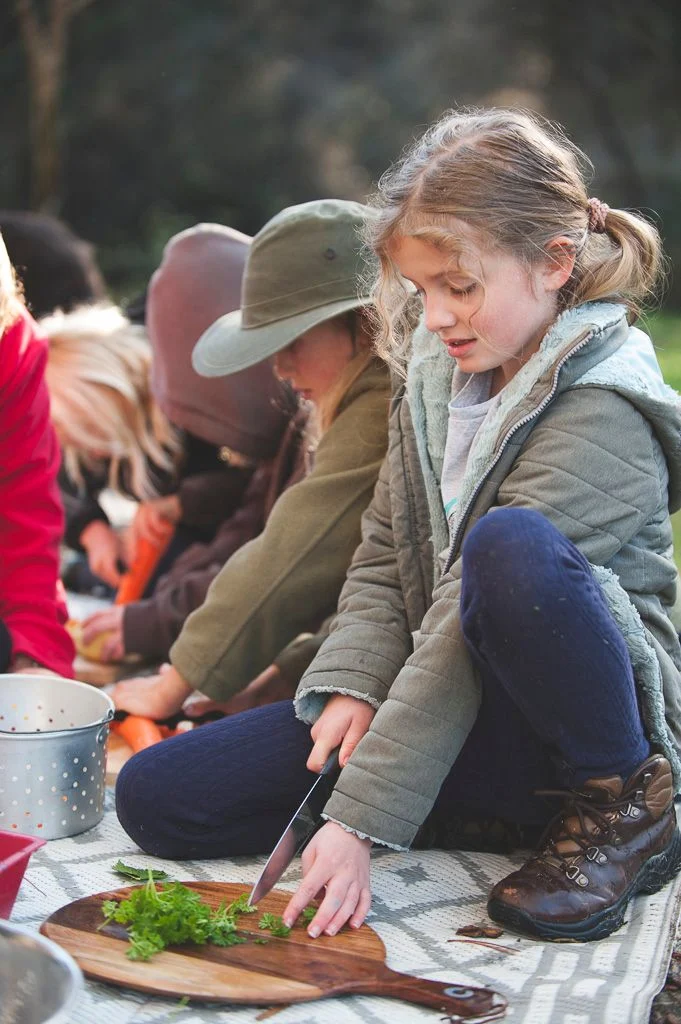
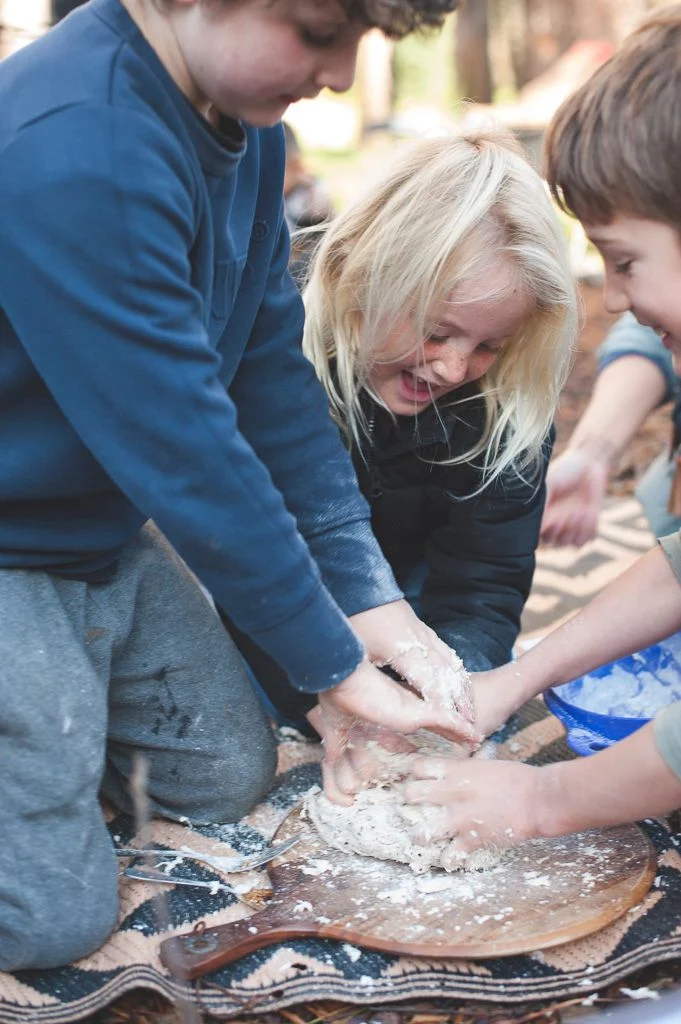
Afternoons are largely child-led: building huts, whittling, exploring the river, climbing trees, or simply lying in the grass watching clouds drift by and imagining what shapes they can see.
Each week centres around a different theme, giving the term a gentle rhythm. “We might do things like raft building, gardening or weaving,” Emily says. “There are eight weeks in the term, so we plan eight different topics.”
In the future, she hopes to bring in more guest educators to share specialist skills. One relief teacher has already introduced children to spinning wool from raw fleece using a spinning wheel. “They absolutely loved it,” she says. She’s also keen to invite members of the local Rock and Mineral Club, as the children are constantly collecting stones and asking questions about what they’ve found.
This kind of setting can be a better fit for children who find traditional classrooms challenging.
“A lot of our kids from mainstream schools are neurodivergent and just need to move,” Emily says. “Here, you often wouldn’t know they’re neurodivergent. They might be fiddling with a stick while listening, but that’s what helps them focus.”
Other children come because they’re thriving academically and are curious for more. “For some, this is an extra outlet, a chance to explore practical, hands-on learning alongside their classroom work,” Emily says.
So how do you measure success in a setting without tests, desks or worksheets? For Emily, the answer shows up in the children themselves, in their confidence, their relationships, and the way they engage with the world around them.
“We had a boy who didn’t have friends at school. Here, in a mixed-age group, he suddenly had a whole community. Another teenage girl arrived saying she didn’t like people and didn’t want to talk. By the end of the term, she was in the river laughing with other kids.”
Running a small private school hasn’t been easy. Funding comes mostly from fees, with a few grants helping pay for equipment. Emily is working towards charitable status to secure sponsorships so more children can attend.
“There are kids who thrived here but whose families couldn’t afford to keep sending them. I’d love to bring them back.”
She also hopes to improve infrastructure, with a more permanent shelter for wet days, and to one day run school holiday camps where children cook over fires and sleep in big communal tents.
For families wondering how a day in the bush compares to a day at a desk, Emily offers a simple explanation.
“When children learn through play and real experiences, their brains make connections much faster. Even if their goal is traditional academics, having one day like this gives their brain a break. They often return to class more focused and ready to learn.”
While nature schools are still a relatively new concept in New Zealand, it’s easy to see why they’re growing in popularity, even if some of the benefits are hard to measure.
Muddy knees from adventure, growing confidence, the quiet pride of making a friend for the first time, or the patience it takes to build a shelter together. These are the kinds of outcomes that feel just as important as academic success.