
How low can the Wairau go?

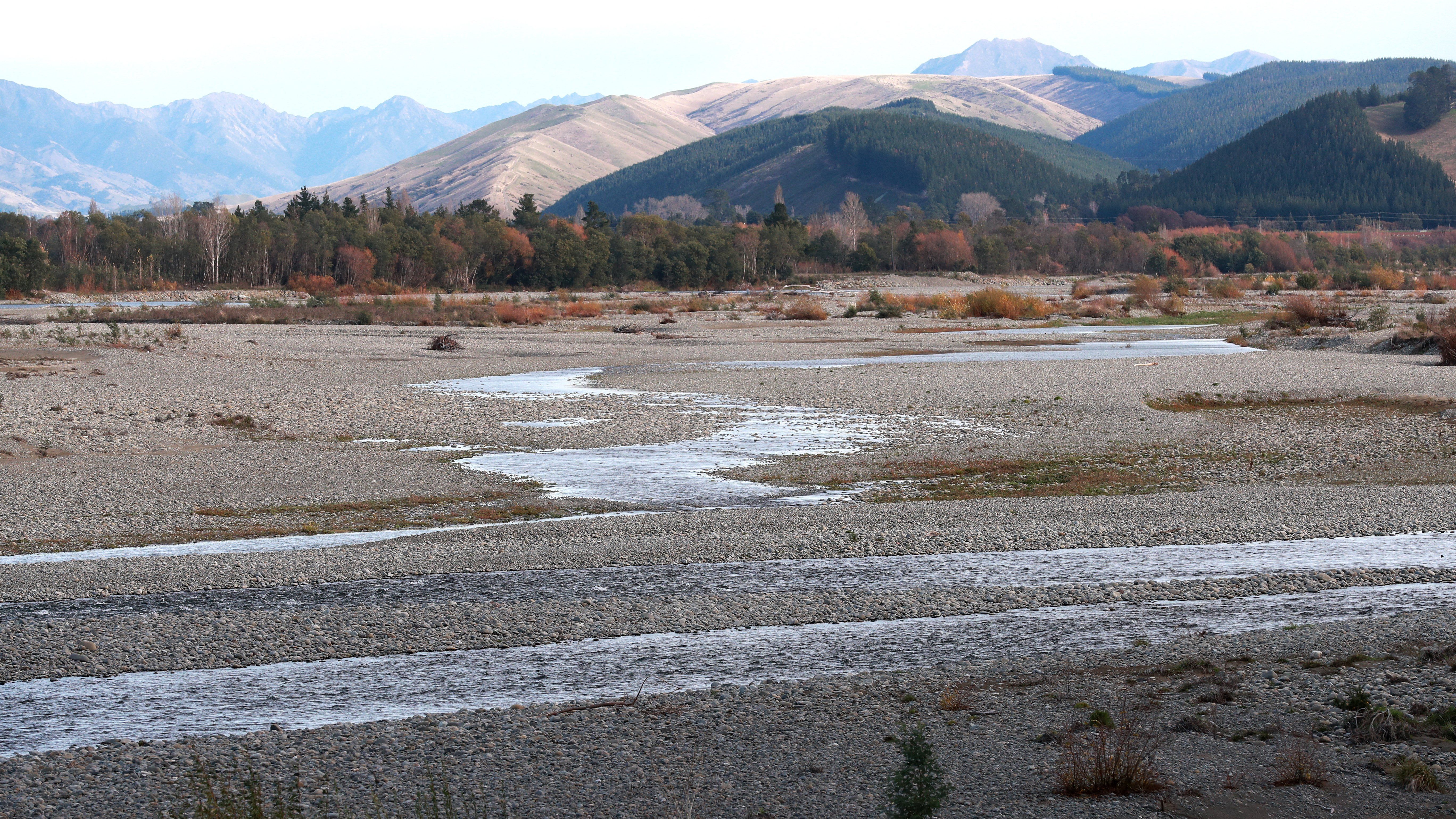
Marlborough District Council says low flows in the Wairau River are not a threat to fish populations, but Fish and Game says a lack of dead fish doesn’t mean they’re not being harmed. Photo: Marlborough Express
By Kira Carrington, Local Democracy Reporter
A dispute about how shallow Marlborough’s Wairau River should be allowed to get has the regional Fish and Game branch issuing the council with a challenge.
Nelson-Marlborough Fish and Game claimed the council was prioritising economic interests over environmental protection.
The Wairau River is a major source of water for irrigation on the Wairau Plain particularly for vineyards.
Water take got cut off if river flows dropped under 8 cumecs, cubic metres per second, over a 24-hour period. This has happened 13 times since the standard was adopted in 1997, the report said.
Council land and water team leader Peter Hamill told councillors on March 5 the 8 cumecs cut off was there “to protect the in-stream fauna habitat so there is still opportunity for the in-stream life to thrive”.
But Nelson Marlborough Fish and Game claimed 8 cumecs was not enough to protect the river’s wildlife.
The organisation had launched an appeal to the Environment Court as part of the Marlborough Environment Plan process, but later dropped it in anticipation of freshwater policy changes.
In 2024, Fish and Game commissioned Dr John Hayes, a leading freshwater scientist, to evaluate the council’s 8-cumec standard.
Hayes’ report, which was peer-reviewed by NZ Freshwater Sciences Society president Dr Kate McArthur, said an 8 cumecs minimum presented a “high risk” to wildlife, and was based on “opinion without backing by environmental flows science”.
Hayes said what mattered was the amount of aquatic habitat being lost, not whether the fish were able to survive the loss of their habitat.
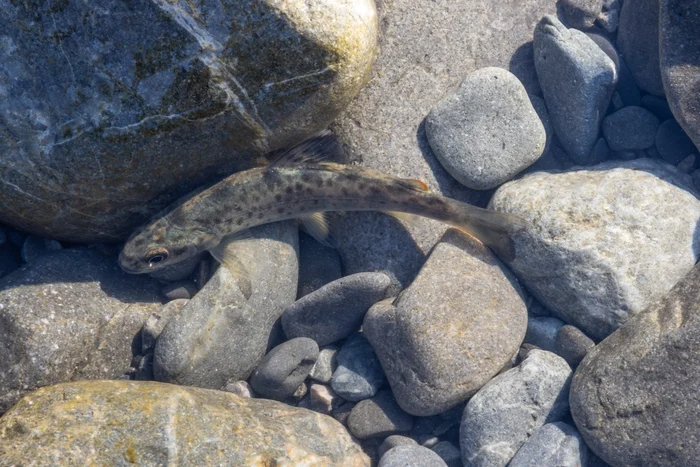
Hayes said raising the cut-off standard to 12.4 cumecs over a 24-hour period would preserve 90% of aquatic habitat, as opposed to only 78% preserved at 8 cumecs.
However, the council carried out its own investigation, which they said was conducted with Fish and Game's agreement following the appeals process, judging 8 cumecs against 12.4 cumecs, using drone imagery, benthic LiDAR mapping, and diving, focused on trout as an indicator species.
Council officers spent hours in the water counting more than 1500 trout, Hamill said.
“The drift dive involves a team of six of us getting in the water, we space ourselves across a cross-section [of] the river and we float down [in a] line and we're counting the fish.”
They found that most habitat lost was in shallow water less than 60cm deep - areas large trout avoided anyway, Hamill said.
The trout proved resilient to habitat loss, moving to deeper, cooler areas and changing their feeding strategies, he said. They had the option of travelling both upstream and downstream to find deeper water.
There was little sign the low flows were killing any trout, Hamill said.
“We only saw three dead fish in all of [the] drift dives.
“If we were getting mortality events through low flows and [higher] temperatures, we would be expecting to see a lot more dead fish,” Hamill said.
Nelson-Marlborough Fish and Game manager Rhys Barrier told Local Democracy Reporting that counting fish then jumping to “unsubstantiated and incorrect final conclusions” showed the council was prioritising the wine industry over the river’s health.
“Councils, particularly unitary authorities, are stuck between a rock and a hard place,” Barrier said.
“One of their jobs is to protect the local economy, which is the wine industry and the irrigation security supply, and then on the other hand they have to protect the river.
“Unfortunately, the economic interest voice is usually much louder than the river’s.”
The council report’s conclusions about habitat loss in shallow water and fish relocating to deeper water were simply “stating the obvious”, Barrier said.
Saying 8 cumecs was safe for fish because they didn’t see many dead fish was “similar to a doctor telling a chronically ill patient that because they are not in danger of immediate death, they are therefore in good health, and then discharging them without any treatment for their chronic illnesses”, Barrier said.
Barrier challenged the council to have their study peer-reviewed by an independent body such as Niwa or the Cawthron Institute.
“Fish and Game would consider co-funding any such peer-review,” Barrier said.
But Barrier said he doubted anything will be done about it any time soon, with government planning changes on the horizon.
"The community's stuck with it until there's a new [freshwater] plan change.”
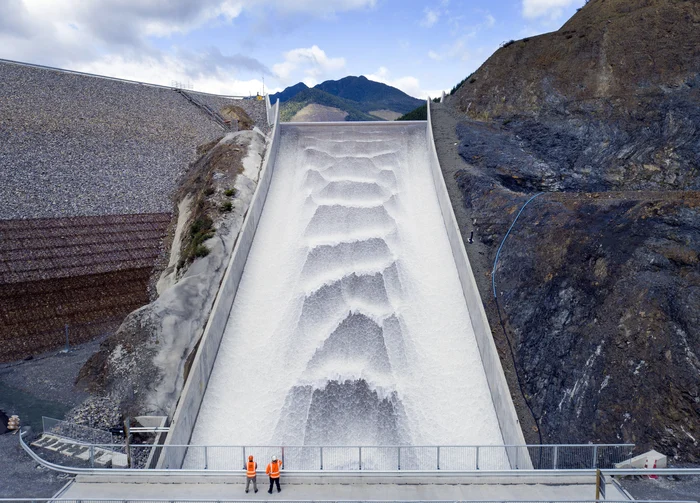
Fish and Game’s main concern was that accepting on a low minimum flow threshold opened the door to the council over-allocating water from the Wairau, which could result in a “Waimea River Basin situation”.
Tasman’s Waimea River was over-allocated by up to 70%, leading to the river drying up in 2001, and the need for the $211m Waimea Dam to secure water for the region.
Marlborough was at risk of a repeat performance with the Wairau, if the council continued to issue new water consents, Barrier said.
“Once water is given away, you never get it back ... and you end up doing what Tasman did,” he said.
In response to Fish and Game's claims, council environmental policy manager Pere Hawes reiterated the findings of the council's study, and said it was available on the council's website.
LDR is local body journalism co-funded by RNZ and NZ On Air.