
Kapa haka takes centre stage
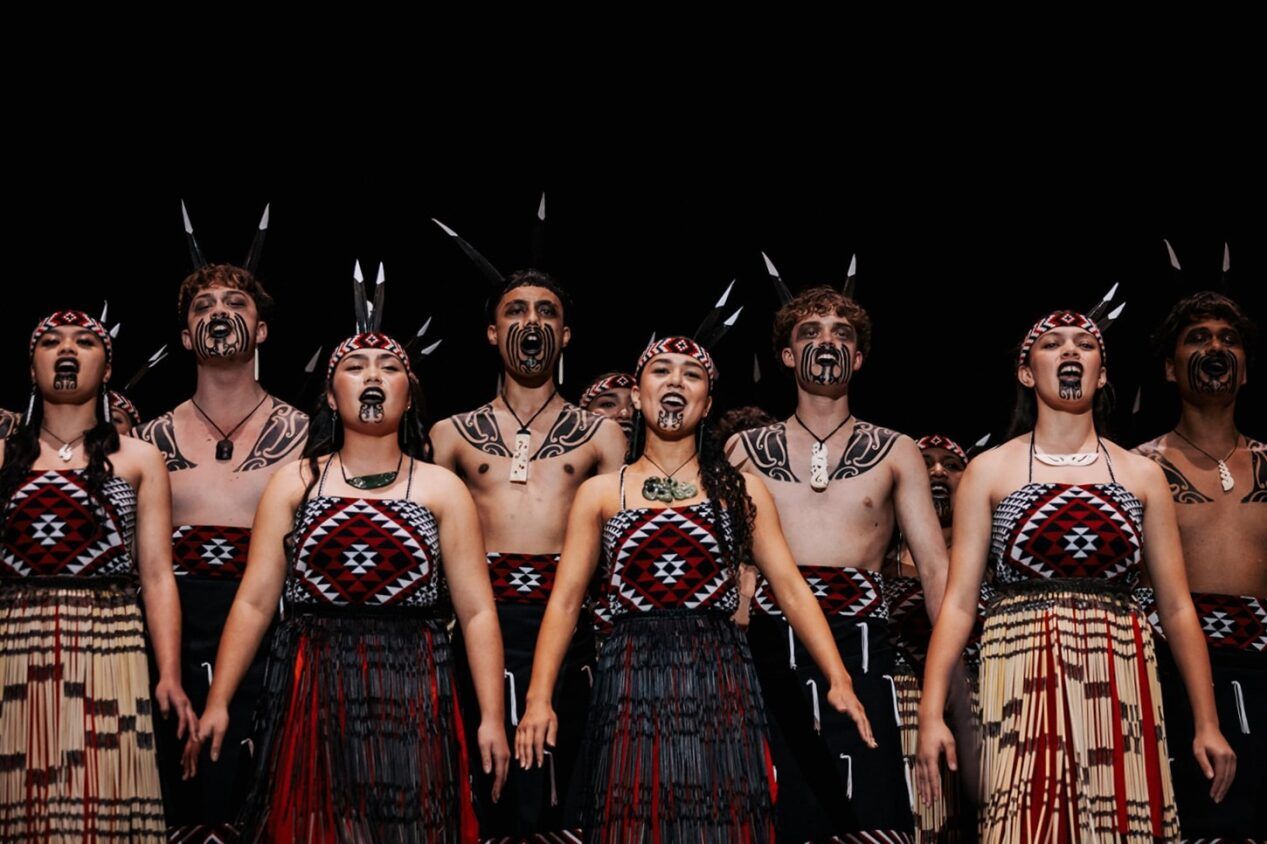
Nga Taiohi o Wairau, shown performing in Nelson last year, returns for the regional kapa haka in Blenheim on 23-24 April. Photo: Shernade Photography.
Over the past 13 years, kapa haka of the highest calibre involved journeys of distance as well as perseverance for performers and audiences from Wairau.
The regional festival for Te Tauihu (the top of the South Island) – which also serves as a qualifier for national kapa haka events – last took place here in 2013. Since then, as the festival’s growth and popularity outpaced local venues’ capacity, hosting honours remained in the Nelson-Tasman area.
For 2026, Marlburians have less travel but more responsibility as hosts. The kapa haka returns as a two-day gathering, on 23-24 April, and should fill not only Marlborough Lines Stadium 2000 but also marae and hotel rooms around the district.
Twenty-two kapa (groups) will compete, with 50 volunteers supporting and hundreds more attending.
“We’ve always looked at coming back to Blenheim,” said Sonny Alesana, Chairperson for Te Tauihu Kapa Haka (formerly known as the Te Tauihu o te Waka-a-Māui Cultural Council). “The last time we were in Blenheim, that’s when the Seddon earthquake happened and we had to cut short that competition.
“The Te Tauihu cultural council covers all of the top of the South – that’s from Golden Bay across to Murchison, and Nelson to Blenheim to Ward – so as part of our commitment to revitalizing and ensuring kapa growth in the region, our commitment is to ensuring each district gets to host an event.”
That message meshes with the name for this year’s kapa haka: Kia Hūkere te Hoe. Literally translated as “let the paddle move,” Sonny explained the broader meaning as “rowing together to move the waka forward”.
“It takes a whole lot of people to ensure that the kapa haka moves forward,” he continued. “Kia Hūkere te Hoe is about all of us in the waka, in the canoe, moving forward together to ensure the kapa haka is successful.”
Growth
The upcoming event features three divisions: primary schools (Te Mana Kuratahi), secondary schools (Kura Tuarua) and an adults’ section (which is the qualifier for national festival Te Matatini).
When Blenheim last hosted, the regional festival went one day. The current two-day format well could become three or four days, Sonny said, as organisers develop their strategic plan.
“Fortunately, and unfortunately, the growth of kapa haka is exponential,” he observed. “We have a mindset of accepting all who want to come, all who want to perform. That’s part of the success for us.”
The hope for the organising committee, Sonny said, is “we just want people to come and have a look and enjoy the day. There will be food stalls; there will be all sorts of things happening as well.
“It’s about sharing the culture, but it’s also about coming together to share each other and living in the Top of the South.”