
Carnatic descendants celebrate their milestone

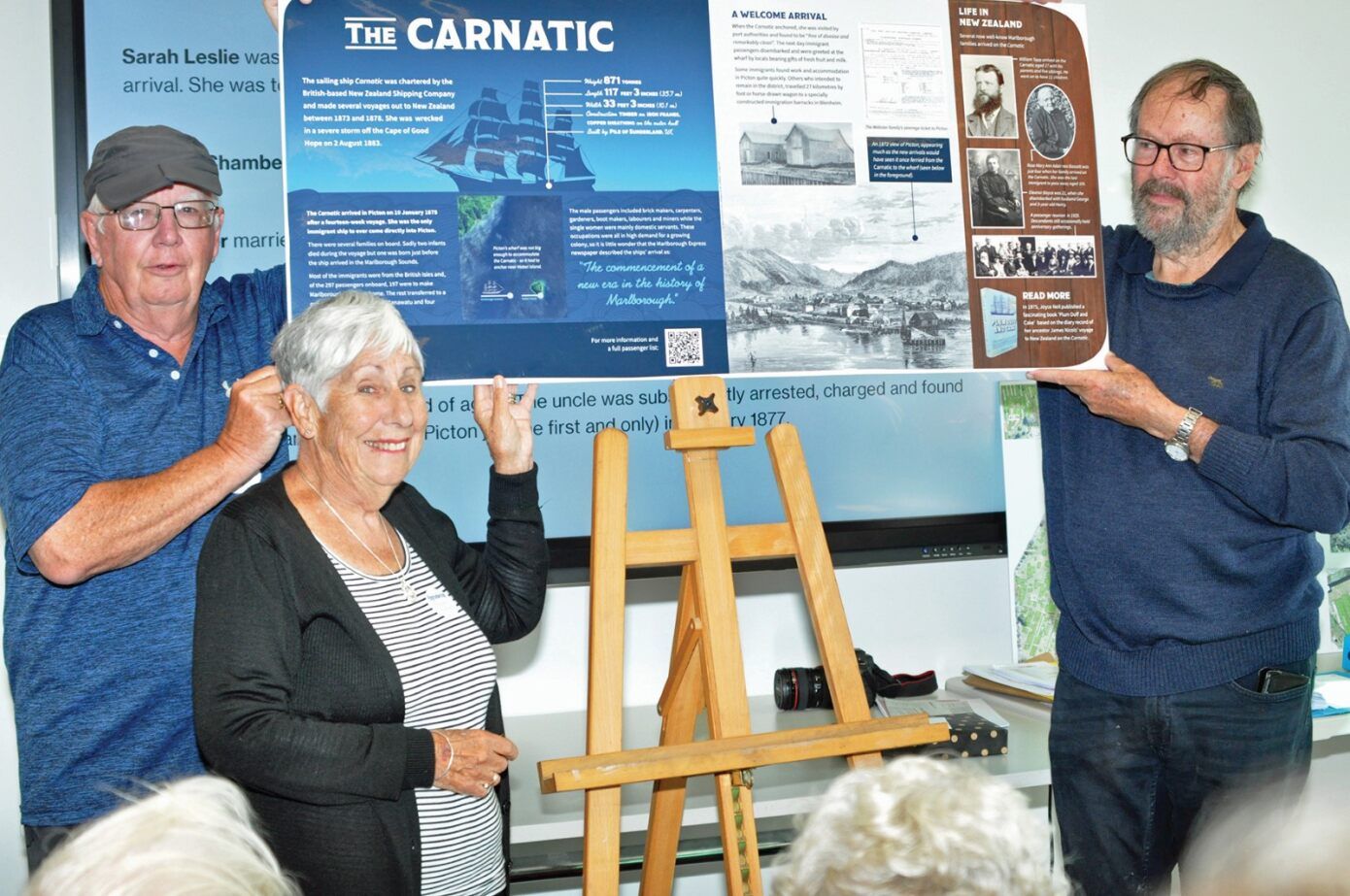
Mark and Meagan Holland, left, and Brian Tapp unveil a replica of the recognition information panel for the Carnatic’s immigrant voyage on 28 March in Picton. Photo: Graham Brooks.
BRIAN TAPP
The author, a Tapp family descendant, has researched the impact of the Carnatic’s arrival for the past 11 years.
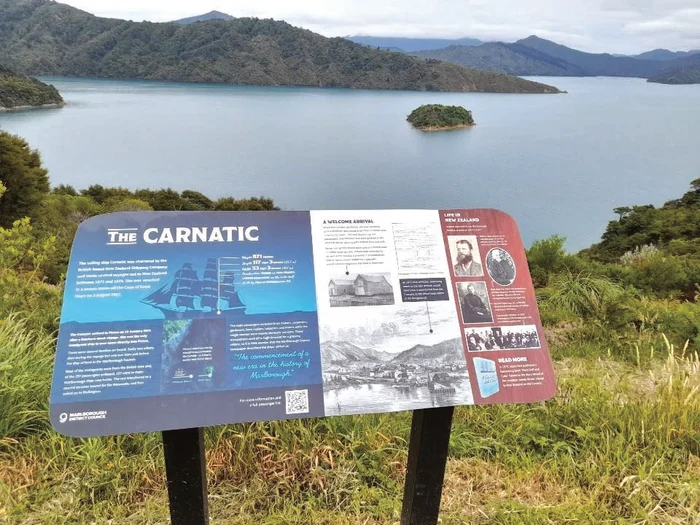
Celebrating the historic voyage that brought their ancestors to New Zealand, descendants got together in the Picton Library on 28 March to celebrate the Carnatic and to unveil the recognition information panel constructed to recognise the arrival 150 years ago.
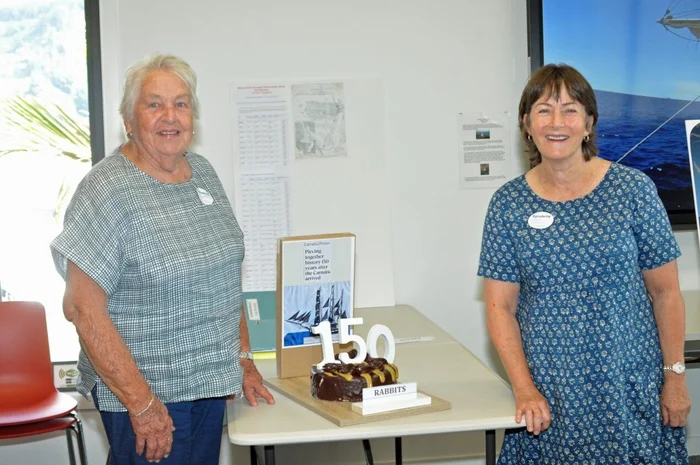
Sixty descendants and partners, representing 18 of the original 121 families or individuals on the voyage, enjoyed the catch-up to view the extensive research on display.
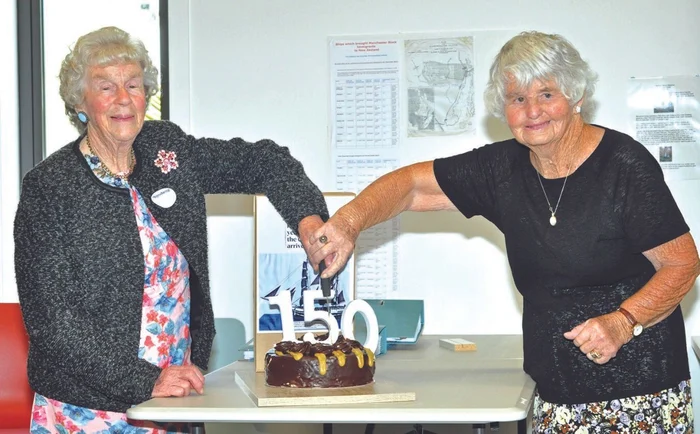
Two of the oldest descendants, Zella Vile (from the Webster family) and Florrie Donnelly (Bassett), cut the 150th anniversary cake. Mark and Meagan Holland (Potter) helped unveil a replica of the recognition information panel Marlborough District Council installed on a spot overlooking the ship’s anchorage in 1875.
More than 15,000 names have been compiled into family trees from the 300 original immigrants. Over 100 photos of immigrant faces and about 82 percent of their graves have been found, recorded and photographed. No plans or photos of the Carnatic have been found, but it is similar in size to the Edwin Fox located on the foreshore in Picton.
The Recognition Information Panel is installed at the end of the road on Victoria Domain overlooking Mabel Island and the area where the Carnatic anchored to offload its immigrants who had to row ashore.
Journey’s history
The Carnatic was a 35-metre wooden clipper ship which left England on 20 September 1874 and arrived in Picton on 10 January 1875. It anchored near Mabel Island to offload its immigrants, who had to row ashore.
Of the 300 immigrants, 100 soon left Picton to travel on to Fielding, where they were contracted by the Colonists Aid Corporation to assist with the development there. Local immigrants were accommodated in special barracks in either Picton or Blenheim until employment or other housing was found.
The Picton barracks were on Kent Street where the present bowling club is located, while the Blenheim site was where the old gas works were on Park Terrace.
The 28 March unveiling bought together various family members, some who knew a lot about their history while others were just starting to learn. A record of photos from the day will be available to the attendees and put on the Facebook page “Old Marlborough, the way we were” when they are available.