
Commentary: Local harvest needs global hands

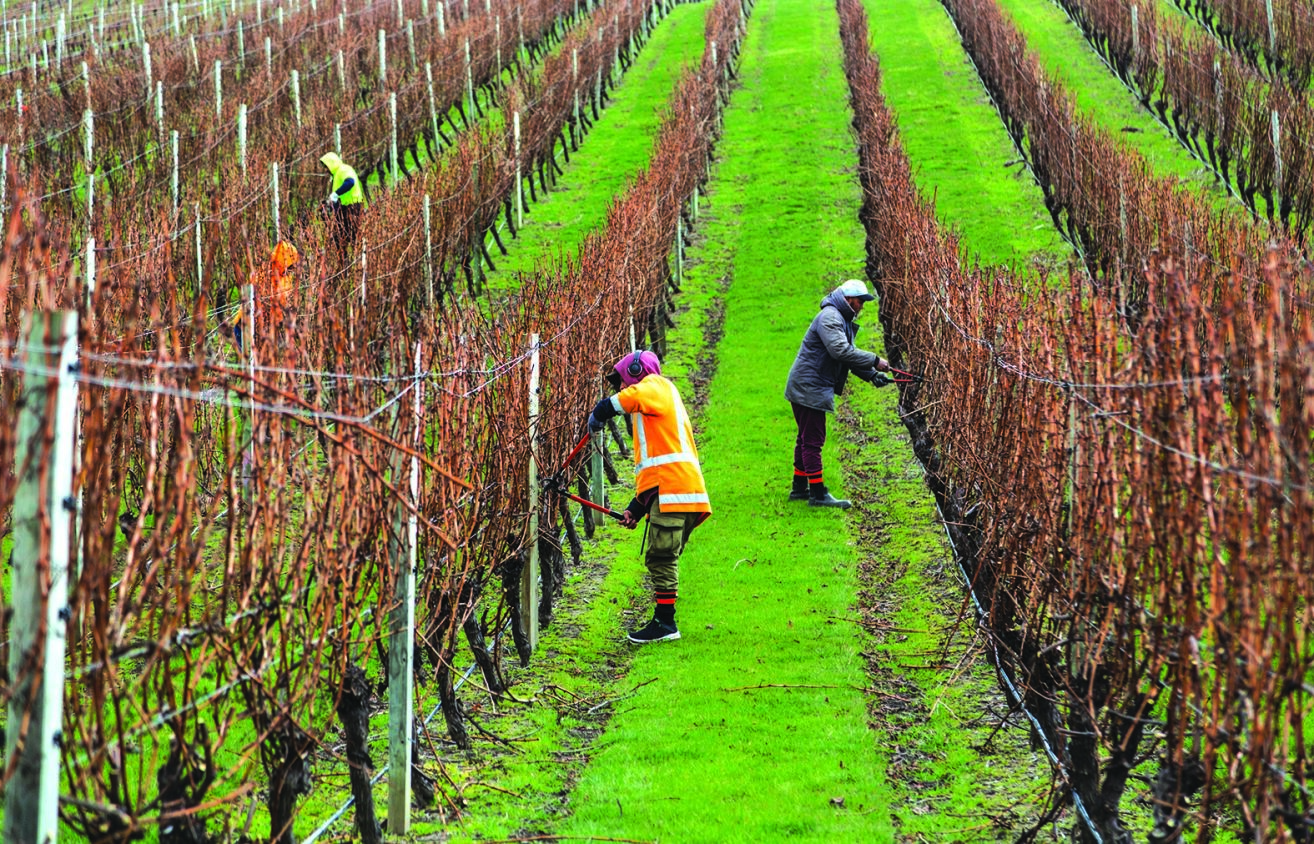
Pruning, stripping and tying down vines takes experience to do well. Photo: Hortus.
KAT PICKFORD - WINE MARLBOROUGH
As the last of the region’s grapes are harvested and the vines turn gold before winter, teams of workers are preparing for one of the most important jobs of the year: pruning.
Pruning, stripping and tying down vines is physically demanding, repetitive work. Through frosty mornings and bitter winds, vineyard crews carefully select and tie down canes, setting the vines up for quality and yield in the coming vintage. It’s work that takes experience to do well.
Hortus government and industry affairs manager Tahu Huntley says much of this crucial work is carried out by people who return to New Zealand each year through the Recognised Seasonal Employer (RSE) scheme.
As the wine industry has grown, so too has the need for a reliable workforce. While growers once relied on backpackers and seasonal Kiwi labour, Tahu says the RSE scheme has helped the industry grow into the $2 billion export earner it is today.
“With 30,000 hectares of vineyard in Marlborough, and 30,000 people in Blenheim, we’ve got a hectare each to prune – that’s just never going to happen,” he says with a laugh.
With 80 percent of RSE workers returning each year, the scheme provides a proven and efficient workforce prepared to do the hard yards, Tahu says.
“Vineyard work might be labelled as unskilled labour, but 100 percent it’s a skilled job. Our most experienced team members are often three or four times as productive as those just starting out. And quality is just as important as speed, because good pruning sets the vine up for the whole season.”
RSE evolves
As well as benefiting seasonal workers and growers, the scheme supports hundreds of local jobs, from supervisors and trainers to transport, accommodation and administrative roles, he says.
The stability of the RSE workforce also gives employers confidence to take on and train Kiwis who might otherwise struggle to enter the industry. Partnerships with the Ministry of Social Development, along with youth groups and training providers, are helping build a more sustainable local workforce.
The RSE scheme has evolved since its inception in 2007, with regular Government auditing and an expectation employers provide a high standard of accommodation and pastoral care, including safe housing, transport, workplace support, and help adjusting to life in New Zealand. “Marlborough leads the way with this, and it’s something all employers can be proud of,” Tahu says.
Caring for people’s wellbeing is a key aspect of the programme. Seasonal Solutions Cooperative pastoral care coordinator Sophie Palmer says helping people settle in and feel comfortable is a central focus.
“We’re there for them from the moment they arrive – helping with accommodation, banking, healthcare, and connecting with family back home,” she says. “There’s a lot to adjust to, and it’s about making that transition as smooth as possible.”
Being away from loved ones isn’t easy, she says, but most workers say the long-term benefits outweigh the sacrifice.
“Most people come with a goal – putting children through school, starting a business, improving their home or helping extended family. It’s hard work and they miss home, but they know the opportunity can make a real difference.”