
Rānui Solar Farm harnesses acclaimed Marlborough asset
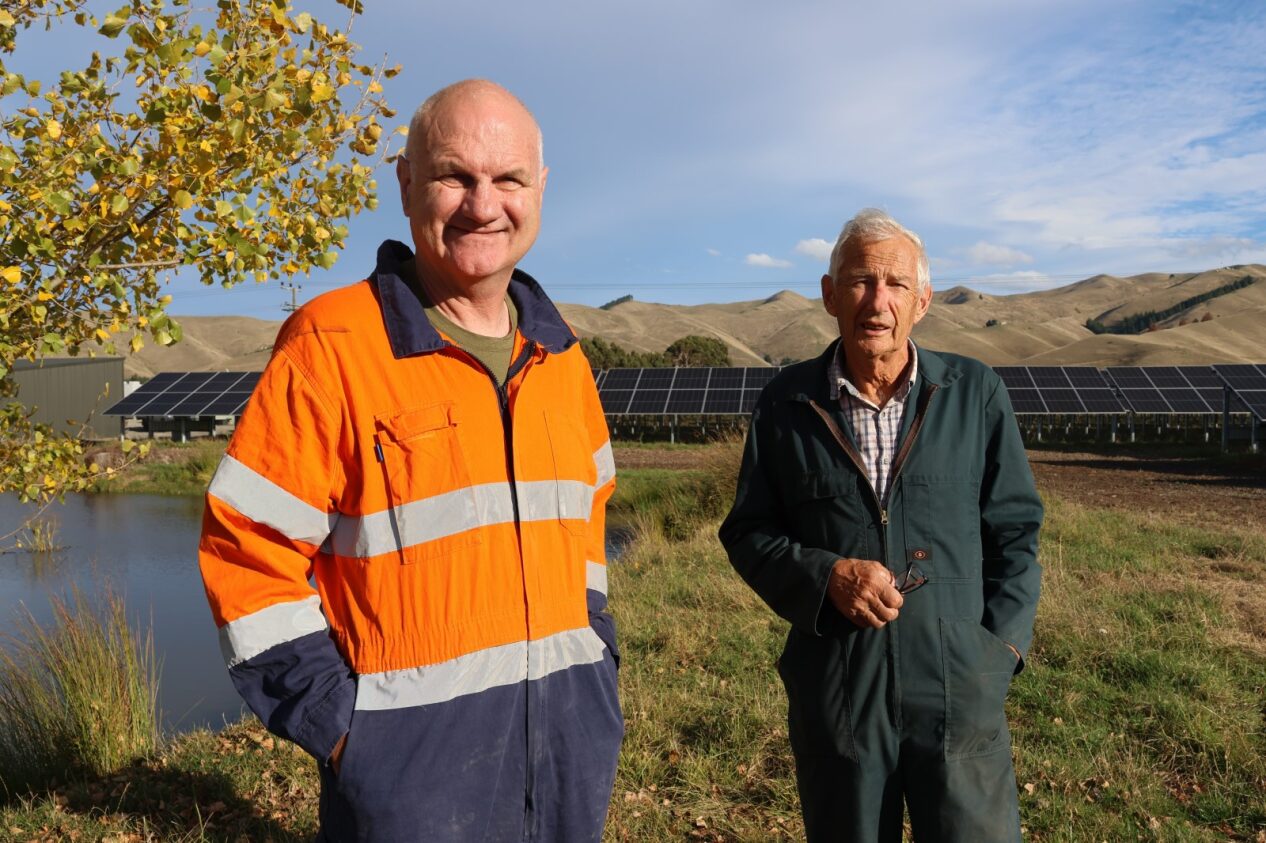
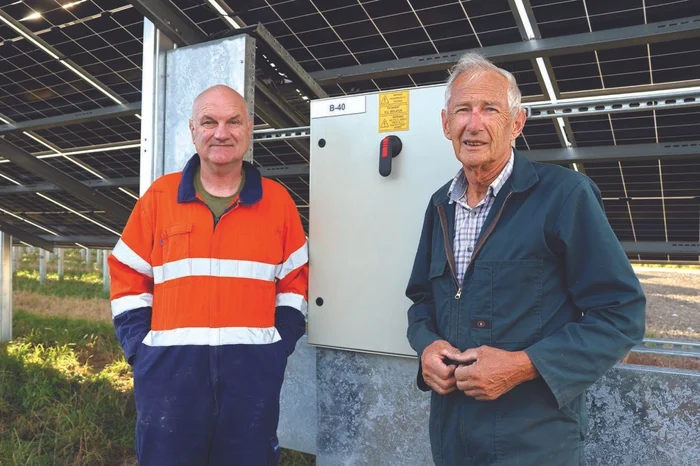
Project Manager Wayne Stronach, left, and owner Rick Osborne pause by the pond at Rānui Solar Farm in Riverlands on 14 April. Photo: Evan Tuchinsky.
As many Marlburians do, Rick Osborne looked skyward and saw the light. That inspiration sparked a bright horizon for local consumers of electricity.
“Through the clouds came what was a pretty obvious realisation,” he recalled. “We’ve got all the sun coming into Marlborough, and very little solar generation.”
That was five years ago. Now, someone is. On 9 March, Rānui Solar Farm flipped the switch to send power through the Marlborough Lines network. The facility in Riverlands alongside SH1 is technically in the final phase of testing, but it is fully operational.
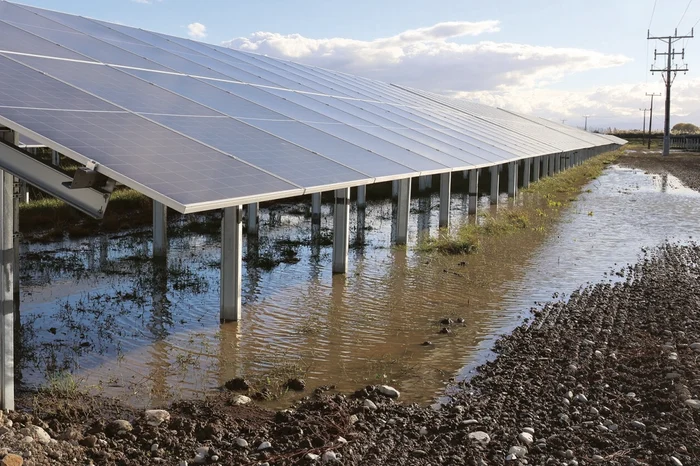
A month after going live, Rick and project manager Wayne Stronach toured the heart of the 11-hectare complex nestled into a 16-hectare property. Rainwater from the weekend’s tropical cyclone pooled in lower points of grading. Green shoots – future food for sheep on site – popped up through drying soils.
Fanning out as far as the eye could see, rows of imposing panels angled toward the afternoon sun turned rays into a form of clean, renewable energy. Peak production, 9.9 megawatts, could power 5,000 homes. Over the course of a year, accounting for variances, their estimate is 3,000 homes.
“We’re all just using power more everywhere,” Rick observed. “At this stage, this is our contribution to the grid.”
Up and running
As if predestined, the location for Rānui Solar Farm came ready-made with the perfect name. “Rā nui” in te reo Māori refers to “big sun” – and Rā Nui Wines’ vineyard there came up for sale a year into Rick’s property search. So, in naming the venture, “we didn’t have to make any decisions.”
That was a rare luxury. Rick brought experience in timber and manufacturing businesses; Wayne, whose engineering work includes “30 years keeping the power on around the place” with Marlborough Lines, advises energy producers through Stronach Power Consulting. Neither had developed a first solar farm from start to finish.
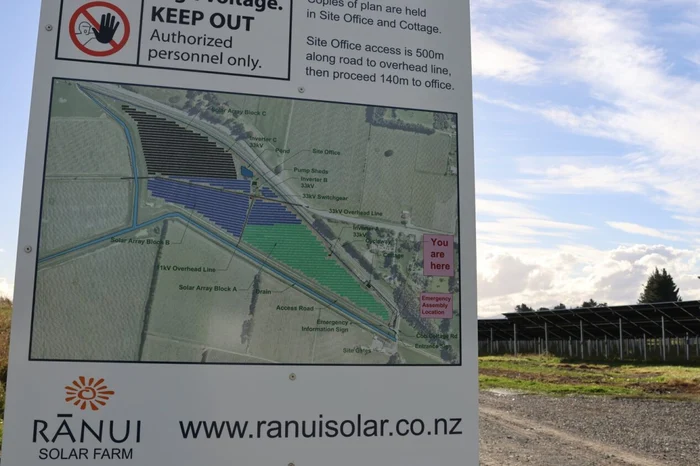
Building Rānui entailed three years of seeking consents, planning the project and bringing in contractors to perform six months of installations. The solar farm delivers electricity via Marlborough Lines to the grid, where providers such as Meridian procure it for distribution.
How much, if any, of the kilowattage remains local is out of local hands. What Rick and Wayne know for certain is how Rānui fits within New Zealand’s power portfolio.
“Most of my working life has been spent in renewable energy,” Wayne explained. “I think it makes your work meaningful.”
Rick agreed: “You come onto this earth, and if you can leave it having made it a better place, it’s great.”
Visit ranuisolar.co.nz and click on “live data” to see Rānui Solar Farm’s power generation.