
Behind the security gates at Port Marlborough
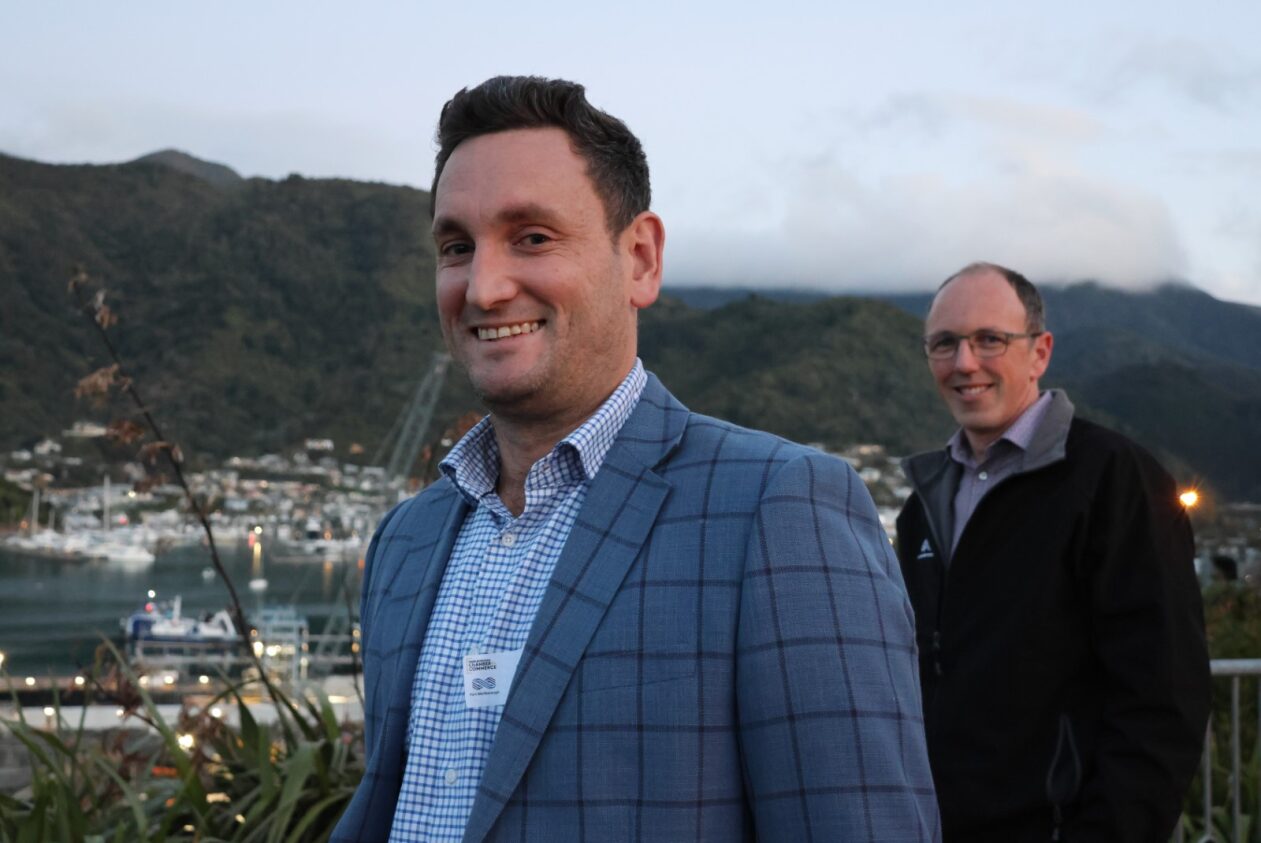
Ryan Lock, left, general manager for port and marine, and Gavin Beattie, general manager for infrastructure and environment, overlook Picton’s harbour while guiding a tour on 23 April. Photo: Evan Tuchinsky.
Port Marlborough affords myriad picturesque views. Whether glimpsed from London Quay, hills in Picton or vistas along Queen Charlotte Drive, the harbour has a lot to see.
Some of the more intriguing scenes, though, are behind the scenes. Zones of operation remain cordoned behind security booths, fences and barriers -- off-limits to the general public unless specifically invited.
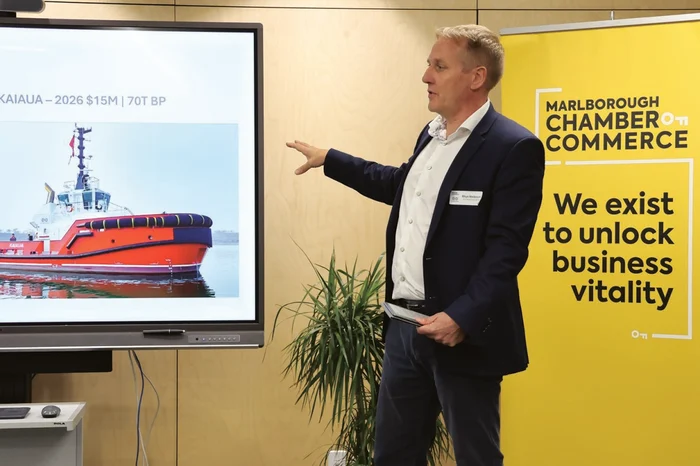
For members of the Marlborough Chamber of Commerce, such an invitation arrived last month. Forty got a bus tour on the evening of 23 April, followed by an update from Chief Executive Officer Rhys Welbourn covering, among other things, the Waitohi Ferry Redevelopment Project.
The timing coincided with the consultation period for a $110 million financing proposal which the chamber subsequently endorsed. Council’s submission period continues through 19 May.
Encapsulating the hum of activity around port premises, the CEO observed: “There’s a lot of business and a lot of development going on. We intersect with every industry in Marlborough.”
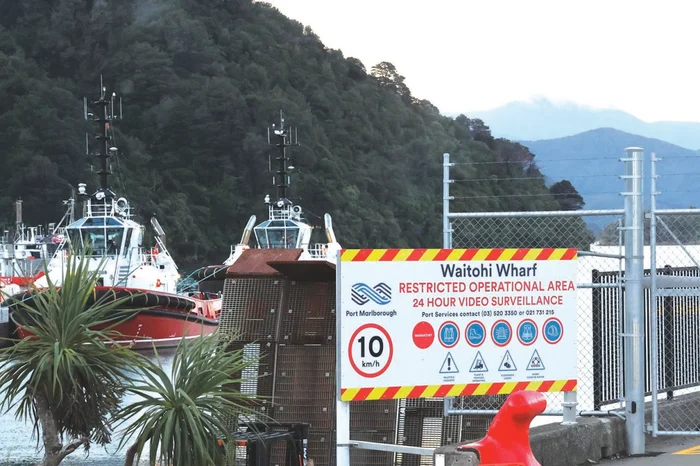
Ryan Lock, general manager for port and marine, and Gavin Beattie, general manager for infrastructure and environment, took turns on the coach’s microphone as the tour looped past Waitohi Wharf and Shakespeare Bay – both visible from a distance but inaccessible for up-close viewing without clearance.
Sites seen
The route to those spots, from where Dublin Street meets Lagoon Road, marked early parts of redevelopment. The roundabout at that junction (which also connects with Kent Street and Queen Charlotte Drive) will widen to accommodate multiple lanes in each direction. An overbridge should span the area by 2029.
Well before then, Marlborough will get its first traffic signals!
Those imminent additions are sited on Lagoon Road toward the secured entrance, which the bus crossed after a credentials check. Ahead loomed the “bull ring” of the port operations hub, ferry load/unload area and temporary wharf for KiwiRail ships.
Cranes and construction caught the eye from most every angle. The full project, currently budgeted at $531 million, plans to transform ferry facilities to accommodate the new, larger vessels that will navigate the strait.
“There are quite a lot of moving pieces,” Ryan said, elaborating on the return trip: “Trying to coordinate operations around construction is fundamental – and a bit of a nightmare.”
The port’s newest craft at the moment are a pair of tugboats docked at Waitohi Wharf. Past another security checkpoint, the Shakespeare Bay log yard wraps around the bend, with massive debarking equipment squarely situated.
“We don’t have a lot of land,” Gavin said, meaning relative to the site’s density. “Multi-use is a key thing.”
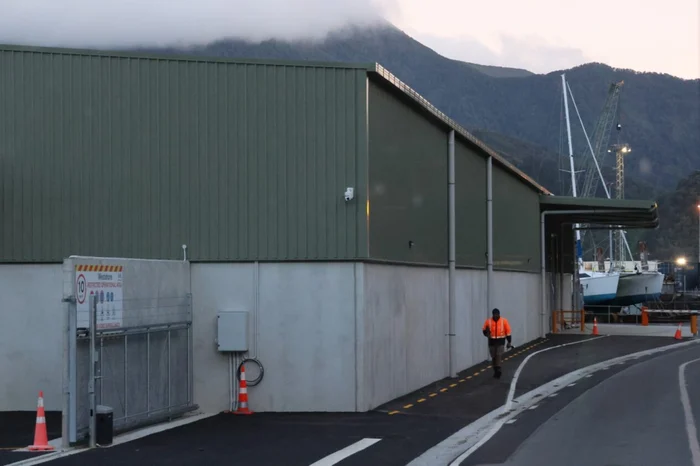
As if to exemplify his point, the backtrack included a pause at Westshore Warehouse. The recently opened, 3,200-square-metre building provides feed storage for New Zealand King Salmon and a home for Waikawa Fishing Company’s king crab venture.
“Even on a Thursday evening,” the CEO noted at the tour’s end, “this is a very busy port.”