
Echoes in the woolshed, marks stamped in time

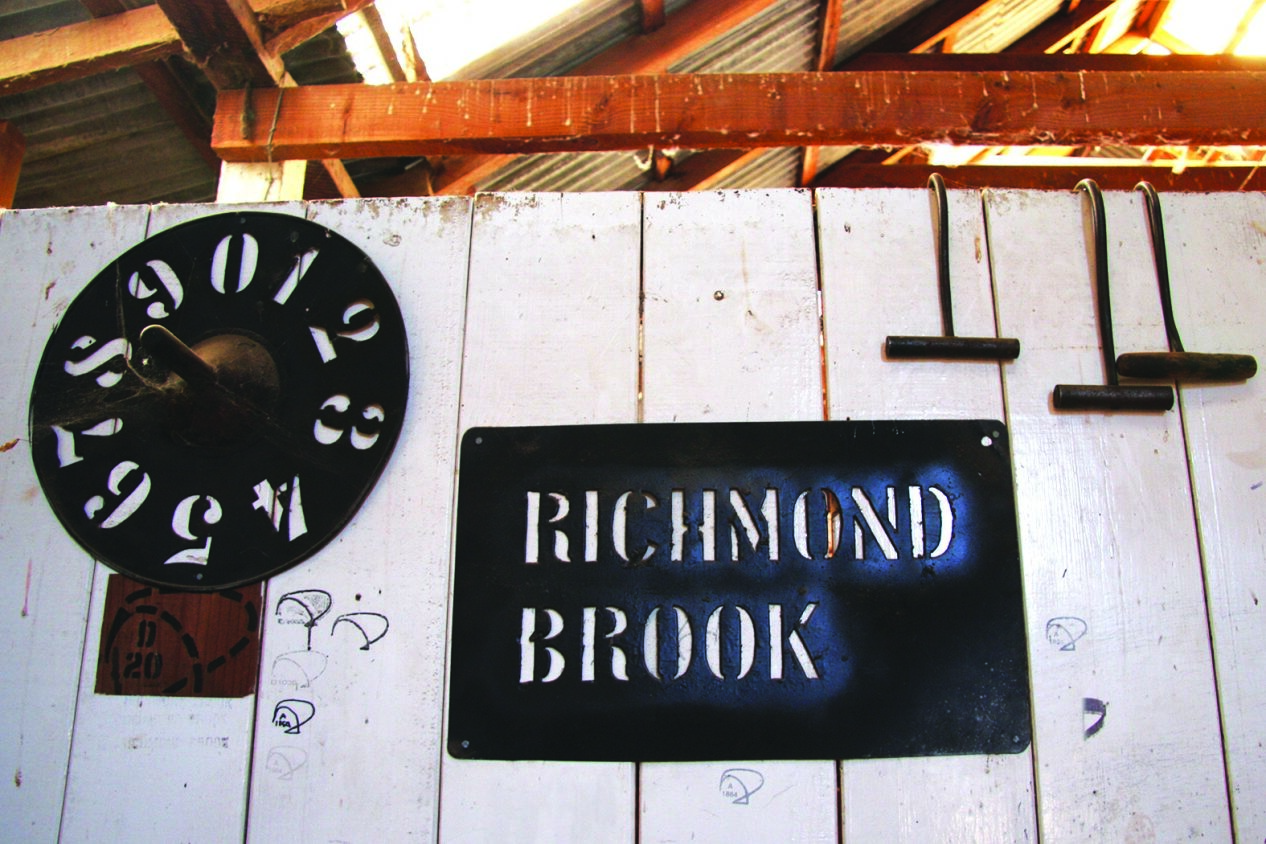
Richmond Brook Station’s woolshedoffers examples ofmid-nineteenth century stencils. Photo: Supplied.
AMY RUSS
There’s something quite powerful about the marks we leave behind -- the symbols, structures and stories which, over time, come to define a place. For published author and researcher Dr Annette O’Sullivan, that idea has shaped years of work exploring our rural identity.
What she discovered, she will share on the opening evening of the Marlborough Heritage Festival in a talk – “Wood Bale Stencils: Branding Histories on NZ Sheep Stations” – on 15 May at 6pm in Brayshaw Park.

Her journey began with a background in graphic design and typography. While teaching at Massey University, she set up a printing studio and began collecting historic printing types. This led to the discovery of a wool bale stencil, and she found herself asking a bigger question: What were these printing tools originally used for?
A trip to Mount Algidus Station in 2010 with Blenheim man Geoff Taylor, a retired high-country farmer, and his daughter Caroll sparked a deeper investigation.
Annette’s research for a conference paper quickly expanded into something much broader.
“As I started looking into the stencils, I discovered the branding behind them, and then the sheep stations and their woolsheds,” she said. “It just kept getting bigger and bigger.”
By the mid-19th century, over 57 major sheep stations spanned more than a million acres across Marlborough, including Richmond Brook, Flaxbourne, Ugbrooke, Muller and Molesworth Stations.
With limited fencing and the constant risk of theft and disease, branding sheep with paint became a legal requirement. Each mark was registered, unique to its owner, and instantly recognisable. Annette discovered that brand marks often carried a deeper meaning.
“They were an incredibly clever marketing tool,” Annette explained. “It was essentially an early ‘track and trace’ system. The brand travelled with the wool, from the station to international markets.”
Museum-like spots
Yet, in the documenting process, Annette noticed that the woolsheds themselves were disappearing. That realisation led to her book, Woolsheds: The Historic Shearing Sheds of Aotearoa, created with photographer Jane Ussher.
Annette explains that woolsheds are like museums, where nothing gets thrown away. Inside, she often found remnants such as old tools, early presses, tally books, stencils and branding irons.
Built from local materials like timber and stone, these sheds showcased the ingenuity of early farming communities. Many large stations functioned like small villages, their woolsheds doubling as social spaces hosting dances, weddings and local gatherings. What ties it all together is the sheer resourcefulness of those who worked the stations.
"People had to be a jack of all trades,” Annette noted. “Early stencils were often handmade from leftover metal; woolsheds were constructed with whatever materials were on hand. That resilience really comes through.”
Today, both the sheds and the stencils are fading from use: “These marks might be seen as ‘Kiwiana’ now. Examples can be found in cafes and pubs, but they tell a much deeper story about who we were, how we worked, and how we connected to the land.”
It’s a story still unfolding, and Annette is keen to discover more station brands and the histories that keep it alive.