
A rapid journey to farm ownership

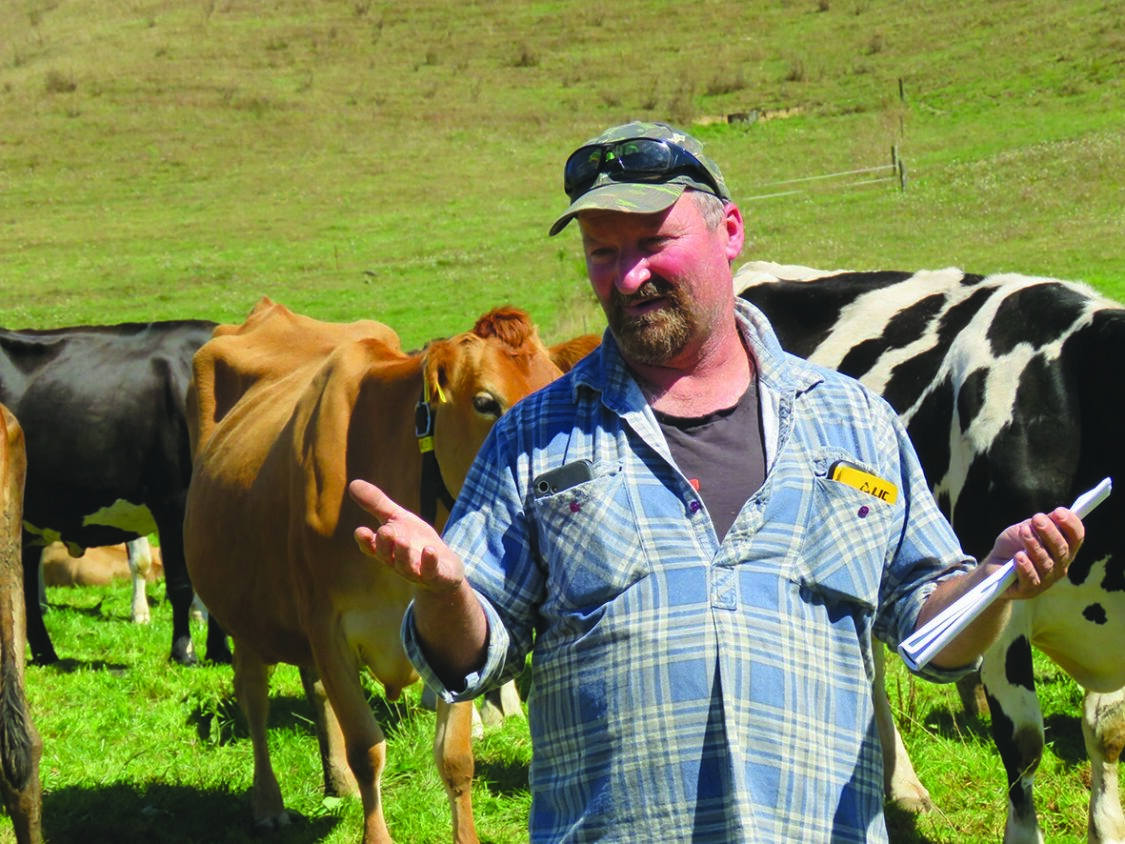
Rai Valley dairy farmer Hamish O'Donnell. Photo: Supplied.
Andrew Ritchie
Hard work and a strong focus on their goals has ensured Hamish and Charlotte O’Donnell’s rapid journey to farm ownership.
The Rai Valley dairy farmers sharemilked for 18 years in Waimate before purchasing their 76Ha property where they milk 185 cows. Genetics play a massive role in the business, having invested heavily in cows early in their share milking career.
“While my mates were buying boats and baches we were buying cows,” says Hamish.
The couple are now reaping the rewards, with their herd rating 11th in New Zealand for Breeding Worth and 21st for Production Worth with four bulls currently in the premier sire team.
Their predominately crossbred herd aims to produce 510ms/cow this year. One hundred and twenty embryos are implanted in the herd each year from which 50 pregnancies result. The O’Donnell’s recently hosted a DairyNZ Field day promoting the tools available to farmers to improve genetic gain.
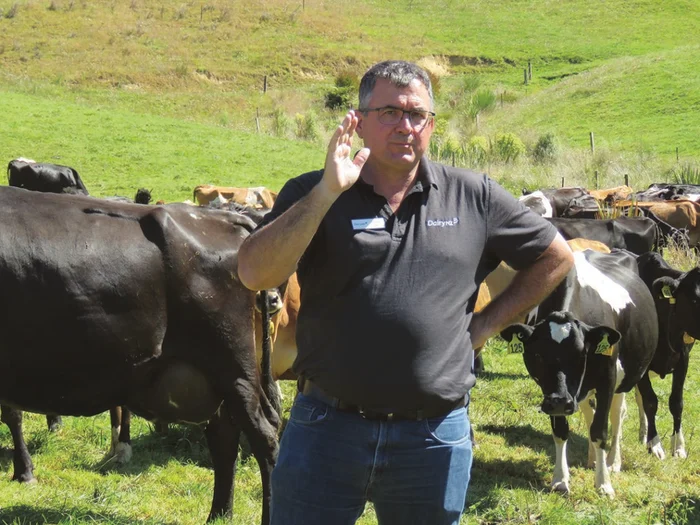
Andrew Fear is the manager for NZ Animal Evaluation and spoke of his vision to see New Zealand’s dairy industry back leading the world in rates of genetic gain.
“Genetic gain helps drive long-term productivity and profitability and genomic selection accelerates the rate of genetic gain,” he says.
“Firstly, it is important to identify your herd priorities, breeding values are available for all traits within the data for example udder strength, fertility, reproductive performance, an increase in milk solids. So, challenge your AB provider to meet your specific requirements.”
Use teams of bulls across the herd to provide safety in numbers, balancing risk and reward. It is best to use 6 to 10 bulls depending on herd size. It is important to keep accurate, up to date records and maintain their quality.
“Mismothering during a busy calving can result in calves being attributed to the wrong cow. DNA testing while expensive will result in more reliable data.”
Andrew says using animals from overseas is not appropriate as other countries are producing for quite different conditions to New Zealand. It is important to identify higher BW animals early by picking younger bulls. Overseas animals are selected by two years old whereas in New Zealand they are up to four years old by the time they are identified.
Our system of selection is more complicated by our extensive use of cross-bred cows. It is important to use improved stock on the best and most fertile cows leaving the lower performing animals to beef breeds.
Hamish stressed the importance of growing out young stock. He weans 80kg and uses 2.5 bags of milk powder per calf. His preference for milk powder is to eliminate the spread of Johnes disease, but he has found the calves have also done better on this system. His calves then move onto irrigated grazing near Waimate where they continue to be under veterinary supervision.
“Young calf management is fundamentally important; a well grown animal is worth a lot of money and should be with you for a long time. It is too important to lose those improved genetics in the first two years due to poor feeding and the corresponding lack of fertility.”