
Stories in stone
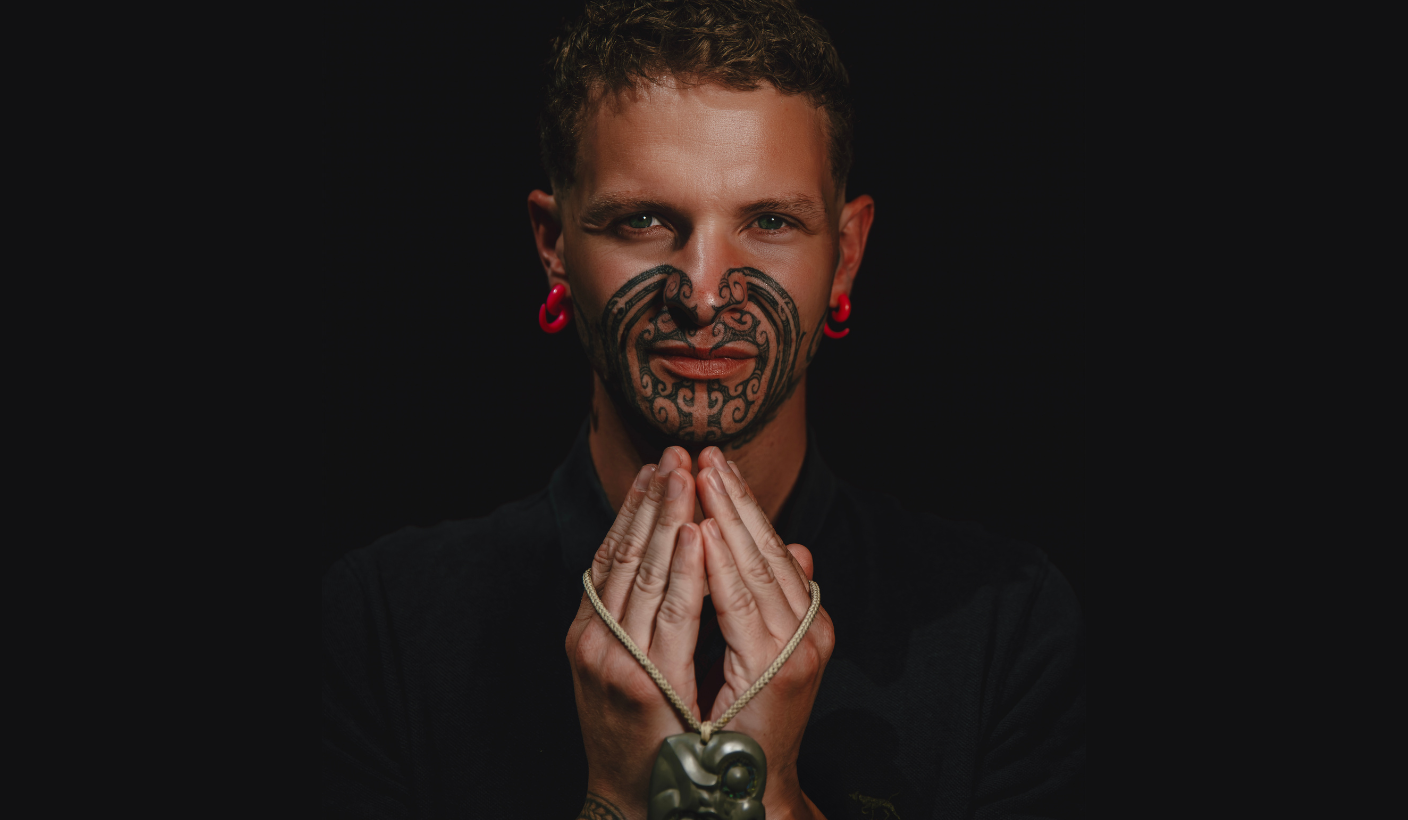
Ruihana Smith. Photo: Richard Briggs
Ngā Pūrākau i Roto i te Kohatu
In a small workshop tucked inside a double garage in Havelock, Ruihana Smith shapes stone with quiet precision. Water runs steadily over diamond tools, cooling the surface as pakohe stone takes form beneath his hands. It is a technical process, but for Ruihana, it is also something far deeper.
Words: Rachel Enright | Photos: Richard Briggs
A respected stone carver, Ruihana Smith carries a practice grounded in whakapapa, place and process. His work is not just about carving stone, but about reconnecting with identity, understanding the environment and continuing cultural knowledge through art.
Raised in Marlborough, Ruihana describes his upbringing as “pretty normal”. He had some connection to his Māori culture growing up, but it was not fully realised. That changed in 2016 with the birth of his first daughter. “I named her after my nana, Pirihira, and after she was born, I decided I really wanted to reconnect, for her sake.”
That decision led him back to Te Hora Marae in Canvastown, where he began attending te reo Māori classes and wānanga, which are spaces for learning, discussion and the sharing of traditional knowledge.
“It wasn’t hard to find my place,” he says. “People didn’t know me, but they knew my nana. Everyone knew my nana.”
From there, his interest deepened. He became, in his words, “infatuated” with whakapapa, history and the stories of the top of the South Island. That curiosity would soon find an outlet in art.
Ruihana had always been creative. Drawing, sketching and painting had long been part of his life. But traditional Māori art had never been something he was exposed to growing up.
“I’d always been into visual art, but I never did Māori art growing up, even though it was something I’d always wanted to explore.”
As his connection to whakapapa strengthened, so too did his desire to create within that space. Influenced by local Māori artists and a growing fascination with history, archaeology and storytelling, he began experimenting with carving.
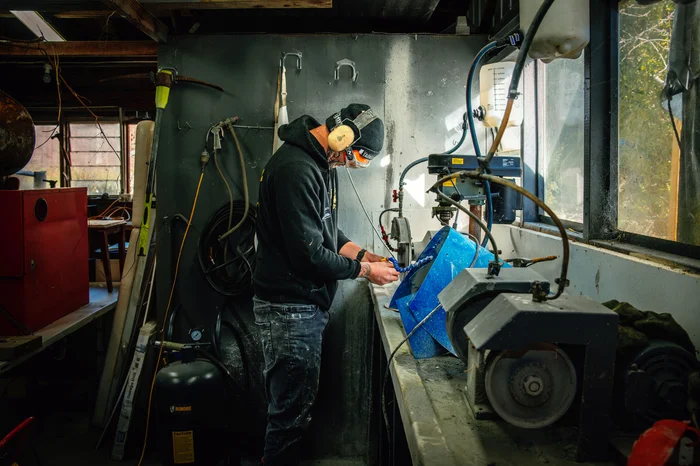
“There weren’t many people doing Māori stone carving in Marlborough, and no real places to learn officially,” he says. Even so, he was too shy to ask the few carvers in the region for guidance. Instead, he taught himself.
“I’d make small carvings, sell them at markets, and use that money to buy another piece of equipment. It was just building things up bit by bit.”
Most of his tools were sourced second-hand from Trade Me. Early on, he worked with equipment that wasn’t fit for purpose, slowing the process but deepening his understanding.
“There was a lot of trial and error. Looking back, if someone had taught me, I probably would’ve progressed more quickly. But learning that way meant I really understood the ins and outs of working with stone.”
Over eight years, that incremental approach has shaped both his skillset and his philosophy.
Central to Ruihana’s work is pakohe, a stone often referred to as argillite, found throughout Pelorus Te Hoiere. His connection to the stone began long before he realised.
“My grandfather lived near a significant old occupation site and used to pick up broken adzes from the beach,” he says. “They were made from what he called argillite.”
Years later, while learning more about local materials and history, Ruihana made the connection.
“I started hearing about pakohe and realised it was the same stone my grandfather had been showing me all those years ago. That was a big moment for me.”
From there, his focus shifted. While he experimented with wood, bone and pounamu, it was pakohe that held his attention. Its local significance, history and connection to place aligned closely with his own journey. That connection extends to how he sources his material.
“I source all my stone myself from Te Hoiere,” he says. “I’ll drive as far as I can and then hike into more remote tributaries. It’s not easy to get to, but it’s always worth it.”
That process is intentional. Knowing where the stone comes from, and being part of its journey, is essential.
“It’s not like mass-produced pieces where you don’t know who made it or where it’s from,” he says. “For me, that connection is really important,” as each piece begins long before the first cut.
“I karakia before I take the stone, while I’m working on it, and again when I finish the taonga,” he explains. “So when someone receives one of my pieces, they know that process has been carried through from beginning to end.”
Ruihana’s work blends his two passions together through art and storytelling. This is perhaps most clearly seen in his contribution to Whāia te Taniwha, an exhibition at Christchurch Art Gallery exploring the concept of taniwha as both feared and revered beings.
His piece represents Kaikaiāwaro, the taniwha of Pelorus Te Hoiere.
“In our stories, Kaikaiāwaro is a kaitiaki for Ngāti Kuia and appears to help people in times of need,” he explains.
The story is closely linked to Pelorus Jack, the white dolphin that famously guided ships through the treacherous waters of the French Pass in the late 19th and early 20th centuries. While widely known as a maritime phenomenon, the story holds deeper cultural meaning.
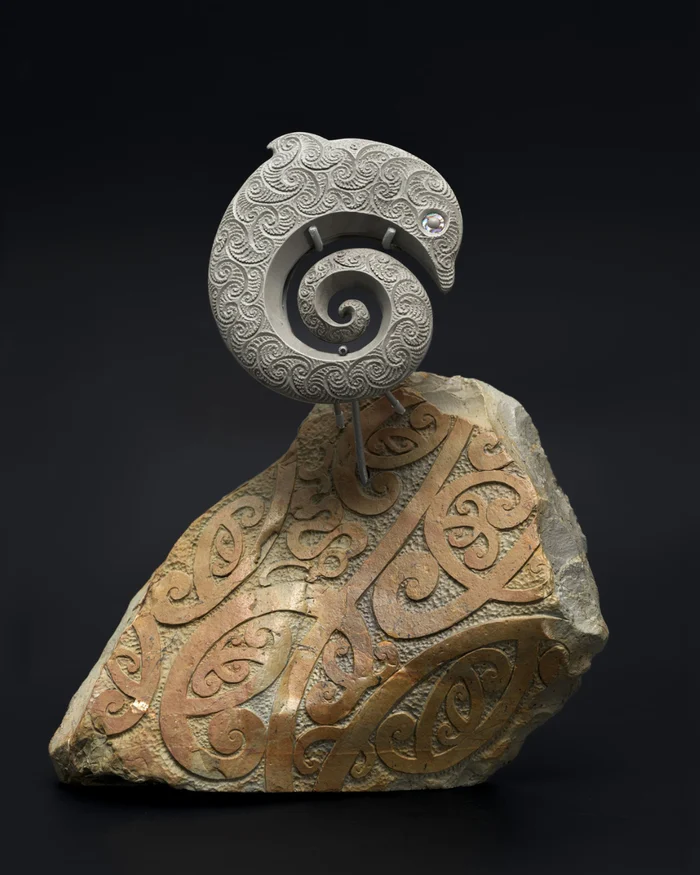
“From a Ngāti Kuia perspective, it’s understood as something more – Kaikaiāwaro taking the form of a dolphin.”
Ruihana translated that narrative into form, carving a dolphin adorned with intricate patterns, set above a base of natural stone with kōru motifs.
It is an example of how his work bridges past and present, tradition and contemporary expression.
Alongside his art, Ruihana works as Iwi Relationships Advisor at Marlborough District Council. There, he supports engagement between council and iwi, helping to build understanding and meaningful relationships.
He also remains closely connected to environmental work through the Te Hoiere Project, a large-scale restoration initiative spanning from the mountains to the sea.
“It’s about improving the health of the awa and the wider environment,” he says. “Cleaner waterways, healthier ecosystems.”
For Ruihana, the link between environment, culture and art is inseparable. His carving reflects not just material, but landscape and history.
“I tend to think of it more as enhancing,” he says of restoration. “Making it as good as it can be now and better in the future.”
Looking ahead, Ruihana hopes to continue growing his practice and, eventually, hold a solo exhibition. But equally important is sharing knowledge. His daughter has already begun carving her own pieces. “She’s quite artistic, so I got her on the tools and showed her how to do things.”
His own journey, shaped by barriers and self-teaching, has reinforced the importance of accessibility for future generations.
“When I was younger, there were art classes, but nothing that exposed you to Māori art,” he says. “I’d love to see more of that in Marlborough.”
For Ruihana, Māori art cannot be defined by tools or techniques alone. “Māori art, whether traditional or not, is still Māori art if it upholds the same values and meanings it always has,” he says. “It’s about storytelling, whakapapa and representing cultural heritage.”
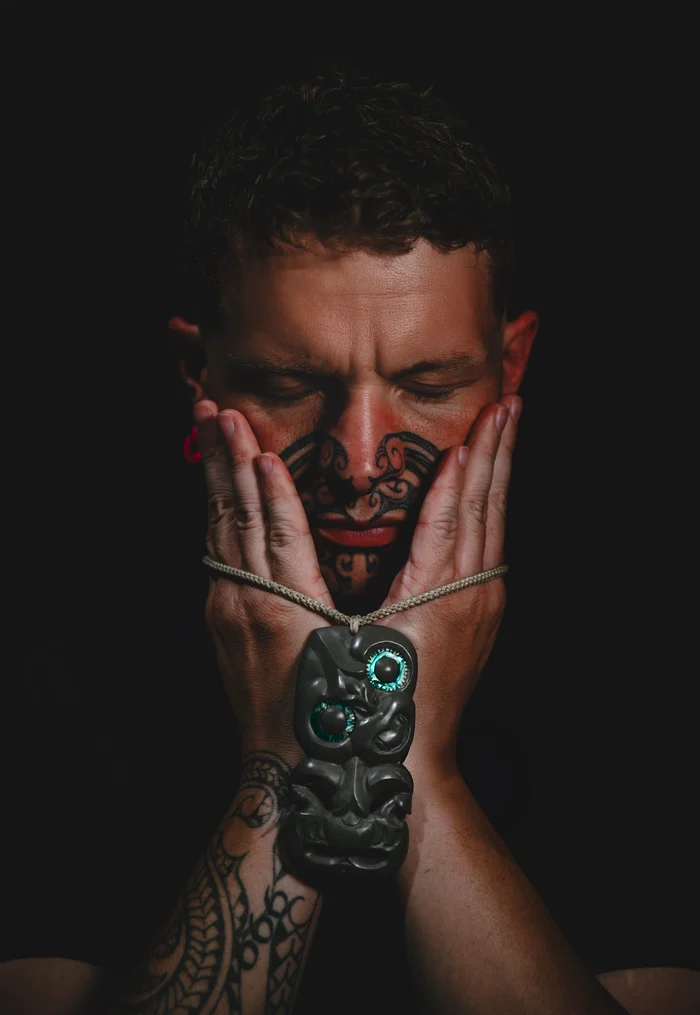
Historically, traditional practices carried knowledge in the absence of written language, passed through pūrākau (writing), waiata (singing), karakia (blessings) and visual expression. Today, that role remains just as vital.
“We live in a modern world where some people are reconnecting with culture that was lost or disrupted,” he says. “Māori art plays a big role in that cultural revitalisation.”
What may appear as a finished piece holds layers of meaning beneath the surface.
“There’s so much beneath what might just look like a beautiful piece of art,” he says. “The tikanga, the process, the meaning behind it.”
Back in his garage studio, as water runs and stone is shaped, those layers are carved in with intention. Each piece is not just made, but carried from mountain to river, from history to present, from one generation to the next.