
Marlborough rates to rise 6.81%

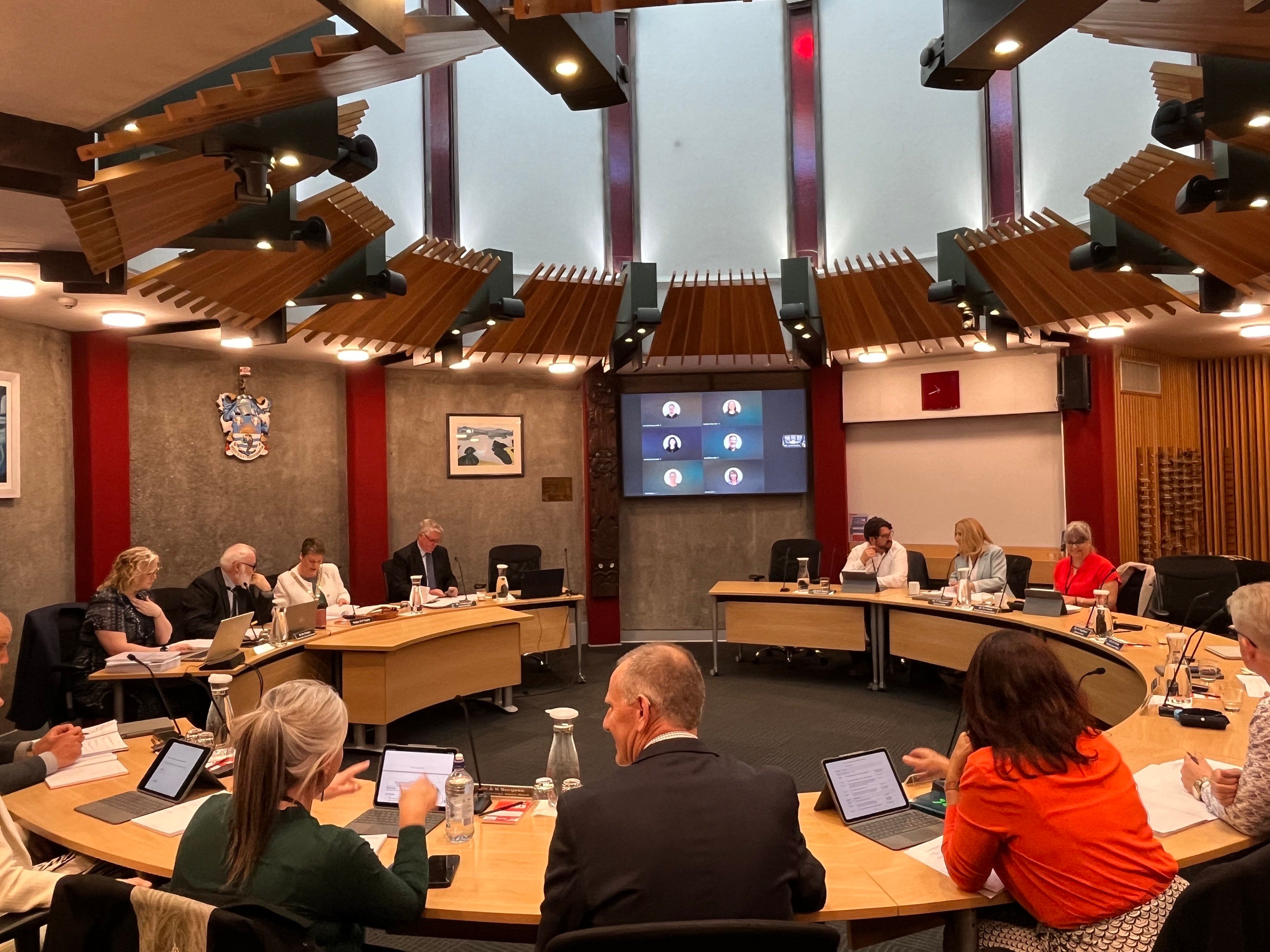
Marlborough councillors secured a reduced 6.81% rates rise by postponing emergency reserve and COVID rates relief payments. Photo: Kira Carrington/LDR
By Kira Carrington, Local Democracy Reporter
Marlborough District Council has welcomed a 6.81% rates rise for 2026, almost 2.5% lower than anticipated.
Chief financial officer Geoff Blake told councillors at a meeting on Thursday that his team had managed to bring rates down from a projected 9.26% increase by postponing planned funding and by finding savings.
The rise was down 1.8% on last year’s 8.61% rates rise, and was exactly half of 2024’s 13.62% rates rise.
Blake said that if they had also canned funding for several necessary projects, such as the Marlborough Sounds Roads Recovery, water infrastructure and COVID rates relief repayments, the rise would have been about 5%, which was much closer to the proposed rates cap.
To achieve the reduced rates rise, councillors unanimously voted to postpone funding for the depreciation of three waters infrastructure until the next financial year, saving 1.16% in rates.
Councillor David Croad supported the choice, saying while delaying funding was regrettable, it was important that the council remained responsive to changing circumstances.
“Ultimately, we'd want to fund as much as we [can] to make sure that we were building some significant financial resilience, but in reality that's not possible all of the time,” Croad said.
Councillors also voted to spread the final $1.5 million COVID rates relief repayment over two years instead of one, reducing its impact on rates from a 1.5% rates rise to 0.68%.
Councillor Malcolm Taylor voted against the split, saying paying it off this year would be cheaper in the long run.
“[Although] we’ll reduce the rates increase for this year ... we’ll actually increase it for next year ... another $35,000 in financing fees,” Taylor said.
Croad said he was “slightly taken aback” by Taylor’s opposition, given Taylor also campaigned on lowering rates, but “accepted the challenge” of finding more savings to offset next year's payment.
Councillor Scott Adams also expressed concern on the delay, likening it to a “buy now, pay later scheme”, but ultimately voted in favour.
Blake said that to pay the whole final repayment this year would add the full 1.5% onto this year’s rates rise.
Councillor Cyril Dawson, who had campaigned on bringing rates down, said he supported “smoothing” the cost, and he expected ratepayers would be pleased.
“Doing it this way, smoothing it, they're going to love it,” Dawson said.
'Very rigorous process'
The councillors also unanimously voted to postpone replenishing their Emergency Events Reserve until next year, despite its depletion forcing them to take out a $6.1m loan to fund last year’s flood repairs.
Blake said the council had planned to put $500,000 into the reserve each year starting this year, but postponing until next year would save another 0.45% in rates.
Taylor again voiced opposition, saying that last year’s flooding was caused by a strong La Niña, and while this winter was shaping up to be an El Niño, “La Niña will come back and we need to build these reserves up”.
Adams said it was a disappointing but necessary decision.
“It was a big thing, getting it through last year to build up this reserve, and we still need to,” he said.
Council staff had also identified more than $600,000 in operational savings, bringing rates down another 0.5%, Blake said.
Councillor Gerald Hope praised staff for scrutinising their budgets.
“I know it's been a very rigorous process,” Hope said.
While cuts and savings were the order of the day, councillors did vote to fund minor operations from rates increases.
They allotted $22,000 for energy use and emissions monitoring equipment, and $20,000 for public art maintenance, totalling 0.04% of rates.
A proposal to increase community events funding for the Southern Jam Youth Jazz Festival, Blenheim Christmas Parade, and Picton Foreshore’s New Years’ Eve celebrations did not pass.
While the events had struggled with rising costs, the council agreed to an unchanged level of funding this year from budget carryovers, with funding for future years to be determined in the Long Term Plan.
The Mānawatia te Kāhui o Matariki Fund would also have funding dry up after this year, after the councillors chose not to allocate $25,000 per year for Matariki celebrations. The future of the fund would also be decided in the Long Term Plan.
LDR is local body journalism co-funded by RNZ and NZ On Air.