
Wine Marlborough: Water wisdom grows more refined

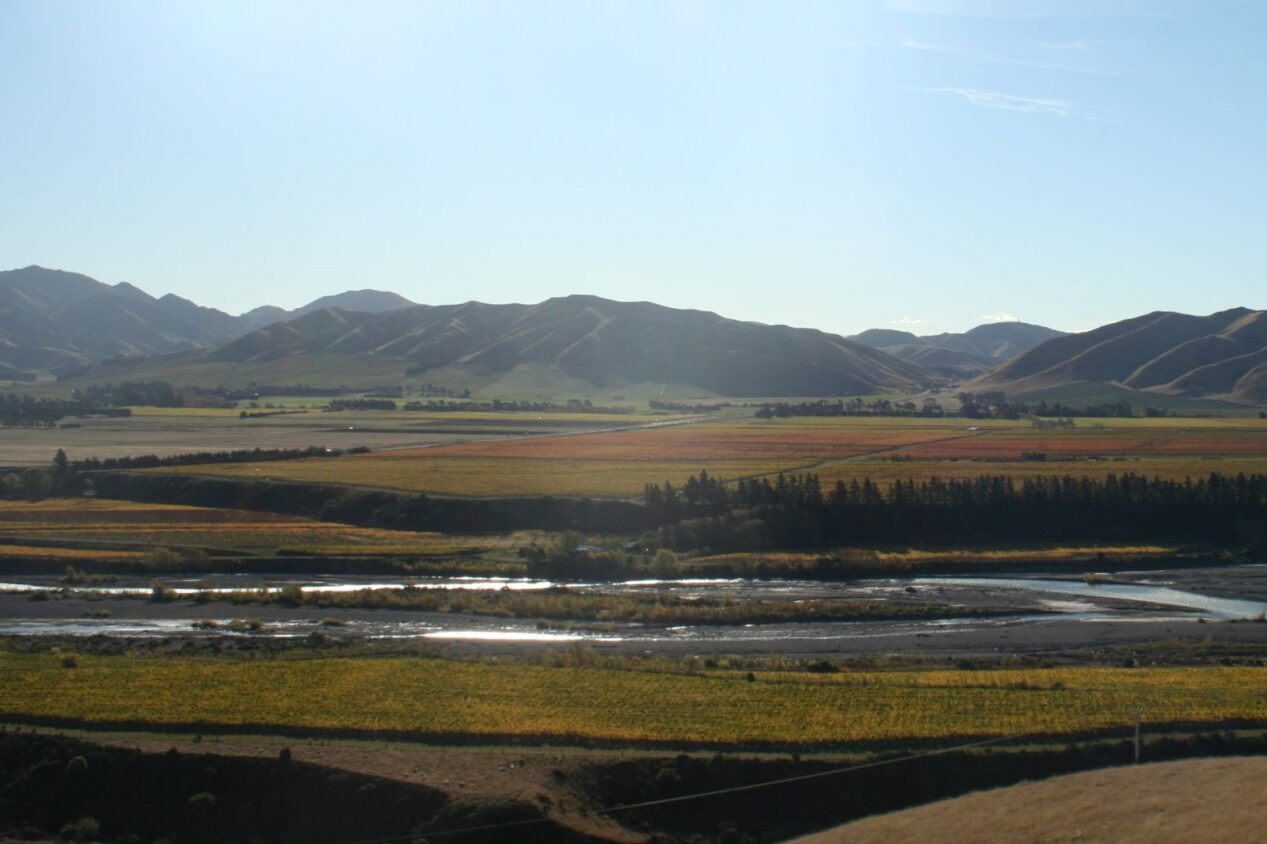
The Awatere River flows at autumnal levels. Photo: Supplied.
KAT PICKFORD, Wine Marlborough
With growing interest in alternative land use, some Marlborough grape growers are exploring options such as apples, sheep and beef, while local food resilience has also entered the conversation.
A key factor in any land use change is water – the lifeblood of all primary production. In a region already prone to dry conditions, and expected to become drier over time, water availability is an increasingly important consideration.
Understanding how water is allocated is central to that discussion.
Sam Forrest, resource management consultant at WilkesRM, says freshwater allocation in Marlborough is managed under the Marlborough Environment Plan (MEP). The MEP is a sustainable allocation regime that sets limits to protect rivers, groundwater and the wider environment within each water resource.
“Irrigation water in Marlborough requires resource consent, and those consents are generally tied to a specific crop, so any change in crop type would most likely trigger reconsenting,” Sam explains.
The way water is allocated has become more refined over time, she says: “It has moved away from a per-hectare approach to one based on efficient water use principles – using modelling to estimate what specific crops actually need and when. It takes into account factors like soil type, rainfall, and the crop’s growth cycle.”
That shift has coincided with a broader change in land use across the region. “Much of Marlborough has transitioned from pasture to vineyard,” she notes, “which has significantly reduced water demand in recent times.”
If modelling shows a proposed crop change would require more water, there may be allocation available in some water resources. Any application would still need to meet the MEP framework and efficient water use principles, she says.
Dr Damian Martin, viticulture and oenology group leader at the Bioeconomy Science Institute (formerly Plant & Food Research), brings more than 30 years’ experience across both commercial winegrowing and research. He has a long-standing focus on how vine water status influences performance and wine quality.
He says vineyards are comparatively light users of water. “Vineyards in Marlborough receive a maximum irrigation allocation that is approximately 30 percent of that of pasture, arable farming or most other horticulture,” Damian says.
“In wetter years, or where soils have high water holding capacity, actual vineyard irrigation is lower than the maximum allowed – so on an average per hectare basis, vineyards use about 20 percent of the water that is allocated to most other crops.”
Careful water management has been shaped by decades of research and on-the-ground practice, he says.
“Probably the most common misconception is that vineyards turn irrigation on in spring and off after harvest,” Damian observes. “In reality, most growers monitor soil moisture or vine water status and make evidence-based decisions about when, and how much, to irrigate.”
With drought frequency in Marlborough increasing under climate warming, to two years in 10 currently and trending towards four years in 10 by 2050, crop irrigation needs are predicted to increase.
“Overall, water availability is becoming less predictable,” Damian says. “Allocations are designed to cover irrigation needs in most years, but droughts are becoming more frequent, and this is something we all need to be aware of, and plan for, with Marlborough’s primary sector-based economy.”