Rewriting life after stroke: Paula Taylor's story of hope
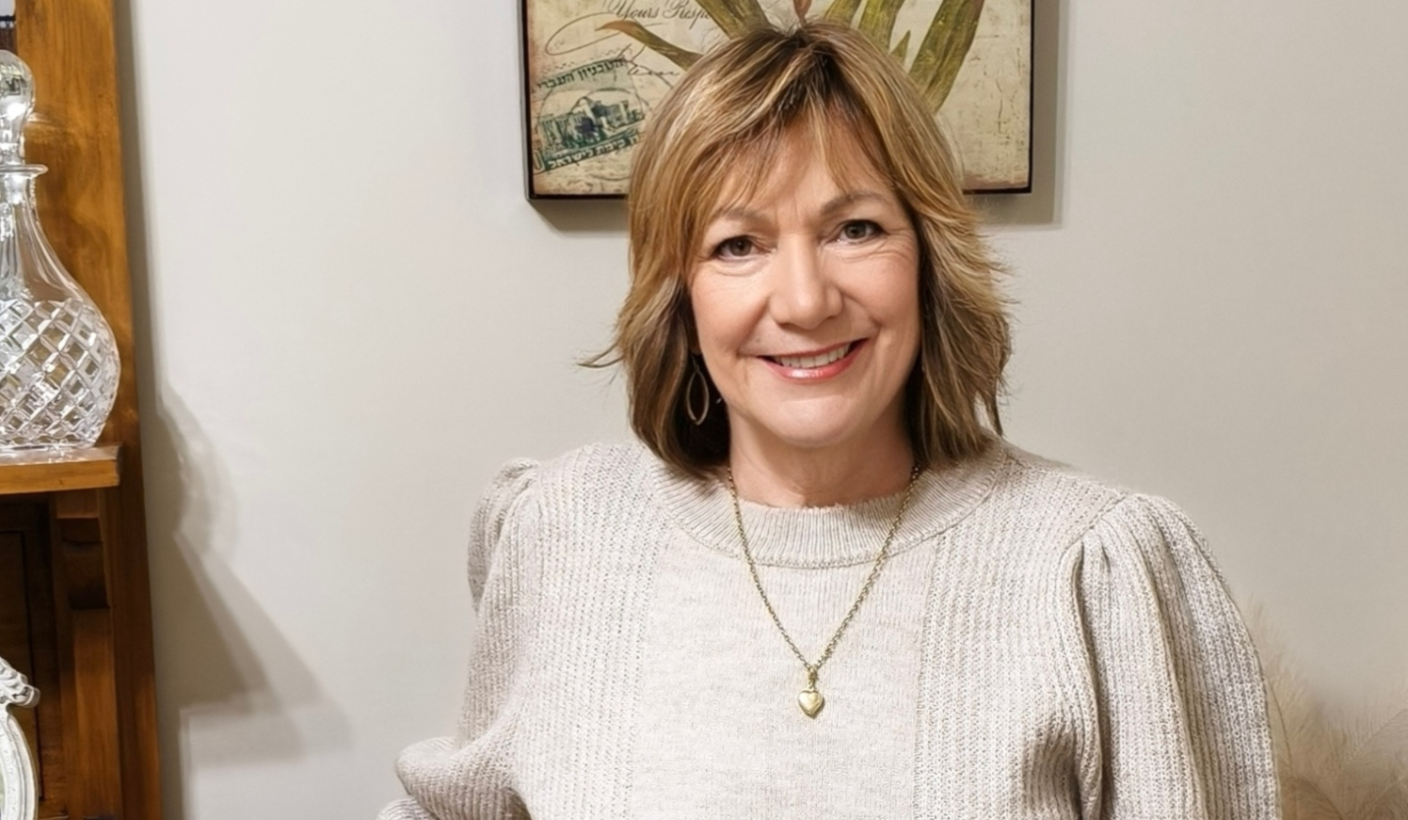
Paula Taylor shares an important message and personal story this Stroke Awareness Month.
Every May, Stroke Aotearoa New Zealand marks Stroke Awareness Month, urging Kiwis to recognise the signs and take action. One person who understands the importance of that message all too well is Marlborough’s Paula Taylor, whose life was suddenly changed by a stroke despite having none of the typical risk factors.
Words: Adrienne Matthews
A headache is easy to dismiss. A long day, a bit of stress, something to push through. For Paula Taylor, that’s exactly what she did.
“I had a headache all day, which wasn’t unusual,” she recalls. “I also felt oddly emotional and not myself but I took Panadol and carried on.”
She had only been home five minutes when a sudden, excruciating pain struck “like an arrow” through her head. Within minutes, she lost control of her body. Her husband Phil rushed to her side and called an ambulance. Although she remained conscious, she sensed something was terribly wrong. “It’s like it’s happening, but it’s not happening to you,” she says.
Paula had suffered a haemorrhagic stroke, a bleed in the brain, despite having none of the typical risk factors. Fit, active and health conscious, she was what doctors describe as an “unusual case.” Even now, there are no clear answers as to why it happened.
What followed was a long and challenging road to recovery, one that would ultimately reshape her life in ways she never expected.
Paula spent seven weeks in hospital, relearning the most basic functions: moving, speaking, and eventually walking again. “The first time my little finger moved was huge,” she says. “Then my toes, then my arm. It just gradually happens.”
Her stroke affected the left side of her brain, leaving the right side of her body paralysed. Even the simplest movements required immense effort and concentration. Walking had to be relearned step by step. “It wasn’t just physical,” she explains. “My brain had to learn what to do again.”
Progress was slow and often frustrating, but steady and each small milestone brought renewed determination. When she eventually walked out of hospital with a cane, it surprised even the medical staff. “They said they don’t often see someone with my type of stroke walking out like that,” she says.
Leaving hospital did not mean the journey was over. In many ways, it was just beginning.
Fatigue became a constant companion. Simple tasks like showering required rest afterwards. Migraines, balance issues and reduced mobility were ongoing challenges. A fall at home shortly after her return left her with broken ribs and more time in hospital.
“The hardest part was the dramatic change in my life,” Paula says. “Not being able to work or drive, and everything slowing down was like starting life all over again.”
There were emotional hurdles too. Like many stroke survivors, Paula experienced depression and a deep sense of isolation. “You feel like you’ve been taken into a different world,” she says. "Stroke survivors often feel misunderstood and don't feel they can contribute to their family, job or community anymore so it is important that others express their worth to them and help them feel valued.”
In desperation, Paula contacted the Marlborough Stroke Club, where she found both support and understanding. With the help of a community stroke advisor, she started a coffee group for younger stroke survivors, people aged 18 to 65 navigating recovery.
Now with around 18 members, the group meets regularly, offering something invaluable: shared experience. “It made me feel less alone,” she says. “You stop focusing on your own struggles and start supporting others.”
She also began writing a blog on Facebook, My Stroke Survival Kit, as a way to process her journey. What started as a personal outlet has grown into a supportive online community connecting survivors, caregivers and families. “It’s about showing people what recovery is really like,” she says, “and letting them know they’re not alone.”
Today, Paula continues to live with the long-term effects of stroke. She walks with a limp, carefully manages fatigue, and still experiences migraines. Some days are harder than others, but her outlook on life has fundamentally changed.
“Every day, I’m grateful,” she says. “When I walk, I’m grateful. When I can drive myself, I’m grateful. My husband and family have been immensely supportive and I am so grateful for that.”
Her recovery has also highlighted the remarkable resilience of the brain. “The brain is so retrainable,” she says. “If one pathway is damaged, it can create a new one. You just have to keep working at it.”
It’s a message she shares often with others, particularly those early in their recovery. “You have to work with your body and give it time,” she says. “As a stroke survivor I have learnt to listen to my body, and to place more importance on what helps my wellbeing because if my mindset is good, I'm more inclined to put the hard work in.”
Paula is quick to talk too about the difficulties other family members face when a member of a household has a stroke. “Our youngest daughter Ruby was just 10 years old and at home when it happened. It was very scary for her,” Paula says.
From that frightening experience, however, came something remarkable. With support from Rapaura School, Ruby turned what she had witnessed into action, creating a booklet on stroke prevention as part of a technology project.
Drawing on her mum’s experience, Ruby included key health messages and practical advice for families, showing a level of understanding well beyond her years. The project earned her an award and caught the attention of the Marlborough Stroke Club, who helped have the booklet printed and distributed to schools and families across the region.
What began as a deeply personal response has since helped raise awareness in the wider community. “It was an awful thing for her to go through,” Paula says, “but she’s become incredibly resilient.”
Now 16, Ruby is even considering a future in the medical field, proof that even the most difficult experiences can shape something positive.
As Stroke Awareness Month reminds us, many strokes can be prevented but awareness only matters if it leads to action.
For Paula, sharing her story is about more than looking back. It’s about changing what comes next. “Get your blood pressure checked. If something doesn’t feel right, don’t ignore it,” she says, “and be kind. If you know someone who’s had a stroke, reach out. It can make such a difference.”
While stroke can change a life in an instant, Paula’s journey proves something just as powerful: recovery is possible, progress continues, and even after the hardest moments, there is still a way forward. “One step at a time,” she says.
Signs of a stroke:
F Face drooping on one side
A Arm weakness on one side
S Speech mixed up, slurred or lost
T Take action. Call 111
Acting FAST gives someone the best chance of recovery.