
Lack of Aratere crew training linked to ferry’s grounding, TAIC report finds
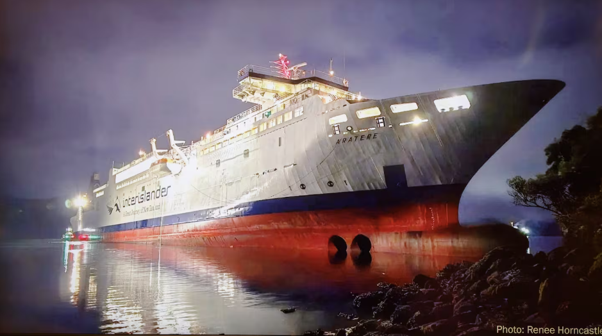
The Interislander’s Aratere ferry ran aground near Picton in June 2024. A final report by the Transport Accident Investigation Commission revealed a sequence of problems that led to the grounding. Photo / Renee Horncastle
The crew of the Aratere, which ran aground two years ago, had not received adequate training in the ship’s upgraded steering control system.
A report into the accident released today found it was part of a sequence of events that led to the slow-speed grounding, including problems with operating the ship’s autopilot that locked the crew on a collision course with land as they struggled to regain control of the ship.
The ship’s master was also distracted by training duties, the Transport Accident Investigation Commission (TAIC) said in its just-released final report.
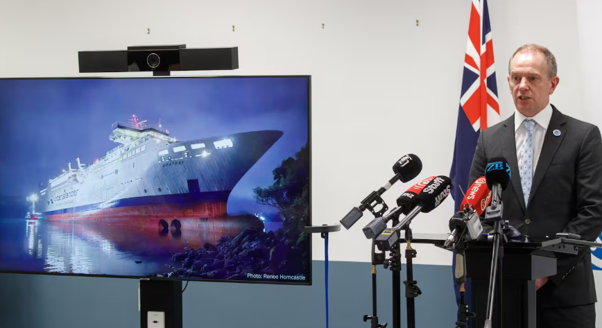
It found no evidence that any mechanical failure contributed to the accident and that the turn leading to the grounding was caused by how the autopilot was operated.
The TAIC found that overall, management around moving to an upgraded steering system was not effective.
Upgraded steering system had ‘safety-critical’ differences
Interislander had decided to replace the steering system when it became difficult to source spare parts and manufacturer support was also declining, the commission said.
The rail ferry operator considered the upgrade “like-for-like”, but it wasn’t.
The commission said the upgraded system introduced “safety-critical changes” to rudder control procedures that were neither identified nor addressed with training.
Chief investigator of accidents, Louise Cook, said Interislander had failed to identify “important operational differences” before returning the ship to service.
“They focused on installing the equipment, but not enough on understanding how the changes affected operation of the vessel and what crews needed to know to use it safely.”
Crucially, the crew had not been trained in two critical operational differences, including alignment of steering commands during transfer of control and how to override that requirement if needed, she said.
The commission found that in the circumstances, the crew reacted quickly but could not immediately regain control of the ship, which had been sailing between Wellington and Picton for three weeks before the accident.
Autopilot engaged but could not be overridden
The Aratere was part of the Interislander fleet, which was owned and operated by KiwiRail, and the ferry had been in service for about 26 years.
It left Picton around 9.20pm on June 21, 2024, with 48 people on board, most of whom were crew, plus a few commercial truck drivers.
The planned track for the passage to Wellington had been programmed into the ship’s electronic navigation equipment as a series of waypoints.
Soon after leaving Picton, the pilot engaged the autopilot to control the rudders of the ship.
A few minutes later the pilot pressed the “execute” button on the autopilot.
As the Aratere steamed through the Marlborough Sounds’ labyrinth of tight turns, currents and headlands, the bridge team expected the ship’s autopilot to make a pre-programmed, slight right-hand turn at a designated point.
However, the ship had already passed this position, and the autopilot had locked on to the next one, where the programmed turn was a larger, 34-degree turn to starboard, ie to the right.
Ran aground
Once the bridge team recognised the error, they were unable to stop the turn or take control of the ship as it veered off course.
Just before 9.30pm, the Aratere ran aground at slow speed, denting part of the hull plating and damaging some of the ship’s internal structure, but no one on board was injured.
The Picton Harbourmaster was notified of the accident by a local pilot and began mobilising a response team.
Interislander notified the Rescue Coordination Centre New Zealand (RCCNZ) about half an hour later.
A crew member also notified police on a 111 call and a response was initiated.
Just before midnight, a decision was made that it was safer to leave the passengers and crew on board and try to refloat the ship at the next high tide.
The ship was refloated and towed back to Picton a few days later.
Changes made since
The commission was “virtually certain” that a structured evaluation would have identified the differences between the systems and prompted appropriate training for the crew.
It said if Interislander had developed a sea trials plan as a part of a structured change process, it was “very likely” the differences would have been identified.
The commission said Interislander had since revised bridge resource management training, updated navigation assessments, improved change management processes, and developed ship-specific steering system guidance and training.
The commission considered that these actions addressed the safety issues identified in the report, so it made no formal recommendations.
KiwiRail retired the Aratere last August and announced in October that it had been sold to a company that would deliver it to a shipbreaking yard in India.
The ship, renamed Vega, has been at anchor in Tasman Bay since December, awaiting approval to enter India for dismantling.
It has now been granted permission to sail to India and will soon be on its way, after stopping in Wellington.
