
Growers’ dilemma: Mothball or replant?


Blair McLean of Fruitfed Supplies counsels Marlborough growers who consider replanting options. Photo: Supplied.
KAT PICKFORD, Wine Marlborough
For a region defined by vineyards, the appearance of bare blocks is a striking sign that the industry has entered a period of adjustment after years of expansion.
What remains unclear is how many of those vineyards will be replanted, how many will be temporarily taken out of production, and how many growers will move into other forms of farming.
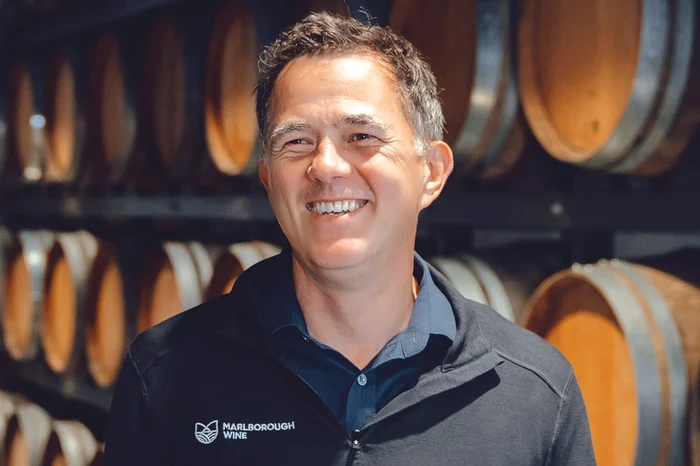
For vineyard owners, the decisions are highly personal, says Ormond Nurseries general manager Marcus Wickham.
“There are a few ways of looking at the current situation, and depending on your particular circumstances, decisions will need to be made accordingly,” Marcus explained. “As a family, we’re coming up 50 years in business, and we’ve seen everything over that period of time.
“The question growers need to ask themselves is whether they want to remain in the wine industry. For some; that might be no; for others, it might be sitting tight and waiting to see what happens.”
Another option is replanting. Ormond Nurseries, one of only four grapevine suppliers in the country, also owns contract vineyards and has chosen to replace some of its ageing vines.
“Most – not all, but most – of Marlborough’s vineyards were planted 20 to 25 years ago and are due to be replaced anyway,” he noted. “Now that demand has temporarily reduced, we’re replanting. If you can get your mind around it, now is strategically a very good time to replant.”
However, not everyone is taking that approach: “We’re grafting half of what we have been over the past few years; it’s definitely very subdued.”
Fruitfed Supplies senior technical representative Blair McLean says many growers are feeling the pressure. “There’s a lot of hurt around the region – my team and I are doing a lot of consoling and talking through options with growers,” he relayed.
While there is discussion around alternatives such as sheep, beef, peas and garlic, Blair says that, for now, it remains largely talk. Most of the vineyards removed so far were older blocks that had reached the end of their productive life.
Broad outlook
Wine Marlborough general manager Marcus Pickens says it is important to remember the current situation is not unique to Marlborough.
“This supply imbalance is impacting wine regions around the country – and the world,” he says. “California, which is seven times the size of Marlborough, is removing 20 percent of its vineyard area, while France is also preparing to remove tens of thousands of hectares of vines."
Unlike some regions facing long-term declines in wine consumption, Marlborough’s challenge is largely one of oversupply: “Demand for Marlborough’s light and refreshing style of Sauvignon Blanc has continued to grow over the past decade, particularly in the United States and emerging export markets.”
That longer-term outlook provides some confidence, but Marcus acknowledges many growers are facing difficult decisions in the short term.
Wine Marlborough and the Bragato Research Institute have developed resources to help growers assess options including temporarily taking vineyards out of production (mothballing), replanting or removing vines – and will host a series of shed meetings to support decision-making.
“I encourage anyone experiencing uncertainty to come in, join the discussion and share ideas – you are not alone,” Marcus stressed.
Having worked through the previous oversupply cycle in 2008, Marcus remains confident in the industry’s ability to adapt.
“Like any agricultural-based business, the wine industry has had many bumps in the road,” he observed. “The wine industry in Marlborough is not going anywhere, but there’s only going to be more competition. We can’t rest on our laurels; we have to continue being better and better.”