
Edwin Fox: The last of her kind

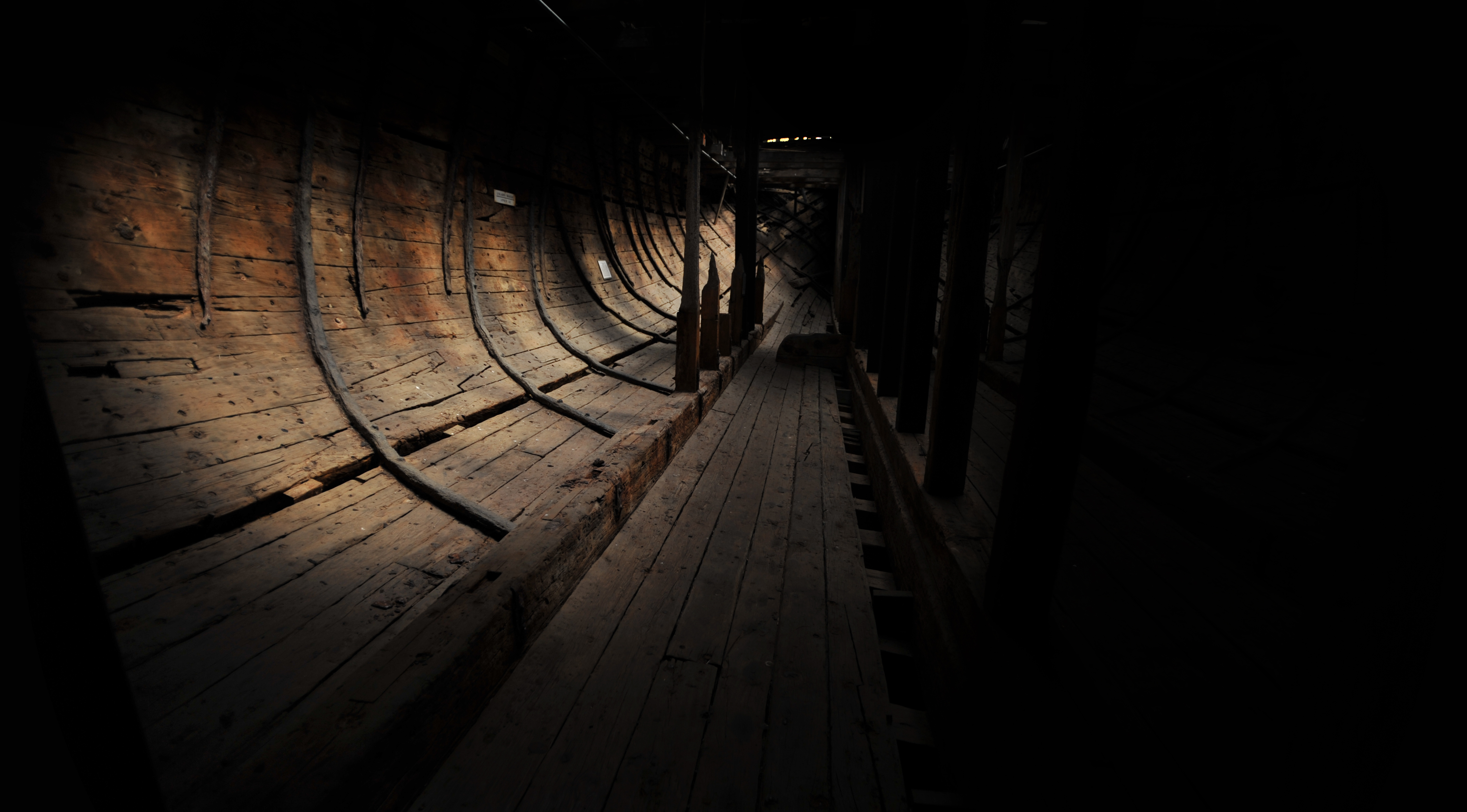
In the hull of the 173-year-old Edwin Fox. Photo: Richard Briggs
Moored in Picton and weathered by time, the Edwin Fox has spent more than a century watching the world evolve around her. She has carried immigrants, convicts, soldiers and cargo across oceans, survived the rise and fall of global trade routes, and outlived almost every wooden sailing ship of her era. Today, at 173 years old, she remains the last of her kind.
Words: Amy Russ
Preserving a vessel of this scale and rarity has required decades of effort – not only to protect the ship herself, but to build a museum capable of sharing her stories with future generations. Purchased in the 1960s by Norman Brayshaw, the Edwin Fox quickly became the focus of a dedicated preservation effort. The Edwin Fox Society was formed in 1965 to safeguard the historic vessel, laying the foundations for decades of ongoing conservation work.
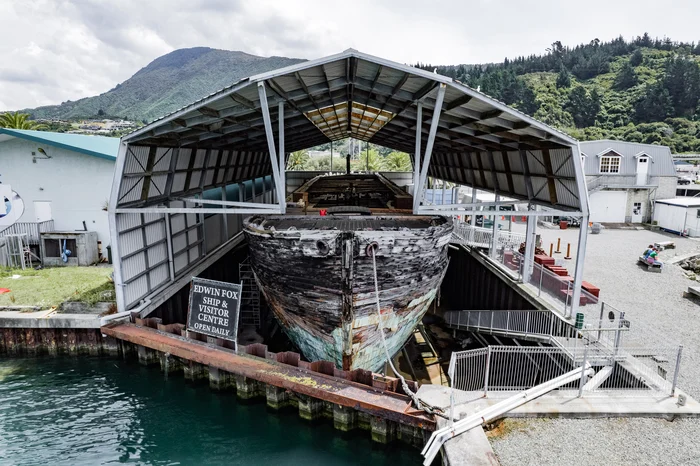
In the years that followed, the site evolved from preservation project to public museum. The Edwin Fox Maritime Museum was formally established in 1990 to interpret and share the ship’s story, with the vessel later placed in dry dock in 1999. Management responsibilities were transferred to the Marlborough Heritage Trust in 2014, before Marlborough District Council assumed stewardship of the site in July 2023 – marking one of the most pivotal modern shifts.
Council’s Arts, Culture and Heritage Manager, Nicola Neilson, says, “The Edwin Fox is a national asset of international significance, and we are fortunate to have her here in Picton. The Marlborough District Council has a lead role to play as guardian/kaitiaki of this significant maritime taonga and its associated historic collection of artefacts and memorabilia. There is without doubt a lot of work and ongoing investment required to continue to safeguard her into the future. With Council’s support alongside that of the wider heritage sector locally, nationally and globally, and the local community, including the Edwin Fox Preservation Trust, I am confident the Edwin Fox will be part of the Marlborough landscape for many years more.”
To understand the scale of that responsibility, it helps to return to the ship herself, and the extraordinary life she has already lived. The 19th-century wooden sailing ship was built in 1853 from approximately 1,000 Indian teak trees and took her maiden voyage around the Cape of Good Hope to London. Over her lifetime she travelled the world an estimated 34 times, transporting troops and supplies during the Crimean War, carrying passengers and cargo to Melbourne, and moving tea and beer between India and England. In 1858, the ship was chartered by the British Government to transport convicts to Australia. Later, in 1867, she was converted from a full-rigged ship to a barque before entering the emigrant route to New Zealand in 1873, making four voyages and carrying a total of 751 settlers.
Among her many notable passengers, Florence Nightingale is rumoured to have been on board during her Crimean War service, while the convict list includes figures such as train robbers James Burgess and William Tester of the ‘Great Train Robbery of 1855’ fame, philanthropist and convicted fraudster Leopold Redpath, and aristocratic clergyman-turned-convict-turned-journalist William Beresford.
Over the years, the ship has also attracted international attention. British archaeologist and broadcaster Neil Oliver filmed a segment for the BBC, while maritime archaeologist Kurt Bennett featured her in academic research. Discovery Channel’s Gold Rush star Parker Schnabel visited in 2022, alongside a range of dignitaries including former Prime Minister Helen Clark, Sir Jerry Mateparae, Sir Doug Kidd and Judith Tizard.
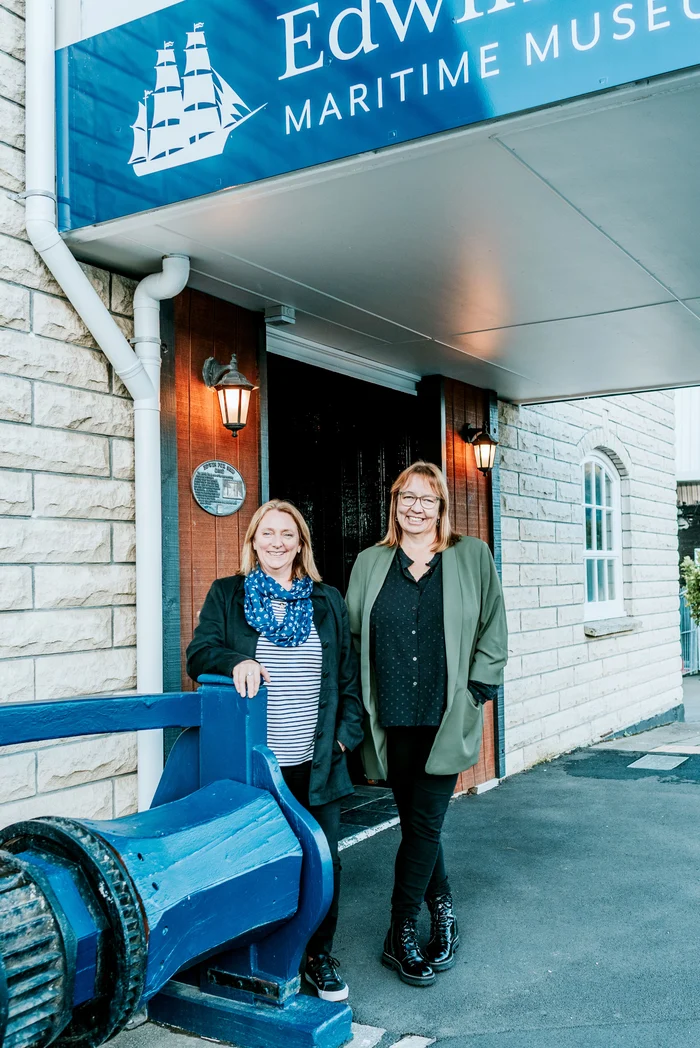
Museum manager Karen McLeod says that since Marlborough District Council came on board the museum has undergone significant change. “Considerable progress has been made through a structured transition process, including the development of a comprehensive three-year strategic plan,” explains Karen. “We are now entering the second year of that plan and are pleased to be progressing ahead of schedule.” Governance of the site is also supported by the Edwin Fox Preservation Trust, with the relationship formalised through a Memorandum of Understanding in 2025. “This was an important step in ensuring the long-term future of both the museum and the ship itself,” says Karen.
One of the key developments over the past year has been the convening of an expert panel to assess the condition of the Edwin Fox itself, along with the dry dock and museum infrastructure surrounding her. “From the work of the panel, a report about the future needs of the Edwin Fox was produced. This has been significant in shaping discussions about the museum’s future direction.”
With a history spanning continents and centuries, new discoveries continue to emerge. Karen says they are still uncovering new stories. “Our strong relationships with descendants of original passengers continue to yield valuable material, including photographs and personal histories. These contributions bring a powerful human dimension to the ship’s story.”
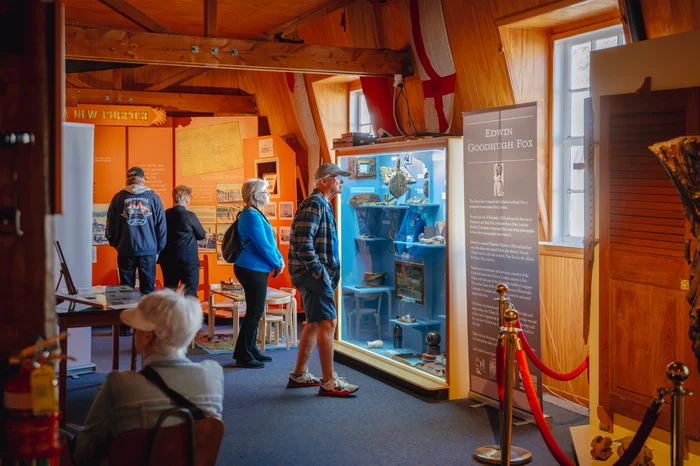
That human connection is also explored in the 2024 publication The Edwin Fox: How an Ordinary Sailing Ship Connected the World in the Age of Globalisation 1850–1914, written by Boyd Cothran and Adrian Shubert, which highlights the vessel’s far-reaching global significance.
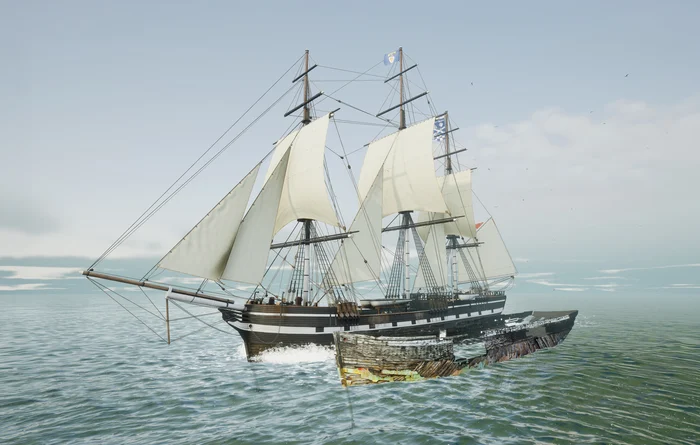
While modern technology is beginning to shape how those stories may be told in future, Karen says some innovations remain in early development. A 3D mapping project completed as part of a PhD thesis in late 2024 has resulted in a prototype “gameplay” experience designed to immerse visitors in the ship’s world. However, the technology is still evolving, and it will be some years before it can be fully integrated into the museum experience.
While physical access aboard the ship is currently restricted during preservation planning, the museum continues to attract growing visitor numbers. As a preservation project, the goal is to carefully slow the inevitable effects of age and environment rather than restore the ship to a pristine state. “The Edwin Fox remains in remarkable condition considering she is 173 years old,” Karen says. “Our role is to mitigate that deterioration as effectively as possible.”
Alongside this, smaller but equally important projects continue. “One recent focus has been the ship’s original windlass – the mechanism once used to raise and lower the anchor. Removed from the ship in the 1980s, the enormous timber structure has sat beside the dry dock for decades.”
Late last year, conservator Sara Gainsford from RedOx Cultural Heritage Services joined museum staff to carefully assess, document and begin relocating the windlass into the museum boatshed for long-term protection and display. This work also included condition assessments of several original artefacts, including the ship’s billethead.
“The Edwin Fox has now spent 129 years in Picton and has become embedded in the town’s history,” Karen says. That connection continues with local groups such as the Blenheim Family History Group currently researching immigrants who arrived aboard the Edwin Fox before settling in Marlborough.
Looking ahead, Karen’s vision is of a museum experience that balances careful preservation with dynamic storytelling and meaningful visitor interaction. “We would want everyone to discover the lost world of sail at the Edwin Fox Maritime Museum and experience a unique nineteenth-century sailing ship that carried people and goods around the globe.”
After more than 14 years at the museum, Karen says she remains as passionate as ever about the one-of-a-kind historical gem. “What continues to motivate me is the unique understated significance of the Edwin Fox and the responsibility of ensuring its survival for future generations. The ship is a veritable treasure trove of extraordinary human stories,” she says. “She truly is the last of her kind.”
Perhaps that is what continues to captivate visitors most; not simply the age of the ship, but the lives she carried, the journeys she witnessed, and the sense that beneath every weathered timber lies another story waiting to surface. “I like to think visitors feel wowed and surprised at the treasure they have found. The Edwin Fox story has so many layers and there is something to engage all ages.”