
Coroner: Student nurse Rebecca Woolley died from hypothermia during hike in Arthur’s Pass National Park
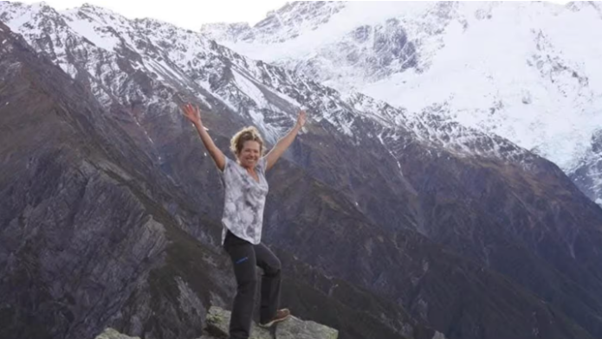
Nursing student Rebecca Woolley lived life to the fullest, her parents said. Photo / Brett and Liz Woolley
A day walk in the mountains proved fatal for a fit, experienced tramper who loved the outdoors.
Former Marlborough woman Rebecca (Bex) Woolley had a fractured spine and died of hypothermia after getting lost and falling in remote, challenging terrain in Arthur’s Pass National Park.
Her friend, Alejandra Ruiz Lagos, had earlier turned back as Woolley decided to press on alone for a short while along a rugged alpine route.
Ruiz Lagos raised the alarm when her text messages to Woolley went unanswered and night had closed in, a coroner said in findings released today.
It was October 30, 2021, and the afternoon was fine but the spring weather was changeable.
The pair had planned a day walk up the Cons Track, which climbed the north side of Devils Punchbowl Creek near Arthur’s Pass Village.
Unable to find its start, they decided to tackle the more challenging Mt Aicken Track, Coroner Alexandra Cunninghame said.
They reached the bushline around mid-afternoon but shortly after they embarked on the unmarked route above, Ruiz Lagos developed a sore leg and decided to turn back.
They agreed Woolley would carry on for 30 minutes.
At 3.42pm Woolley sent Ruiz Lagos a message to say she had taken a wrong turn and would see her back at the car.
About an hour later she sent another message saying “lots of bum sliding!”, then message saying she could see the road to the east and would head down towards it.
Ruiz Lagos continued to send messages, but got no reply.
It transpired Woolley’s mobile phone had gone flat and she realised she had become separated from the route and tried to descend unfamiliar terrain toward a visible landmark.
At 7.35pm, by which time it was raining, the temperature had dropped and Woolley had not returned. Ruiz Lagos raised the alarm.
Coroner Cunninghame said police performed an initial search before a full search and rescue operation began at first light the next day.
Woolley’s body was found at 1pm on October 31 in a bluff area south of the Mt Aicken Track.
Members of a rescue helicopter team winched into the area found her lying on her back, wedged between the base of a tree and a steep slope.
The rescue team found a silver survival blanket at the scene, weighed down with rocks, a head torch and small tools.
Woolley was wearing a lightweight nylon jacket, tramping trousers and one tramping boot.
Another jacket, a singlet, a T-shirt and a beanie were also found, the coroner said.
The 37-year-old was described by her parents, Brett and Liz Woolley, as an “incredible person” who lived life to the fullest, and was missed by all who knew her.
They told NZME they hoped the coroner’s recommendations, which included responses from the Department of Conservation and the Mountain Safety Council, would prevent a tragedy like this happening to another family.
Death from hypothermia
The coroner found Woolley’s accidental death from hypothermia at Graham Stream occurred after she became lost on the Mt Aicken route and was unable to find the marked track to the carpark.
A contributing factor was a disabling spinal fracture, which most likely happened in the fall after Woolley had become hypothermic, based on the expert opinion of a forensic pathologist.
Evidence suggested Woolley had removed clothing before the fall and “paradoxical undressing” was a known symptom of severe hypothermia which occurs as victims become confused and disoriented, Coroner Cunninghame said.
She said Woolley was a fit, experienced tramper and it would be unreasonable to criticise her decision to continue up the Mt Aicken Route alone for a short time.
“Solo tramping and day walking is a common activity,” she said.
However, Woolley made some decisions against best practice when day walking more challenging routes in New Zealand’s alpine areas, Coroner Cunninghame said.
The Mountain Safety Council (MSC), which assisted the coroner’s court with a review of proposed recommendations and the Department of Conservation (DoC), which managed Arthur’s Pass National Park and conducted its own investigation into the accident, expressed sadness over the accident.
DoC visitor safety and standards manager Andy Roberts said their heart went out to Woolley’s whānau and friends.
“It’s a tragedy when people lose their lives in the mountains and we do as much as we can to prevent this,” Roberts said.
MSC chief executive Mike Daisley said the “heartbreaking event” provided valuable lessons about navigation and what to do if things went wrong, even on a day hike.
Keen adventurer
Woolley lived in Christchurch, where she was studying for a nursing degree.
She had moved there from Marlborough, where she had volunteered with St John and with Civil Defence, which had given her the opportunity to develop her outdoor skills, the coroner said.
She said the section of DoC-managed track below the bushline was inspected every four years and had an annual “maintenance run” focused on windfall and checking track markers.
The section above the bushline was regarded as an “unmarked route” and was not managed by DoC.
However, four strategically placed poles and three large triangle markers had been installed to aid trampers at key decision points.
There were also cairns along the route placed by other trampers over the years.
DoC said while the coroner had recommended it review the timing of its annual marker checks, at the time of the tragedy in 2021, the navigation markers above the bushline on Mount Aicken were in place and in good condition.
“We have reviewed our annual marker checking timeline and will undertake that at a time when snow conditions allow staff to do that safely, as per the coroner’s recommendation,” Roberts said.
DoC has scheduled a check of the Mount Aicken marker poles for early October this year, snow conditions allowing.
Coroner Cunninghame noted unmarked routes were recommended for experienced alpine trampers or mountaineers only, who were advised to carry (and be able to use) a compass and map for navigation.
Neither of the pair had a map, compass, GPS device or personal locator beacon. Instead, they used the map from the DoC website to navigate.
Hazardous zone
DoC provided records to the court of three incidents where trampers had become lost on the Mt Aicken Route; an incident where a tramper had to be rescued after finding the track beyond their abilities, and an incident where two trampers were rescued after they were separated in deteriorating weather.
In 2006, the body of a tramper was found in Graham Stream in a similar area to where Woolley was found, having become lost on the unmarked section of the Mt Aicken route.
DoC then installed more navigation markers at key points to help trampers navigate the difficult terrain.
“We also updated our website information with clear warnings and guidance on the difficulty of this area, including noting that fatalities have occurred,” Roberts said.
Roberts said people becoming lost or having incidents on unmarked routes was an increasing issue.
“What we have seen over recent years is people going off tracks or routes and not necessarily having the equipment or the skills to deal with the conditions.
“The New Zealand outdoors are amazing but can be unforgiving,” Roberts said.
He said DoC’s land safety code had five key rules; choose trips to match skill levels, share plans, understand the weather, pack warm clothes and extra food, and carry devices designed to seek help such as a personal locator beacon.
Daisley, for the MSC, said their best advice to anyone lost was to stay where they were and call for help rather than carry on into unfamiliar terrain where they could be exposed to greater risks.
