
Permission to play
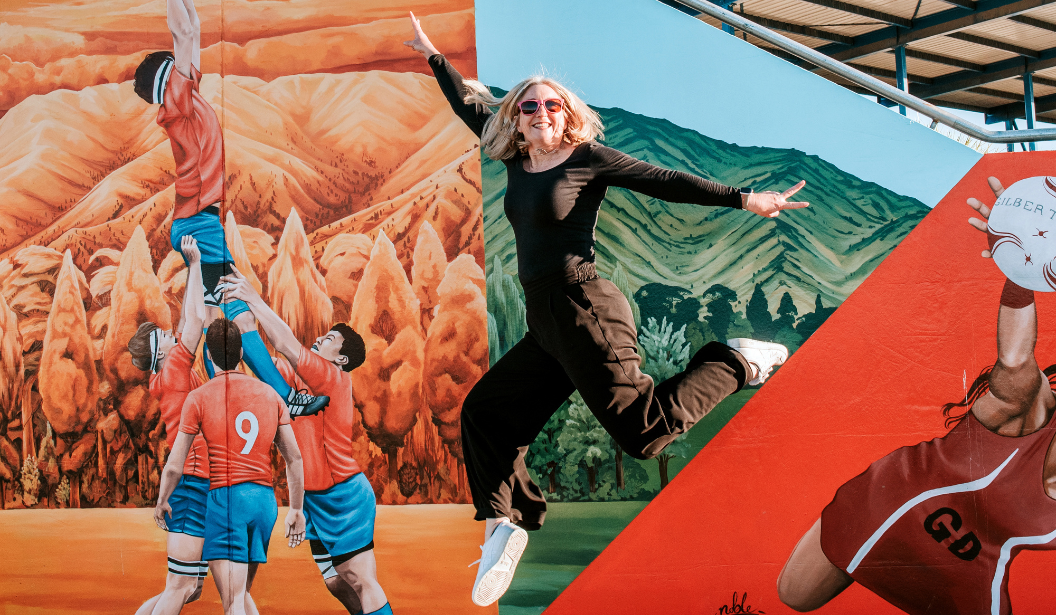
Marlborough's Play Advocate Lesley McIntosh. Photo: <em>Aimee Preston</em>
For most of us, play is something we associate with childhood. But Marlborough's Play Advocate Lesley McIntosh is challenging that idea, encouraging us to rethink how we design our towns so our streets, parks and public spaces invite people of all ages to connect, explore and enjoy the places they live.
Words: Rachel Enright
One of Lesley McIntosh's earliest memories of play is swinging from a makeshift swing tied to a pōhutukawa tree overlooking a Bay of Islands beach.
There was no playground, no safety surfacing and no carefully designed play equipment. Just a rope, a tree, and a childhood spent outdoors.
"We lived in a rural area and spent a lot of time at the beach," she recalls. "What my parents provided was the time, space and permission to play."
Decades later, those simple experiences continue to shape how Lesley sees the world. Today, she holds one of the more unusual job titles in Marlborough: Play Advocate. The Play Advocate role is funded by central government (Sport New Zealand) for two years with around 18 roles funded in the same way throughout New Zealand.
"People often hear ‘Play Advocate’ and think of playgrounds," she says. That assumption is exactly what she is trying to challenge. "Play is much bigger than that, it's about making play an everywhere possibility.”
Lesley’s role is largely educational. She works across Marlborough District Council, helping departments understand that play extends far beyond playgrounds and encouraging consideration of how engagement and playfulness can be woven into everyday environments for people of all ages. Her role aims to help teams identify opportunities to incorporate these ideas into projects at the planning stage, often before a single line has been drawn.

It is a role that combines urban design, wellbeing and community development. While still relatively new in New Zealand, the thinking behind it is part of a much larger global conversation about how our towns and cities should function.
The benefits extend well beyond individual wellbeing. Advocates argue that playful communities can strengthen social connection, support local economic activity and tourism, help people engage more deeply with culture and the environment, and even play a role in community recovery following challenging events or crises.
For generations, urban design focused largely on transport, infrastructure and economic activity. But increasingly, planners, architects and policymakers are asking a different question: what if our streets, parks and public spaces could also help people feel happier, healthier and more connected? Lesley says, “Play is a perspective, not a siloed project, and can be overlaid into new project developments.”
The New Zealand Urban Design Protocol recognised this challenge nearly two decades ago, noting that New Zealand is one of the world's most urbanised nations, with almost 87 per cent of the population living in towns and cities. It argued that the places we create today will shape how future generations live, work and connect.
That thinking has evolved into a growing movement around "playable cities" and human-centred urban design. Across the world, councils are experimenting with interactive public spaces, multi-generational gathering areas, pop-up parks and flexible playscapes that encourage people to engage with their surroundings in unexpected ways. Some double as climate-resilient infrastructure. Others use modular elements that can be interpreted differently depending on who is using them.
Some researchers have even suggested that one measure of a healthy town or city is how visible children are in public spaces, and how safely they can move around independently.
The goal is not necessarily to create more places to play. It is to create more opportunities for engagement. Leisure spaces are increasingly recognised as places where different generations naturally cross paths. Without formal programmes or assigned roles, they allow people to move, pause and spend time together, each using the space in their own way.
Dutch architect Herman Hertzberger captured the idea succinctly when he wrote: "The more a space can be interpreted in different ways, the more people it can accommodate."
Lesley sees that philosophy reflected in her own upbringing. "There weren't many playgrounds involved in my play," she says. "It was organic." Growing up as an only child, she learnt to create her own entertainment. Cardboard boxes became toys. Beaches became playgrounds. Time spent with cousins and grandparents often blurred the line between exploration and imagination.
Those experiences helped shape a belief that play is not something confined to a designated location. It is something woven throughout everyday life.
After studying business psychology through Massey University, Lesley built a career in community sport, organisational development and participation. She worked in hockey both in New Zealand and overseas, held roles with Softball New Zealand and later spent a decade at Sport Tasman, eventually becoming General Manager of Community Sport.
When the opportunity arose to become Marlborough's Play Advocate, it felt like a natural extension of work she had already been doing for years. The position was designed to create lasting change rather than deliver short-term projects.
That means much of her time is spent in meetings rather than playgrounds.
Over the past year she has worked with teams across Council, from roads and transport to parks, and some key infrastructure teams. She has also engaged with iwi to better understand tākaro – a Māori understanding of play that extends beyond recreation to include learning, culture and connection to people and place.
The objective is not to retrofit play into projects once they are complete, it is to consider this from the outset. "The best time to think about these opportunities is when the paper is still blank," she says.
A footpath being upgraded could incorporate elements that encourage curiosity. A riverside project might become both educational and playful. A walkway could invite people to slow down, interact or experience a place differently.
Many of the projects Lesley has helped influence are still emerging, but she points to strong collaboration with Marlborough Roads, particularly the walking and cycling team, along with parks and open spaces staff.
The changes may not always be obvious. In fact, some of the most successful examples of playful design are often the least conspicuous. A welcoming walkway. A public space that invites people to linger. A place where children, teenagers, parents and grandparents all feel comfortable spending time.
One concept Lesley references is the "8 to 80" principle of urban design. The idea is simple: if a space works well for an eight-year-old, it will likely work well for an 80-year-old too. It is a reminder that designing for children often improves accessibility, safety and enjoyment for everyone.
Play, she argues, should not be viewed as something people outgrow. "I think adults still play. They're just not calling it play." Walking with friends. Card games. Hiking. Sport. Swimming. Hobbies. The label changes, but the benefits remain remarkably similar.
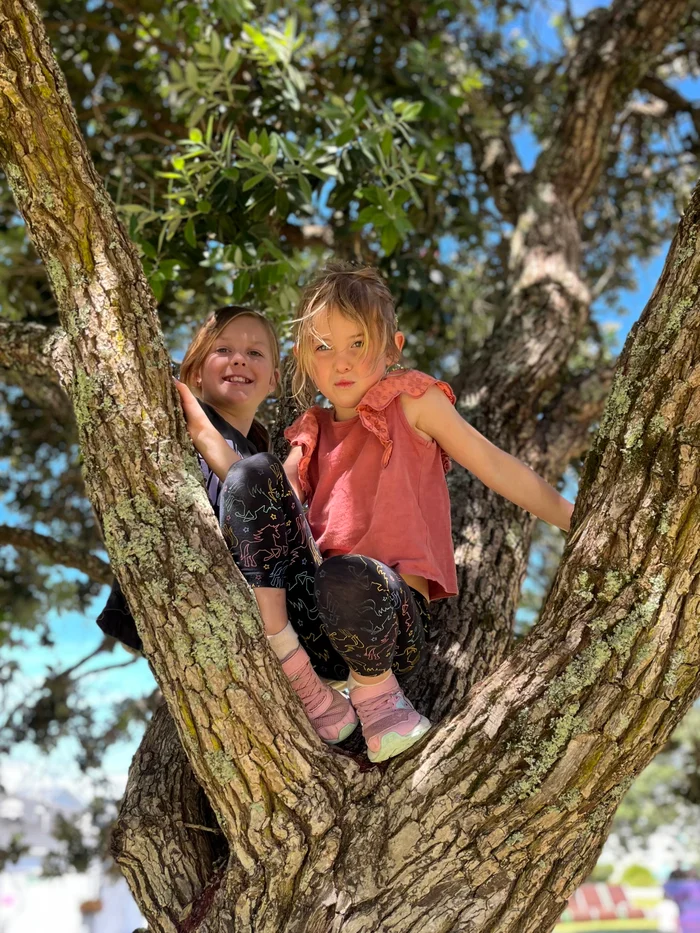
At home in St Arnaud, where she lives with her family, those moments often involve lake swims, hiking trails, collecting tadpoles or spending time outdoors. During school holidays, screens take a back seat whenever possible. "I tell my kids that boredom is their best friend because that's when imagination kicks in."
It is a philosophy that feels increasingly relevant in a world of constant notifications and digital distractions. And if she succeeds, most people may never realise the role she played. They will simply experience towns and public spaces that feel more engaging and more welcoming. In fact, she believes true success would eventually make her own position redundant.
"If I'm successful in getting play into Council procedures and planning documents, there should be no need for my role anymore."
For someone whose job is often misunderstood, that might be the clearest measure of success of all.