
Marlborough growers urged to adapt

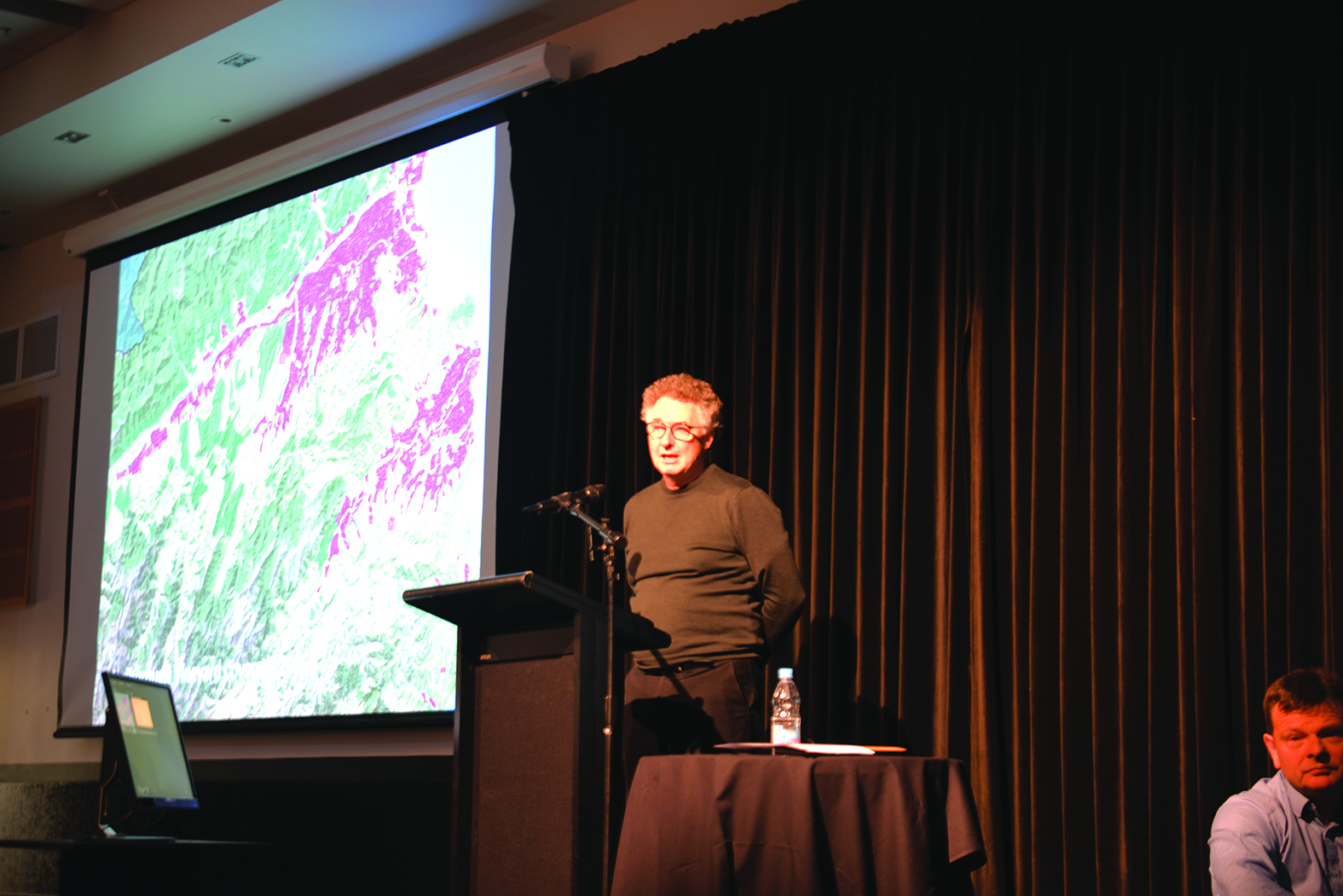
John Wilson from JPEW business advisory speaking at the Marlborough Events Centre last Thursday. Photo: Alex Roberton.
Marlborough growers have been urged to view pressure in the wine industry as an opportunity to explore different crops and build a more diverse future for the region’s productive land.
A regional land-use forum heard Marlborough remained a world-class wine region, but oversupply, slower global demand and changes to grape supply agreements are creating uncertainty, particularly for smaller independent growers.
John Wilson from JPEW business advisory said the region may need to consistently produce between 340,000 and 350,000 tonnes of grapes a year to restore balance and improve grape and bulk-wine prices.
That followed several large vintages, including a 410,000-tonne harvest in 2025 which did not include grapes left on vines. Marlborough’s producing vineyard area had also grown from 22,900 hectares in 2014 to about 31,600 hectares.
While wine export volumes increased 9 percent in the past year, revenue remained almost completely unchanged.
“We’re selling 9 percent more volume for the same amount of value. So basically, selling more for less,” the forum heard.
However, there were positive signs at the premium end of the market. Sales of New Zealand sauvignon blanc priced above $20 and $25 a bottle were growing, showing consumers were still prepared to pay for quality and trusted brands.
Speakers also highlighted opportunities for landowners whose grape contracts could not be renewed on acceptable terms. Marlborough’s climate, soils, workforce and primary-industry expertise could support crops including apples, cherries, kiwifruit, vegetables and arable seeds.
The region was described as strategically important for apple expansion by Cam Elton from T&G Global, with its cooler climate, winter chill and free-draining soils favouring fruit colour and firmness. Kiwifruit could also be grown successfully, although wind, frost, water and biosecurity would require careful management.
Existing cool-storage facilities in Marlborough, packing capacity in Nelson and horticultural expertise across the upper South Island meant growers would not have to create an entirely new support network.
Conversion would require substantial investment. Apple developments were estimated at between $250,000 and $450,000 per hectare, while covered cherry orchards could cost about $220,000 per hectare.
Growers were encouraged to seek specialist advice and secure a market before choosing a crop.
The message was not that Marlborough should turn away from wine, but that its growers had to make use of their skills and resources to adapt while protecting the region’s productive future.