Rangitahi and Molesworth: tracing a station’s name


A Molesworth Muster. Photo: Supplied.
JENNY PIERSON and PAUL DAVIDSON
Marlborough Historical Society
The recent announcement that the operation of Molesworth Station, the iconic high-country farm spanning 180,000 hectares across Marlborough and North Canterbury, is to be transferred to Ngāi Tahu Farming has drawn new attention to the station’s history.
For Ngāi Tahu and Ngāti Kuri, the area has long been known as Rangitahi, an ancestral landscape woven into their whakapapa. The name is likely to become the primary reference for the station under its new Māori operators.
But how did this historic station become known as Molesworth in the first place?
A dive into the Provincial Archives at Marlborough Museum provides some intriguing clues.
In 1850, John Henry Caton and his partner, Mr Murphy, occupied the northern part of an area in the Awatere Valley known as Barefells Run. They held a depasturing licence for cattle and built a whare, their first homestead, near an area known as the Mole Hills.
That provides the first clue to the origin of the name “Molesworth”.
However, another undated map in the archives shows a stream on the northern boundary of Barefells Run, forming the boundary with Langridge Station to the north. The stream is labelled Molesworth Creek, the earliest known appearance of the Molesworth name.
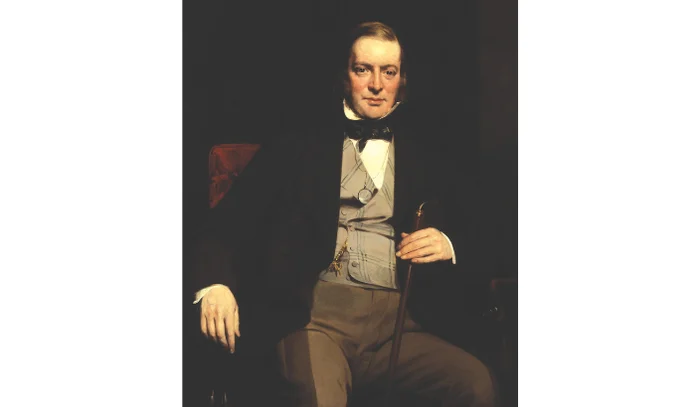
Whether the name came from the Mole Hills or was intended as a tribute to Sir William Molesworth, 8th Baronet, cannot be determined with certainty. However, as Sir William was a prominent English supporter of the New Zealand Company, the latter explanation appears the more likely.
In November 1865, Caton applied for a new licence, referring to the property as Molesworth Run. Three years later, the area was surveyed and recorded as Molesworth Moor Run. However, the resulting map still listed Barefells Run as the official name.
At the end of November 1868, Caton received a Crown grant of 1,027 freehold acres, including the Molesworth homestead. Just six months later, on 25 May 1869, he was declared bankrupt.
Molesworth Moor Station remained the commonly used name, but when William Acton-Adams applied for the property in 1897, his licence described it as “Run 119, also known as Molesworth."
That name endured, even after the Government took control of the station in 1938.
Today, the official name is Rangitahi /Molesworth, a fitting combination of old and new as a fresh chapter begins in the history of this iconic station.