
Cleaning up at Wairau Bar


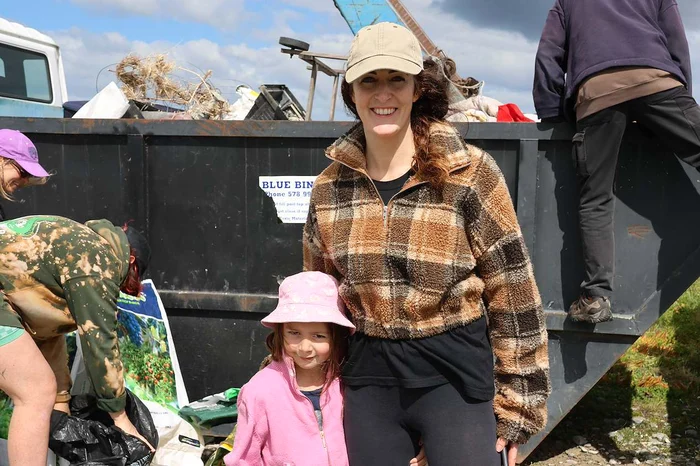
Anna Kelland and Mel Pierce with their collected rubbish. Photo: Abigail Spink.
Wairau Bar volunteers fill skip in annual clean-up
Abigail Spink
Couches, tyres, plaster board and campfire litter were among the items collected by volunteers at Wairau Bar on Sunday, as they scoured the river mouth for trash.
With feed sacks, compost bags and other upcycled rubbish collectors in hand, over 50 people headed out for the third annual Wairau bar cleanup - its biggest turn out yet.
Under stewardship of local iwi, Rangitāne o Wairau, the bar is described as an early settlement site and important part of ancestral Māori history.
For organiser and Green Party co-convener Aimee Payne, the site’s cultural value, recreational significance and importance to local wildlife are key motivations for the clean-up:
“It’s culturally significant in Marlborough, and it's really well used. There's a lot of fishing, white baiting, motorbiking recreationally. And it's beautiful. There's lots of shorebirds that gravitate around the bar area, so it's really important for our biodiversity.”
The team filled an 8 cubic metre skip, which upon reflection, Aimee says was not enough to contain the amount of rubbish collected. With more trash amounting each year, she says the team may look to do the clean-up biannually.
The council waved the dump fees for the event and Blue Bins Marlborough provided the skip and a driver. Rangitāne and Boom café provided post-event snacks.
Volunteer Gabe Bertogg says household rubbish was the most common type collected, outweighing fishing waste, with the team finding large amounts of refuse dumped beneath trees.
Despite the level of waste, she says “it was really cool to see everybody come together. It's sad to see the rubbish…but altogether we can make a difference.”
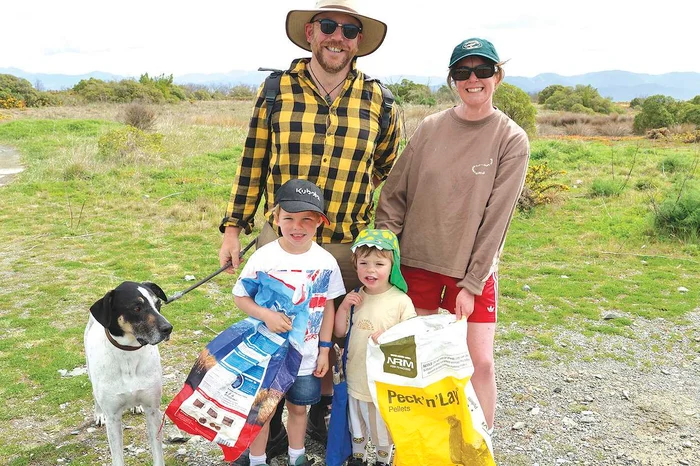
Blair and Sarah McDonald, who brought their children Pat and Gus along to the cleanup, say that finding items left behind by beachgoers was “kind of disappointing” but they were happy nonetheless to see “heaps of people” out doing their bit.
“We enjoyed that and will do it again” they agreed.
Aimee concludes that the cleanup is proof that community can pull together:
“It’s unfortunate that there’s more [rubbish] this year” she says, “[but] I think people collectively want to help. Connection is way forward in community. And Kai always brings people together.”