
Blenheim volunteer urges rethink on remembrance


Mike Carter carrying out restoration works on bronze plaques in the service section of Omaka Cemetery. Photo: Supplied.
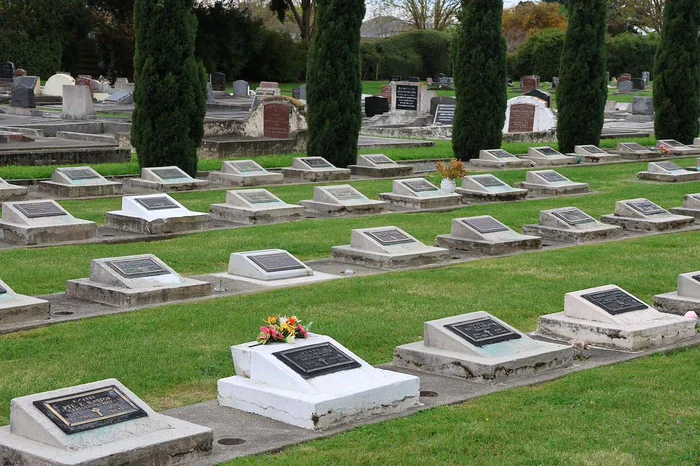
When Mike Carter, Blenheim co-ordinator of the New Zealand Remembrance Army (NZRA), was alerted to 800 biodegradable RSA poppies stuck to bronze plaques at service graves in Omaka Cemetery last month, he set about removing them one by one.
The labour-intensive task, which Mike says took "hours and hours", is part of a wider effort to preserve the graves of service men and women whose plaques can be damaged by adhesive-backed poppies.
A former Air Force engineer, Mike has volunteered with the Blenheim branch of the NZRA for three years and has found himself periodically removing poppies during that time.
The NZRA, alongside other volunteer groups, Veterans' Affairs New Zealand and Marlborough District Council, is responsible for maintaining the service area of the cemetery.
"The problem is that the new poppies, because they're biodegradable, the sticky adhesive on the back actually eats into the surface coating of the plaques… so you're sort of causing permanent damage," Mike says.
Former Marlborough NZRA co-ordinator of seven years and retired Lieutenant Colonel Simon Ewing Jarvie has watched the issue develop over several years.
He confirms adhesives such as Blu Tack and sticky-backed poppies can chemically damage lacquered bronze plaques, sometimes within days. Older-style poppies also create plastic waste and can become a hazard for lawn mowers, he says.
"The only way to save [them] is to get the get the blue tack off as quickly as possible", Simon says of his experience maintaining Marlborough service graves.
The issue is not limited to Marlborough. Mike says fellow NZRA volunteers have reported similar removals on the Kāpiti Coast and in Wellington.
Of the 800 poppies placed on the grave sites in August, Mike says it was done with the best intentions.
"I think it's essentially a very kind-hearted person who thinks they're doing the right thing, but it's actually causing ongoing damage."
The removal of the poppies, explained in a Facebook post by the NZRA, prompted an emotional response online, with some people questioning whether removing tributes left as a sign of respect was appropriate.
"My dad is buried in this plot at Fairhall cemetery and reading this just makes me sad. I totally get that you want to preserve the plaques but... the poppy symbolises the sacrifice they made and it is a way to honour them," writes Shelly Carroll.
Mike says he understands the reaction.
"I can understand… because essentially, we're going along pulling them off, but you know, it's just the long-term damage to them."
He says keeping plaques clear, placing tributes beside them, or using ceramic poppies specially designed by the NZRA is the best way to commemorate those who served.
Sandy Snell, president of Marlborough RSA, agrees navigating the issue is difficult, particularly when people are well-meaning and unaware of the long-term damage they can cause. She says the issue typically arises around Armistice Day and Anzac Day.
"It's a sensitive issue because we're dealing with grieving families," Sandy says.
She agrees with the NZRA that mounting poppies on a plinth, placing them in jars, or using ceramic poppies is the best way forward.
"By not putting stuff on the brass plaques, you're actually showing more respect," Mike says.
He adds that some plaques are old and may no longer have family members available to clean and maintain them.
On preserving service graves for future generations, Mike says: "It's a memorial to that person who served New Zealand. And we want it to last as long as possible."
"We're all doing this out of love... we just need to try and come to an agreement where everyone can understand what [each other is] trying to do, with respect", Simon says.